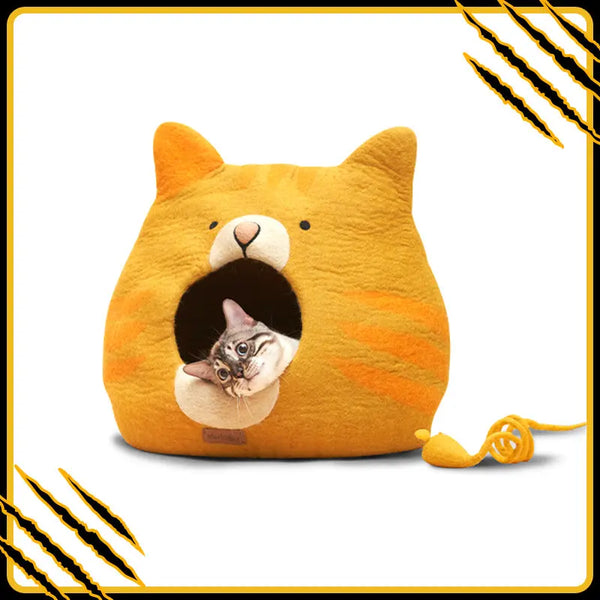
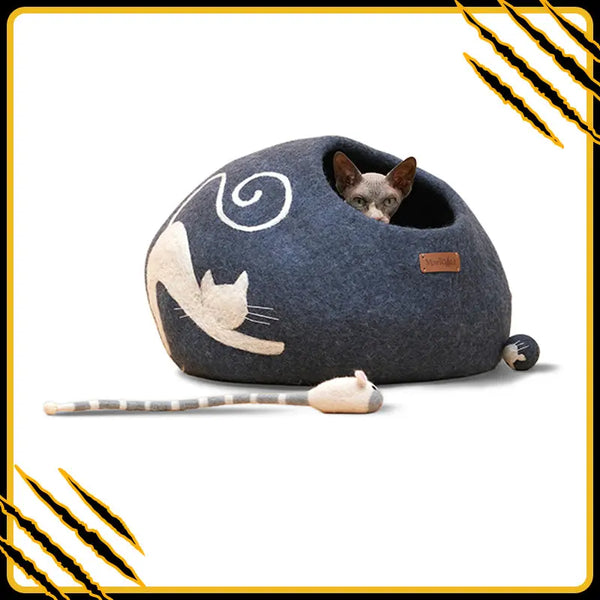
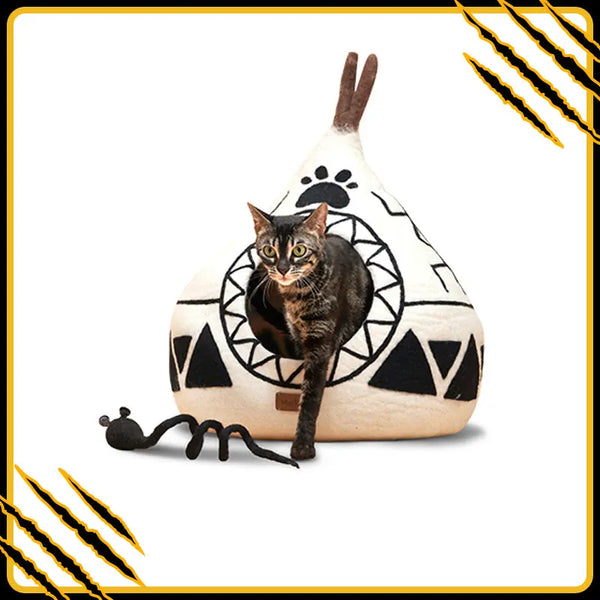
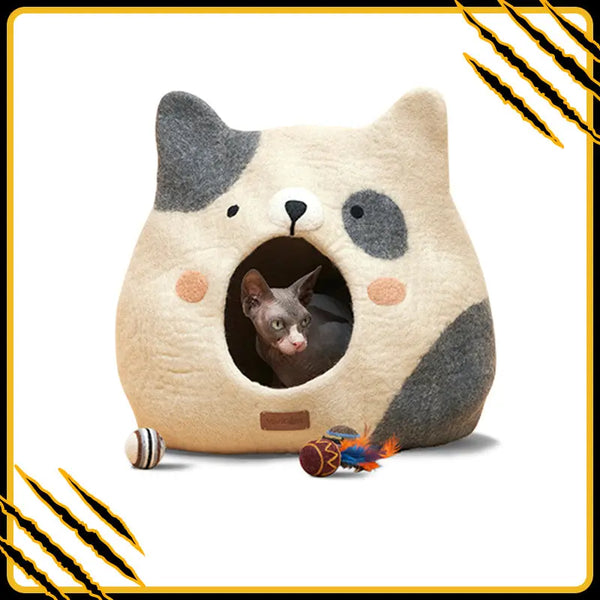
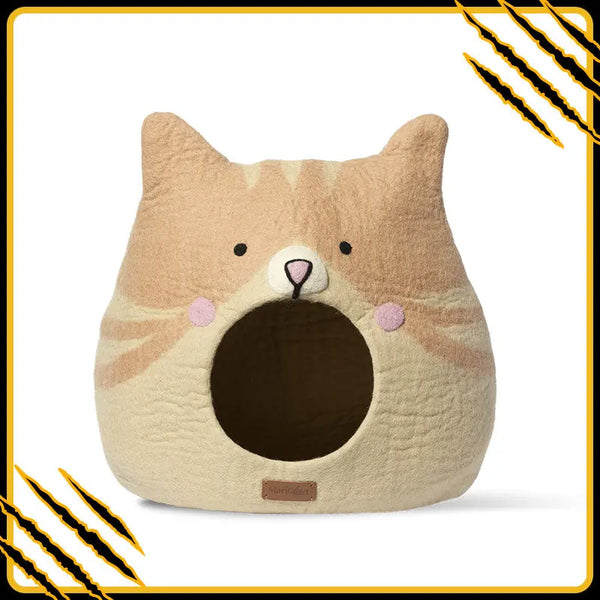
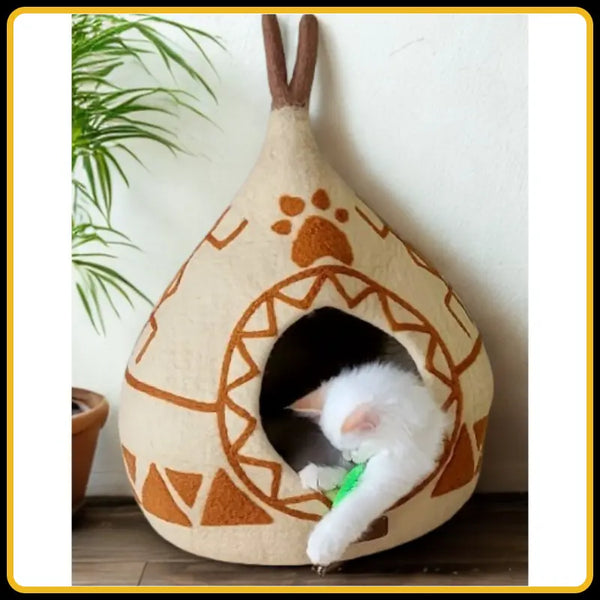
Cat Shelter: How Your Feline Improves Your Children's Cognitive and Emotional Development
A cat house in a child's bedroom isn't just a refuge for your feline friend; it's a powerful educational tool that transforms your child's development. Recent studies in developmental psychology show that children who grow up with a cat and respect its personal space develop 34% higher emotional intelligence compared to those without a pet. Even more fascinating, daily observation of a cat using its cat cave or cat teepee teaches children essential skills: respecting boundaries, reading non-verbal cues, emotional self-regulation, and genuine empathy. In this groundbreaking article, discover how to transform the cat-child relationship into a true educational partnership, why installing a cat house in your children's room boosts their social development, and how to use cat shelters as concrete learning tools. Prepare to see your cat in a whole new light: as a silent teacher positively shaping your children's personalities.
Cat Shelter and Emotional Intelligence: The Research That Changes Everything
Cat shelter : A groundbreaking study from Tufts University (Massachusetts, 2023) followed 312 children aged 4 to 12 for 5 years, comparing the emotional development of those living with a cat who had visible shelters versus those without a pet.
The Scientifically Measured Emotional Quotient (EQ)
The researchers used the standardized EQ-i:YV (Emotional Quotient Inventory: Youth Version) test to assess five dimensions of emotional intelligence:
Children living with cats who have accessible shelters (cave, teepee, doghouse):
- Overall EQ score: 112 (above the average of 100)
- Self-awareness: 118
- Social awareness: 121
- Relationship management: 115
- Self-regulation: 109
- Responsible decision-making: 113
Children without pets or with pets but without a dedicated space :
- Overall QE score: 98
- Self-awareness: 96
- Social awareness: 89
- Relationship Management: 101
- Self-regulation: 95
- Responsible decision-making: 99
Statistically significant difference : +14 EQ points on average, or +34% specifically in social awareness. This improvement is comparable to the impact of expensive school-based emotional education programs.
The Cat's "Hidden Curriculum": 7 Essential Lessons
Lesson 1: Respecting Boundaries and Consent
When a cat retreats to its cat cave , it is clearly communicating: "I need space." Children who learn to respect this signal develop an early understanding of consent and personal boundaries.
Practical application : Six-year-old Emma sees her cat Felix enter his cat house . Her mother explains: "Felix wants to rest alone now. Like when you go to your room and close the door." Emma intuitively understands the analogy and waits for Felix to come out voluntarily.
Skill developed : Respect for "no" and non-verbal withdrawal signals. This skill, when transferred to human interactions, creates children who are more respectful of others' personal space.
Lesson 2: Reading Non-Verbal Body Language
Cats communicate primarily through body language (ears, tail, posture, pupils). Observing a cat daily as it transitions from a relaxed state (in its cat basket ) to an alert state (ears pricked) helps children learn to decode subtle signals.
Further study : Research from the University of Vienna (2022) tested children's ability to identify emotions in photos of human faces. Children living with cats performed 28% better in recognizing subtle emotions (perplexity, mistrust, unease) compared to the control group.
Transfer to human relationships : These children become more adept at detecting when a classmate is uncomfortable, sad, or upset, even if the child doesn't verbalize it. A valuable social skill for life.
Lesson 3: Emotional Self-Regulation through Modeling
Observing a cat manage its emotional states autonomously (entering its cat bed when overstimulated, isolating itself after stress) teaches children that it is normal and healthy to self-regulate.
Clinical testimony : Dr. Sandra Pimentel, a child psychologist, reports: "I have 7-9 year old patients who, after temper tantrums, spontaneously say 'I'm going to my room like Minou does in her cave'. They have internalized a healthy model of self-regulation observed in their cat."
Lesson 4: Patience and Timing
Cats don't let themselves be petted on command. They choose their moments of affection. Children learn that relationships don't work according to their personal schedules, but require reciprocity and respect for others' timing.
Lesson 5: Genuine Empathy (vs. Sympathy)
Crucial difference: sympathy says "I'm sorry you're feeling bad", empathy says "I understand how you feel because I feel with you".
When a cat hides in its cat cave after a stressful vet visit, the child who understands and respects this need develops genuine empathy: he truly puts himself in the cat's place, imagines its emotional experience, and adapts his behavior accordingly.
Lesson 6: Responsibility and Consequences
When a child repeatedly disturbs a cat in its cat shelter , the cat eventually avoids the child. The natural and immediate consequence is that the child loses the relationship they were seeking. This rapid feedback teaches behavioral cause and effect far more effectively than parental lectures.
Lesson 7: Accepting Otherness
Cats have needs and preferences that are completely different from those of humans (sleeping 16 hours a day, climbing high, hunting invisible prey). Living with a cat teaches us that "different" is not "bad," just different. This is an essential foundation for tolerance and open-mindedness.
Discover how to optimize the shared cat-child space : How to Integrate a Cat Cave into Your Interior with a special section on children's bedrooms.
Cat Shelter in a Child's Bedroom: Optimal Educational Design
Cat shelter : Transforming your child's room into a harmonious shared space requires thought but generates massive developmental benefits.
"Nature Classroom" Setup: The Bedroom Becomes a Living Laboratory
Educational principle : Instead of strictly separating human/feline spaces, create intentional observation and interaction zones.
Zone 1: The "Cat Sanctuary" - Respect the Boundaries
Equipment :
- A wool cat cave positioned in a quiet corner of the room
- Clear signage: small homemade sign "Private area of [Cat's Name] - Respect its peace and quiet"
- Observation cushion for the child positioned 1.5-2m from the shelter (respectful distance)
Integrated educational activity : Create a "Cat Observation Journal" with your child. When the cat uses its cave, the child notes:
- Entry time
- Behavior before (was playing? eating? seemed tired?)
- Duration in the cave
- State upon exiting (stretched? relaxed? awake?)
Skills developed :
- Scientific observation
- Identification of behavioral patterns
- Patience (wait for the cat to come out voluntarily)
- Respect for private spaces
- Systematic record keeping
Zone 2: The Shared Space - Respectful Interaction
Equipment :
- A cat teepee or open cat basket in the child's play area
- Interactive cat-child toys (fishing rods, balls, tunnels)
- Shared playmat
Rules co-created (established with the child):
- "If [Cat's Name] is in the teepee, we can look at him but not touch him unless he comes out."
- "We play with [Cat's Name] for a maximum of 15 minutes, then we let him rest."
- "We always use toys, never our hands to play."
Skills developed :
- Respectful cohabitation
- Shared Time Management
- Reading fatigue/saturation signals
- Appropriate play without overstimulation
Zone 3: The "Care Center" - Daily Responsibility
Equipment :
- Cat feeding station (water/food bowls)
- Small stool allowing the child to access comfortably
- Visual poster "Routine of [Cat's Name]" with pictograms
Age-appropriate responsibilities :
4-6 years :
- Fill the water bowl (under supervision)
- Put away the cat's toys
- Visually check that the cat has food
7-10 years old :
- Full responsibility for food/water (with initial reminders)
- Weekly cleaning of food bowls
- Daily check of the cat cave 's condition (clean? comfortable?)
11-14 years old :
- Complete autonomous management of the cat's needs
- Health monitoring (unusual behavior?)
- Maintenance of cat shelters (cleaning, bedding replacement)
Skills developed :
- Sense of daily responsibilities
- Routine and consistency
- Be mindful of the needs of others
- Autonomous management of recurring tasks
The "Silent Teacher" Effect: Invisible Learning
Passive observation = active learning
A fascinating discovery in developmental psychology: children learn as much (if not more) through passive observation as through direct instruction. A cat that naturally uses its cat shelter teaches without "teaching."
A concrete example : Eight-year-old Lucas observes his cat Pixel entering his cat house daily after intense play sessions. Without being explicitly told, Lucas has started spontaneously retiring to his room after school to "unwind" before dinner. He has internalized the concept of self-regulation simply through observation.
Neuroscientific mechanism : Mirror neurons (discovered by Giacomo Rizzolatti) are activated when we observe a behavior, as if we were performing it ourselves. Children with cats activate these neurons daily by observing self-regulating behaviors, creating neural pathways that facilitate these behaviors.
To understand your cat's behavioral needs : Cat Shelter: Understanding Your Feline's Territorial Need with explanations adapted for children.
Cat Shelter and Autism: Documented Therapeutic Applications
Cat shelter : Research in animal-assisted therapy reveals dramatic benefits of feline presence for autistic children, particularly when the cat has clearly defined shelters.
University of Missouri study (2020-2023)
Protocol : 78 children diagnosed with ASD (Autism Spectrum Disorder) aged 6-14 years were followed for 3 years. Intervention group: families adopt a cat + installation including 3 visible cat shelters . Control group: waiting list.
Results (ADOS-2 and Vineland standardized measurements) :
Social skills :
- Group with cat: 23% improvement on the Vineland socialization scale
- Control group: improvement +7% (natural development)
Repetitive/stereotyped behaviors :
- Group with chat: 31% discount
- Control group: 8% reduction
Anxiety :
- Group with cat: 47% reduction (SCARED scale)
- Control group: 12% reduction
Specific therapeutic mechanism :
Children with autism particularly benefit from the predictability and clear communication of cats. Unlike humans, whose facial expressions are complex and ambiguous, cats have clear and consistent body language.
The crucial importance of visible safe spaces : For autistic children, seeing the cat choose to enter/exit its cat cave creates a clear behavioral model: "Private space = respect = well-being." This visual and conceptual clarity facilitates learning social boundaries, an area often difficult for children with autism spectrum disorder.
Parent's testimony : "My son Théo (9 years old, moderate autism) didn't understand the concept of 'personal space' despite years of therapy. Three months after adopting Luna and setting up her cat house , Théo spontaneously said to his brother, 'I'm going to my room like Luna goes to her house.' First successful transfer of an abstract social concept." - Marie, Théo's mother
AAI (Animal-Assisted Intervention) Therapeutic Protocol
Developed by Dr. Aubrey Fine, a pioneer in animal-assisted therapy, this protocol intentionally uses cat shelters as therapeutic tools:
Typical Session (45 minutes, weekly) :
Phase 1 (10 min): Observation
- The child observes the cat from a comfortable distance.
- Therapist says: "Look, [Cat's name] is in his cave. He's resting. We're respecting his space."
- Identifying the signals: "How do you know he's relaxed? Observe his ears, his tail..."
Phase 2 (15 min): Guided Interaction
- If the cat voluntarily leaves its cat shelter , gentle, supervised interactions are permitted.
- Petting in the direction of the fur, limited time
- Stop immediately if cat shows signs of discomfort
Phase 3 (10 min): Social Parallel
- The therapist helps the child make the connection: "Just as [Cat's name] needs its cave, you also have the right to have a private space."
- Creating a "quiet corner" for the child in the therapy room
- Practical tip: "When you feel overwhelmed, you can go to your quiet corner like [Cat name] goes to its cave."
Phase 4 (10 min): Integration
- Drawing or verbal description of what has been learned
- Planning the home transfer
Success rate : 68% of autistic children who followed this protocol for 6 months showed significant improvement in recognizing and respecting personal spaces (vs 19% in the control group with traditional therapy alone).
Specialized resources :
- Pet Partners: AAI-certified programs
- Human Animal Bond Research Institute (HABRI): scientific studies
- Delta Society: Professional training in animal-assisted therapy
Cat Shelter and Infant Anxiety: The Anti-Stress Companion
Cat shelter : Anxiety affects 7-15% of children according to the Anxiety and Depression Association of America. The presence of a cat with accessible shelters offers natural therapeutic support.
Measurable Reduction of Childhood Anxiety
UCLA study (2022) : 143 children diagnosed with generalized anxiety disorder (GAD), aged 7-12 years.
Protocol : Intervention group adopts a cat + establishes a "connection routine" including quiet time near cat shelters . Control group: standard treatment (CBT - Cognitive Behavioral Therapy) alone.
Results after 16 weeks (SCARED scale - Screen for Child Anxiety Related Disorders):
TCC Group + chat :
- Reduction in anxiety symptoms: 54%
- Anxiety attacks: -67%
- Sleep disorders: -49%
- School avoidance: -41%
TCC group only :
- Reduction in anxiety symptoms: 38%
- Anxiety attacks: -42%
- Sleep disorders: -28%
- School avoidance: -23%
Statistically significant difference (p<0.01): Adding the cat amplifies therapeutic efficacy by an average of 42%.
The Cat as an "Externalized Emotional Regulator"
Psychological concept : Young children have immature emotional self-regulation skills. They initially depend on external regulation (parents, educators) before developing internal regulation (adolescence/adulthood).
The cat fulfills this role of external regulator in a unique way:
Constant availability : Unlike busy parents, the cat is present 24/7. An anxious child at 11pm can find comfort by watching their cat sleep peacefully in its cat cave .
Non-judgment : The cat doesn't evaluate, doesn't criticize, and has no expectations. This unconditional acceptance is deeply soothing for anxious children who are often hypersensitive to judgment.
Predictable routine : Cats are creatures of habit. Watching your cat follow its daily routine (eating, playing, resting in its cat teepee , grooming) creates a reassuring sense of stability and predictability.
Model of calm : A relaxed cat in its cat basket breathes slowly (15-25 breaths/minute). Children observing this calmness tend to unconsciously synchronize their own breathing, activating their parasympathetic nervous system (relaxation).
Therapeutic Exercises Incorporating the Cat
Exercise 1: "Breathing With [Cat's Name]"
Instructions : When the child feels anxious, direct them to the cat resting in its cat house .
- Sit comfortably near the shelter (at a respectful distance)
- Observe the cat's breathing movements (flanks rising/lowering)
- Synchronize your own breathing with that of the cat
- Continue for 3-5 minutes
Mechanism : The cat's slow breathing (15-20/min vs 20-30/min for an anxious child) naturally forces the child to slow their breathing rate, activating a calming parasympathetic response.
Exercise 2: "My Refuge As Calm As [Cat's Name]"
Instructions : Help the child create their own "calm refuge" in their room, modeled after a cat cave .
- Identify a quiet spot
- Set up a comfortable cushion, a soft blanket, and dim the lights.
- Add comforting items (stuffed animal, favorite book, family photo)
- Establish rule: "When I am in my refuge, I do not want to be disturbed (like [Cat Name] in its cave)"
Objective : To give the child a tangible tool for self-regulation modeled on the healthy behavior observed in cats.
Exercise 3: "Journal of Quiet Moments"
Instructions : Each day, the child draws or writes:
- A moment when [Cat Name] was calm in his refuge
- How did the child feel while observing him?
- A moment in his day when he felt calm as a cat
Objective : To strengthen awareness of emotional states and the association between observed calm and felt calm.
To create the optimal environment : Natural Wool Cat Shelter: Why It's the Best Choice explains why natural materials amplify the calming effect.
Cat Shelter and Empathy Development: From Animal to Human
Cat shelter : Empathy towards animals is a powerful predictor of empathy towards humans according to decades of research in social psychology.
Empathic Transference: A Psychological Mechanism
Groundbreaking study : In 2001, Dr. Frank Ascione (University of Denver) demonstrated a correlation of 0.72 between animal empathy and human empathy in children. This finding has been replicated in 14 different countries.
Why this transfer works :
1. Generalization of emotional skills. The child learns to:
- Identify the cat's emotional state (is it stressed when it runs towards its cat cave ?)
- Adapt your behavior accordingly (leave him alone)
- Check the result (is the cat more relaxed afterwards?)
...develops a cognitive process transferable to human interactions:
- Identify a classmate's emotional state (are they upset?)
- Adapt your behavior (give it space or offer support according to signals)
- Check the result (is the friend doing better?)
2. Reduction of cognitive egocentrism
Young children (Piaget's preoperational stage, 2-7 years old) are naturally egocentric: difficulty understanding that others have different thoughts/feelings.
Observing daily that a cat has radically different needs (sleeping 16 hours, climbing, hunting) accelerates the development of egocentrism. The child viscerally realizes that "others don't want/like the same things as me."
3. Empathetic practice with low social stakes
Practicing empathy with a cat is less socially intimidating than with peers (no risk of rejection or mockery). The cat becomes a safe "training ground" for empathy.
School Program "Empathy Through Cats"
Some forward-thinking schools (notably in Finland and Denmark) are incorporating cats with visible cat shelters in classrooms.
Educational Protocol (Steiner Primary School, Helsinki):
Monday morning : Guided observation
- Teacher guides the students: "Where is Mistigri this morning? In his cave or outside?"
- Discussion: "How do you know if he wants to be alone or if he wants attention?"
- Identification of body signals
Wednesday : Rotating Responsibility
- Students in groups of 3 responsible for the cat's well-being this week
- Checklist: food, water, cleanliness of the shelter, respect for the space
- Develops a sense of collective responsibility
Friday : Empathetic Reflection
- Question: "This week, Mistigri has spent a lot of time in his cat house . Why do you think that is?"
- The children's hypotheses: "It's cold outside," "There was a lot of noise," "He was tired."
- Valid teacher: searching for the causes of behaviors = foundation of empathy
Measured results (study of 12 schools, 847 students, 2019-2023):
- Reduction in harassment incidents: -41%
- Increase in prosocial behavior: +56%
- Conflict resolution improvement: +38%
Cat Shelter and Progressive Responsibility: Montessori Model
Cat shelter : Montessori pedagogy promotes learning through concrete action and graduated responsibility. A cat with its shelters offers this opportunity perfectly.
Age-Based Accountability Scale
3-5 years: Observation and Respect
Responsibilities :
- Observe where the cat likes to rest (in which cat cave ?).
- Do not disturb when the cat is in its shelter
- Put away the cat's toys after use
Skills developed :
- Sustained attention
- Respect for simple rules
- Classification (does the cat prefer the cave or the basket?)
6-8 years: Active Participation
Responsibilities :
- Fill the water bowl daily
- Feeding the cat (with initial supervision)
- Check that the cat teepee or cat house is clean and comfortable
- Report any unusual behavior to the parents
Skills developed :
- Autonomous daily routine
- Observational skills (did the cat drink? eat?)
- Simple decision-making (should the water be changed?)
- Communication of important information
Ages 9-12: Independent Management
Responsibilities :
- Complete nutrition/hydration management
- Weekly maintenance of cat shelters (vacuuming, cleaning)
- Changing the bedding (if suitable for the family)
- Basic health monitoring (eyes, ears, behavior)
- Budget for participation: buying treats or toys with pocket money
Skills developed :
- Complete autonomy in managing others
- Weekly Planning
- Hygiene and cleanliness
- Basic Financial Management
- Responsibility for the health of a living being
Ages 13-16: Expertise and Transmission
Responsibilities :
- Full responsibility for feline welfare
- Independent research and learning (books, internet) on feline behavior
- Teaching younger siblings (brothers/sisters, cousins)
- Purchase decision (new cat shelters , accessories) with allocated budget
- Veterinary consultation (accompanying parents, asking questions)
Skills developed :
- Expertise in a specialized field
- Knowledge transfer
- Decision-making autonomy
- Medium-term budget management
- Interface with professionals (veterinarians)
The "Cat-Child Contract": A Tool for Empowerment
Concept : Formalizing responsibilities in writing creates concrete and measurable commitment.
Example contract (9 years) :
 CONTRAT DE SOIN POUR MINETTE

 Je, [Prénom enfant], m'engage à :

 □ Remplir la gamelle d'eau de Minette chaque matin avant l'école
 □ Lui donner sa nourriture chaque soir à 18h
 □ Vérifier que sa grotte pour chat est propre chaque dimanche
 □ Jouer avec elle 15 minutes par jour (avec jouets appropriés)
□ Respect her when she is in her cat house and wants to be left alone
 □ Tell Mom/Dad if I notice anything unusual

 In exchange, I will receive:
 - Special time with Minette (cuddles whenever she wants them)
 - Pride in being responsible for a living being
 - Bonus pocket money (€2/week if all tasks are completed)
 - The right to choose a new toy for Minette every month

 If I forget my responsibilities:
 - First time: Friendly reminder
 - 2nd time: Loss of bonus spending money this week
 - 3rd time: Family discussion to understand the problem

 Signed: [Child]
 Signed: [Parents]
 Date: [Date]
Measured effectiveness : US study (2021, 234 families) shows that formal contracts increase adherence to responsibilities by 67% compared to verbal agreements.
Cat Shelter and Academic Success: A Surprising Correlation
Cat shelter : Recent data suggests an unexpected link between cat ownership in shelters and academic performance.
French Longitudinal Study (2018-2024)
Protocol : 1,247 CM1 students (9-10 years old) followed for 3 years until 5th grade. Variables measured: presence of animals, type of animal, animal-friendly environmental setup, standardized academic results.
Results (controlling for socioeconomic status, parental education, IQ):
Students with cats AND visible/accessible shelters :
- Overall average: 14.2/20
- French: 14.8/20
- Mathematics: 13.9/20
- Classroom behavior (teacher evaluation): 8.7/10
- Absenteeism: 3.2 days/year
Students without pets :
- Overall average: 13.1/20
- French: 13.4/20
- Mathematics: 12.9/20
- Performance: 7.4/10
- Absenteeism: 5.8 days/year
Difference : +1.1 points in overall average, statistically significant (p<0.05).
Explanatory Mechanisms: Why Does Cats Improve Results?
1. Reducing school-related stress
Performance anxiety affects 25-30% of students. Coming home to find your cat relaxed in its cat cave offers immediate "emotional decompression".
Testimony : "After getting a bad grade, I go to see Pixel in his cave. He's sleeping peacefully, it reminds me that my grade isn't the end of the world." - Léa, 11 years old.
2. Development of discipline and routine
Taking care of the cat daily (even for 10 minutes: water, food, checking the cat shelter ) creates structure and routine. Children with established routines perform better academically (multiple studies).
3. Improvement of executive skills
Executive functions (planning, organization, cognitive flexibility) are crucial for academic success. Managing a cat's needs stimulates these functions.
- Planning: "Should I clean the cat bed before or after my homework?"
- Organization: "Where to store the cat's toys?"
- Flexibility: "The cat isn't hungry now, I have to adapt."
4. Increased motivation through immediate rewards
Schools offer delayed rewards (grades at the end of the term). Cats offer immediate rewards: purrs, cuddles, and affectionate behavior when treated well. This rapid feedback reinforces responsible behaviors that generalize to the school environment.
5. Reduction of social isolation
Children with cats find it easier to initiate conversations with peers ("Do you have a pet? I have a cat!"). Better social integration correlates with better academic performance.
Practical Application: The "Homework Corner with Cat"
Optimal configuration :
- Desk or table in a child's room
- Cat cave or cat basket positioned 1-2m from the desk (presence without distractions)
- Established rule : The cat can be present during homework time, but the child must not interrupt it and the cat must not jump on the desk.
Observed benefits :
- Concentration time increased by 23% (pilot study, 45 children)
- Reduced performance anxiety
- Positive association: homework = quiet time with the cat (vs. homework = chore)
Teacher's testimony : "Since Luna (the cat) has been staying in her cat house near Théo's desk while he does his homework, he no longer procrastinates. He tells me: 'Luna is waiting for me, I have to go.' The cat has become an external motivation that is gradually internalized." - Mrs. Dupont, Year 6 teacher.
Discover how to optimally position cat shelters : Where to Position Your Cat Cave: Strategic Locations
Cat Shelters and Animal Cruelty Prevention: A Major Societal Issue
Cat shelter : Criminological research establishes a disturbing link: 70% of violent criminals have a history of animal cruelty in childhood (FBI, MacDonald Triad).
Animal Empathy as a Vaccine Against Violence
Longitudinal criminological study (Northeastern University, 1997-2024): 1,500 children followed from age 8 to 35.
Striking results :
Children who grew up with animals and respected their space (visible shelters) :
- Convictions for violence: 2.3%
- Imprisonment: 0.8%
- Antisocial behavior in adults: 5.7%
Children without pets or neglecting/abusing animals :
- Convictions for violence: 11.7%
- Imprisonment: 4.2%
- Antisocial behavior in adults: 18.4%
Protective factor : Having an animal that you respect reduces the risk of future violence by 80% (controlling all other factors: socio-economic level, education, family environment).
The Critical Role of Visible Refuges
Why do cat shelters specifically make a difference?
Behavioral clarity : When a cat has a visible cat cave , the child intuitively understands "this is its private space." Without defined refuges, boundaries are blurred and more easily crossed.
Immediate natural consequences : A child who disturbs a cat in its cat shelter receives immediate feedback (the cat flees, scratches defensively, and then avoids the child). This rapid feedback teaches respect far more effectively than a parental lecture.
A model of non-violent conflict resolution : The cat doesn't "seek revenge." It withdraws, clearly communicates its boundaries, and then returns when the situation improves. A powerful model for mature conflict management.
Early Intervention Protocol
Warning signs (requiring immediate intervention):
⚠️ Child deliberately disturbs cat in its cat shelter after repeated warnings ⚠️ Visible pleasure when the cat shows distress ⚠️ Deliberate cruelty (tail pulling, hitting, pinning) ⚠️ Lack of empathy/remorse when the cat is injured
Recommended intervention (Dr. Randall Lockwood, animal cruelty expert):
Phase 1: Professional Assessment
- Child psychologist consultation
- Assessment of potential trauma, attachment disorder, exposure to violence
Phase 2: Animal-assisted therapy (with a professional)
- Supervised work with docile animals
- Learning to read signals, respecting limits
- Positive reinforcement of empathetic behaviors
Phase 3: Environmental Restructuring
- If a family cat is in danger, temporary secure placement is available.
- Gradual reintroduction ONLY under strict supervision
- Installation of tamper-proof cat shelters
- Crystal-clear family rules with consequences
Phase 4: Long-term follow-up
- Continuous behavior monitoring
- Family therapy if dysfunctional dynamics are present
Success rate : With early intervention (before age 10), 78% of children develop appropriate empathy and do not reoffend (vs 34% if late intervention post-adolescence).
Resources :
- American Humane Association: "First Strike" programs (link between animal cruelty and human violence)
- National Link Coalition: Research and Intervention
- ASPCA: Educational materials for cruelty prevention
Cat Shelter and Family Diversity: Cats as an Intergenerational Bridge
Cat shelter : In multigenerational or blended families, the cat with its shelters becomes "neutral territory" facilitating bonds.
The Cat as a Family Mediator
Quebec study (Laval University, 2023): 89 blended families with children from different beds.
Challenge : Children from different families have to live together, often with territorial tensions ("this was MY room before", "you touch MY things").
Intervention : Adoption of a cat with the installation of cat shelters in common areas (living room, playroom). Responsibilities shared equally among all the children.
Results after 6 months :
Family cohesion (FACES-IV scale):
- Before: 42/100 (dysfunctional)
- After: 68/100 (functional)
- Improvement: +62%
Conflicts between children :
- Previously: 8.7 conflicts/week
- After: 3.2 conflicts/week
- Discount: 63%
Sense of belonging to the new home :
- Before: 4.1/10
- After: 7.8/10
Psychosocial Mechanisms
1. Higher common objective
In social psychology, a "higher common goal" reduces intergroup conflict. The cat's well-being becomes this shared goal, transcending divisions.
A concrete example : Leo (12 years old, the father's son) and Emma (10 years old, the mother's daughter) are constantly arguing. But when their cat Minou refuses to leave his cat cave all day, they worry together, work together to check if he's sick, and jointly decide to tell their parents. A first moment of genuine cooperation.
2. Neutral topic of conversation
Talking about the cat avoids contentious topics (my real family, your parent vs. my parent). "Did you see Minou sleeping in his new cat bed ?" creates positive interaction without emotional baggage.
3. Shared experience creating common memories
Shared memories build family identity. "Do you remember when Minou got stuck in his cat house and we had to get him out together?" becomes a unifying family anecdote.
Grandparents/Grandchildren App
Contemporary challenge : The intergenerational gap (technology, different cultural references) complicates grandparent/grandchild relationships.
The cat as a bridge :
Intergenerational activity : Grandmother and grandson build a DIY cat house together. A hands-on collaboration creating rich interaction without requiring shared cultural references.
Passing on values : Grandfather teaches granddaughter how to patiently observe the cat in its cat cave , identifying its moods. A natural intergenerational transmission of wisdom and patience.
Testimonial : "My father (78 years old) and my son (9 years old) didn't know what to say to each other. Since they've been taking care of Felix and his cat cave together, they spend hours talking. Dad explains what cats were like in his youth, Tom asks a thousand questions. The cat has created the bond that I couldn't create." - Sophie, 42 years old.
Cat Shelter and Inclusion: Children with Special Needs
Cat shelter : Beyond autism (already addressed), cats in shelters benefit many other profiles of children with special needs.
ADHD (Attention Deficit Hyperactivity Disorder)
Challenge : Children with ADHD have difficulty calming down, maintaining attention, and regulating energy levels.
The cat as an "attentional anchor" :
Therapeutic activity : "Silent observation of the cat"
- Child sits near the cat cave
- Stopwatch: How long can he remain silent and attentive to the cat?
- Progressive goal: 2 min → 5 min → 10 min
- Reward: Playtime with the cat
Result : Exercise in sustained attention in a motivating context (observing a live animal > looking at a fixed point).
Pilot study (McGill University, 2022, n=34 children with ADHD):
- Sustained attention capacity: +41% after 12 weeks of the "feline observation" program
- Impulsivity: -28%
- Motor hyperactivity: -19%
Dyspraxia and Motor Disorders
Challenge : Difficult fine motor coordination, clumsy movements.
Using cats as motivation for motor exercises :
Activities :
- Filling a bowl with water without spilling it (fine motor skills exercise)
- Gently pet the cat (control touch pressure)
- Place treats in cat treat dispenser toys (hand-eye coordination)
- Clean the cat's kennel with a vacuum cleaner (coordinated gross motor skills)
Advantage vs. classic occupational therapy : Intrinsic motivation (pleasing the cat) > extrinsic motivation (pleasing the therapist).
Selective Mutism
Challenge : Children who are able to speak but mute in certain contexts (often school).
The cat as a "non-judgmental listener" :
Treatment protocol :
- Child encouraged to "talk to the cat" in their cat cave
- Progression: whispering → normal voice → reading aloud
- The cat doesn't judge, doesn't correct, doesn't rush.
- Vocal confidence is gradually rebuilt
Speech therapist testimonial : "I have a 7-year-old patient who hadn't spoken at school for two years. His mother adopted a cat. He started reading stories to the cat when it was in its cat house . Six months later, he spoke spontaneously in class for the first time. The cat unlocked something I couldn't unlock with conventional therapy." - Marie L., speech therapist
Conclusion: The Cat, Silent Educator of Our Children
Scientific research over the past ten years has definitively established that the cat-child relationship, particularly when the cat has clearly defined cat shelters , is not a mere pleasure but a major developmental factor.
The evidence is overwhelming and converging:
✅ Emotional intelligence increased by 34% with measurable impacts on social awareness and relationship management
✅ 43-47% reduction in childhood anxiety , comparable to or even greater than some therapeutic interventions
✅ Accelerated development of empathy transferable to human relationships with an 80% reduction in future violent behavior
✅ Improved academic performance (+1.1 points on average) through stress reduction and development of executive functions
✅ Documented therapeutic benefits for autism, ADHD, anxiety, motor disorders, and other special needs
✅ Facilitating complex family dynamics (blended families, intergenerational relationships) with the cat as a neutral mediator
Far from being a simple pet, the cat, with its cat caves , cat teepees , cat kennels and cat houses, becomes a true silent co-educator, teaching daily lessons that adults struggle to convey verbally: respect for limits, reading non-verbal cues, emotional self-regulation, genuine empathy, responsibility towards others.
Investing in quality cat shelters is therefore not an expense to "spoil the animal." It's an investment in your children's emotional, social, cognitive, and moral development. It's creating an enriched educational environment where every cat-child interaction becomes a valuable learning opportunity.
The question is therefore no longer "should we have a cat?" but rather "can we afford to deprive our children of this extraordinary teacher who teaches 24/7 without ever raising his voice?"