Cat Shelter: The Complete Guide to Choosing the Ideal Refuge for Your Feline
Cats spend an average of 15 hours a day sleeping or resting. Providing a suitable cat shelter is therefore not a luxury, but a necessity for your feline friend's well-being. Whether you're looking for a cat house , a cozy cat bed , or a secure cat cave , this guide will help you make the best choice.
Why Invest in a Cat Shelter?
The Instinctive Needs of the Cat
According to the American Association of Feline Practitioners (AAFP), cats have an innate need to find enclosed and secure spaces. These shelters allow them to:
- Feeling safe : A shelter replicates the protected environment instinctively sought by felines.
- Regulating their temperature : Cats naturally seek out warm places to maintain their body temperature
- Managing their stress : A personal refuge reduces anxiety, particularly in multi-pet households
- Protecting their territory : Each cat needs a space that belongs exclusively to them.
Health Benefits
Veterinary studies published on the website of the French National Order of Veterinarians demonstrate that a suitable cat bed improves the quality of feline sleep and promotes muscle recovery. For senior cats suffering from arthritis, appropriate bedding can significantly reduce joint pain.
The Different Types of Cat Shelters
The Cat House: The Multipurpose Shelter
A cat house is an enclosed structure with one or more openings, offering complete privacy. It is available in several materials:
Fabric and foam models : Lightweight, with removable covers and easy to clean, they are particularly suitable for indoor use. Their soft structure soothes anxious cats.
Wooden houses : Robust and aesthetically pleasing, they blend harmoniously into the decor. Opt for untreated wood or wood with VOC-free varnishes, as recommended by the ASPCA (American Society for the Prevention of Cruelty to Animals).
Eco-friendly cardboard shelters : Economical solutions that are popular with cats, they can be scratched without guilt and are fully recyclable.
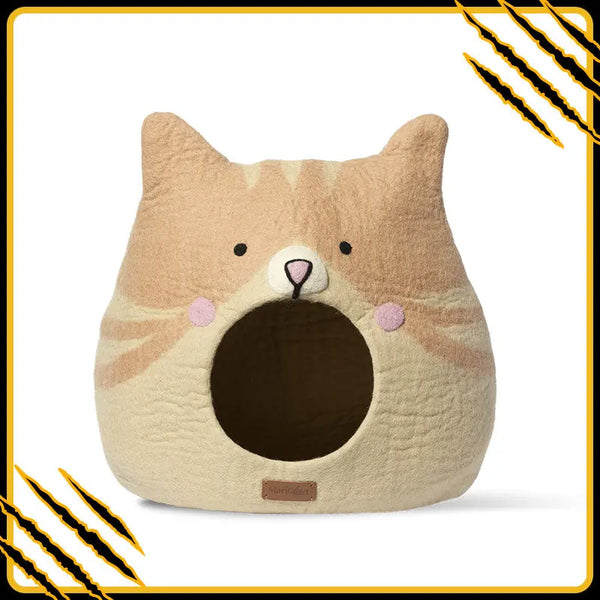
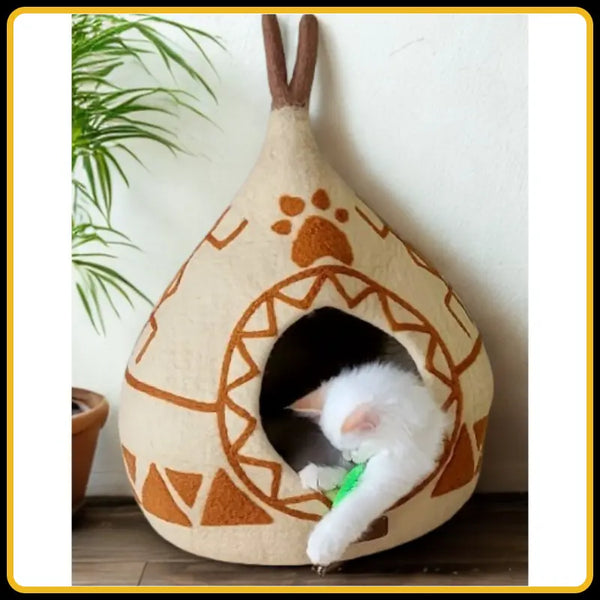
The Cat Cave: The Cocooning Space
The cat cave perfectly replicates the environment felines seek in the wild. Its enveloping shape offers:
- A reassuring darkness that promotes deep sleep
- Optimal thermal insulation, particularly appreciated in winter
- A soothing "mother's womb" effect for stressed cats
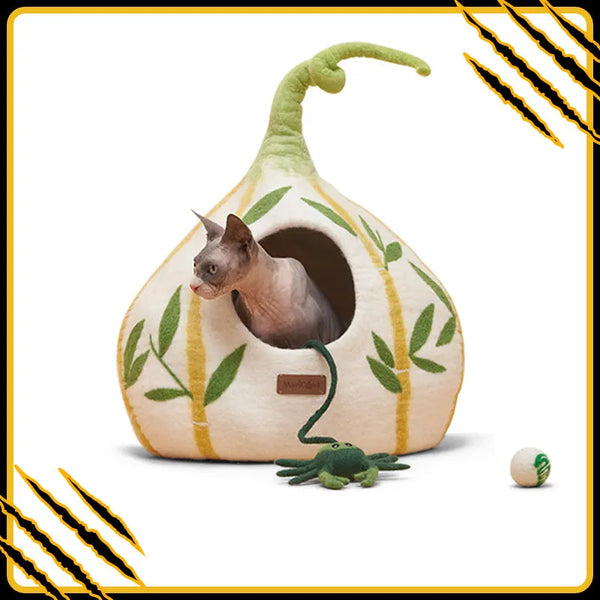
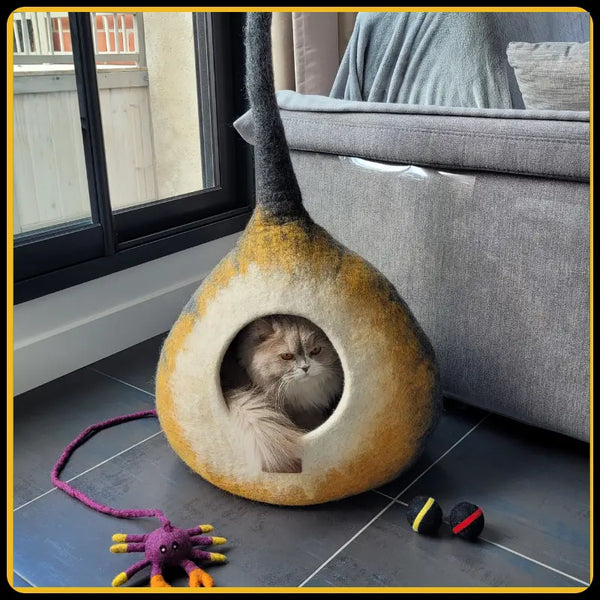
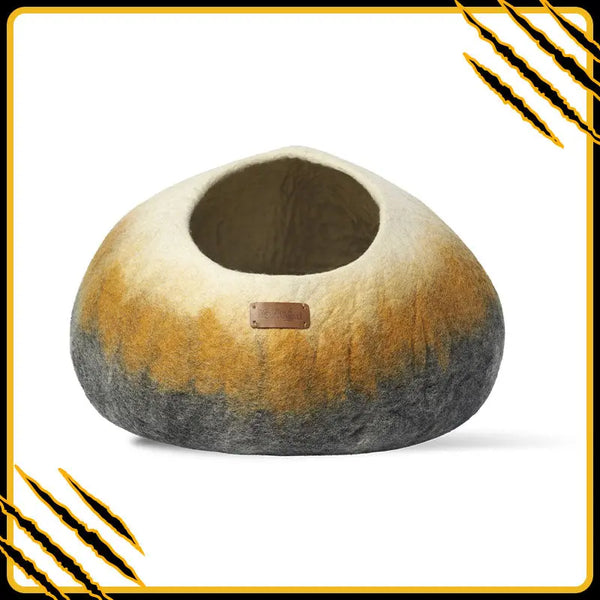
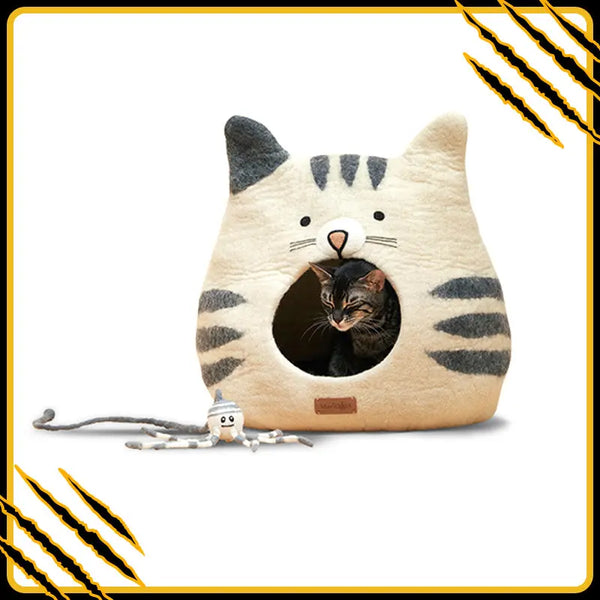
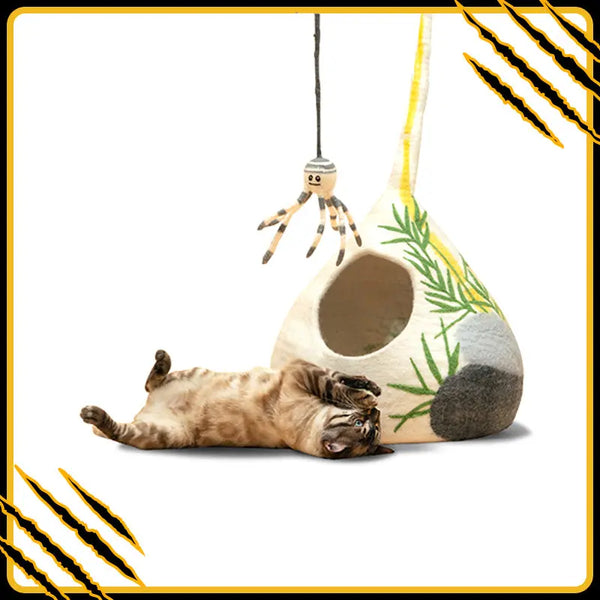
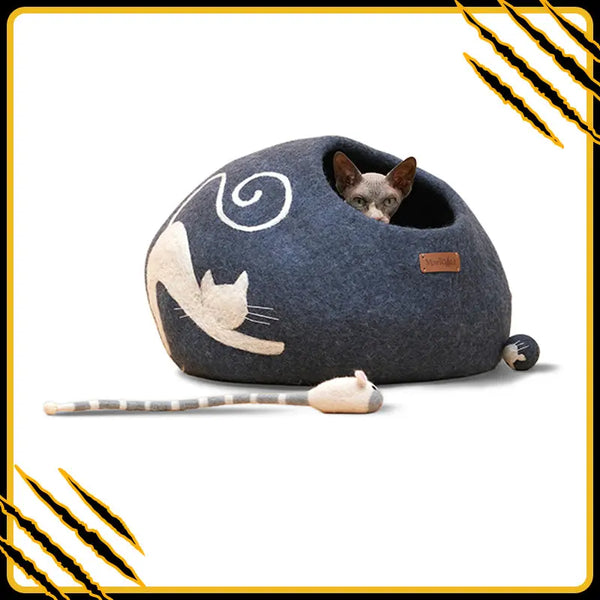
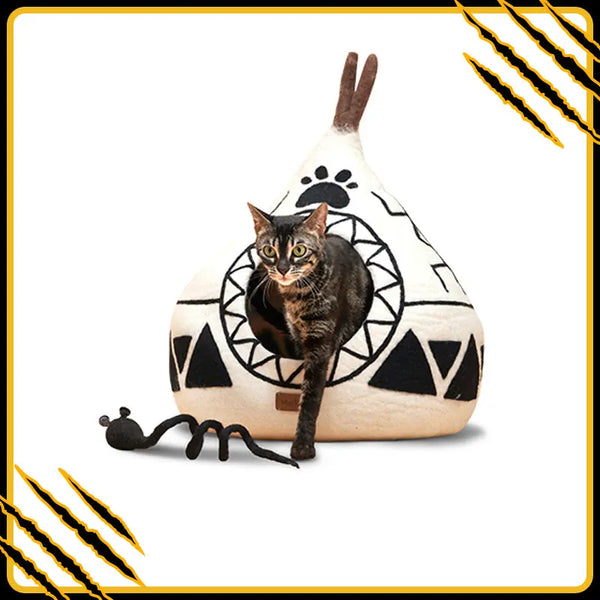
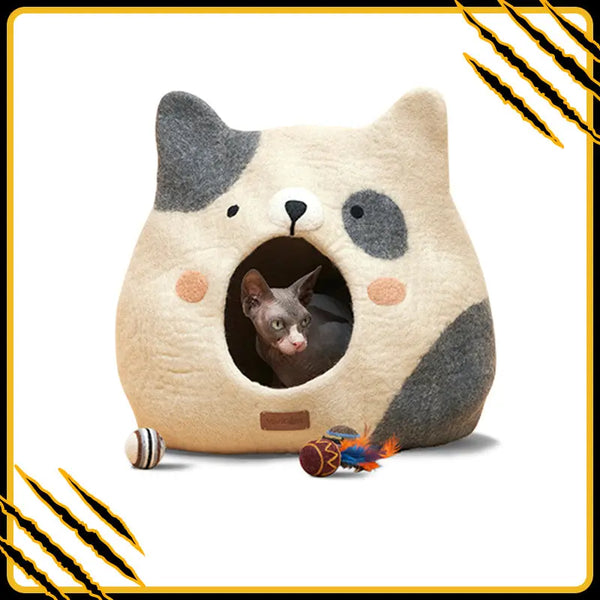
Natural wool felt caves are particularly recommended: breathable, thermoregulating and durable, they represent an ecological investment for many years.
The Cat Bed: Everyday Comfort
More open than a cave, a cat bed is ideal for felines who like to survey their surroundings while resting. Several categories are available:
Beds with raised sides : Perfect for cats who like to rest their heads, they offer a sense of security while maintaining visibility.
Heated cushions : Ideal for senior cats, hairless breeds (like the Sphynx), or during the winter months. Check that the model has a safety thermostat.
Radiator hammocks : Space-saving solutions that utilize the natural heat of the heating system, much appreciated by cats who seek human proximity.
How to Choose the Right Shelter for Your Cat
Size and Morphology
The golden rule: your cat must be able to turn around completely and stretch out in its shelter. For an average-sized cat (4-5 kg), opt for interior dimensions of at least 40 x 40 cm.
Large breeds like the Maine Coon or Ragdoll require extra-large enclosures. Conversely, kittens and miniature breeds will feel safer in spaces proportionate to their size.
Materials and Safety
According to PETA's recommendations, absolutely avoid:
- Fabrics treated with chemicals
- Detachable parts that could be swallowed
- Unstable structures at risk of collapsing
- Materials emitting strong synthetic odors
Opt for Oeko-Tex certifications for textiles and eco-labels for wood.
Strategic Location
The location of the cat shelter directly influences its use:
Areas to prioritize :
- Quiet places, away from busy areas
- Average height (cats enjoy observing from an elevated point)
- Proximity to a natural heat source
- Distance from the litter box (minimum 2 meters)
Areas to avoid :
- Proximity to noisy appliances (washing machine, vacuum cleaner)
- Drafts
- High-traffic areas
- Immediate proximity of the water and food bowls
Outdoor Solutions: The Outdoor Cat Shelter
If your cat has access to the outdoors, an outdoor cat shelter becomes essential, especially for:
Climate Protection
Outdoor shelters must be waterproof, insulated, and raised off the ground to prevent moisture buildup. Models with a pitched roof facilitate rainwater runoff. Extruded polystyrene insulation offers the best performance-to-durability ratio.
Safety and Accessibility
According to International Cat Care recommendations, a good outdoor shelter should include:
- Two outings minimum (to avoid being trapped by other animals)
- A draft-proof hatch
- An insulated floor raised 10-15 cm
- Sturdy, wind-resistant fixings
Cat Shelter Maintenance and Hygiene
Regular Cleaning
A clean cat bed prevents dermatological and parasitic problems. Recommended frequency:
- Washing the covers: weekly at a minimum of 60°C
- Structural aspiration: bi-weekly
- Complete disinfection: monthly with products suitable for felines
Avoid bleach, which is toxic to cats. Opt instead for diluted white vinegar or specific enzymatic cleaners.
Renewal
The average lifespan of a shelter varies depending on the materials used:
- Fabrics and foam: 2-3 years
- Wooden structures: 5-10 years with maintenance
- Felt caves: 3-5 years
- Cardboard box: 6-12 months
Immediately replace any shelter showing significant tears, mold, or deformation.
Combining Multiple Types of Shelters
Ideally, offer your cat at least two different options:
Summer/winter combination : A cozy cat cave for the cold season and an airy cat bed for the summer meets seasonal needs.
Social combination : An open shelter in the living areas to stay close to you, and an isolated cat house for moments of absolute tranquility.
This diversity allows your cat to choose according to its mood, health and environmental conditions, thus respecting its need for autonomy in decision-making.
Budget and Value for Money
Price Ranges
Entry-level (15-30€) : Simple cushions, caves made of basic synthetic fabric. Limited durability but sufficient to test your cat's preferences.
Mid-range (€30-70) : High-quality fabric cat houses, felt caves, orthopedic beds. Best compromise between durability and comfort.
High-end (€70-€200+) : Designer structures in solid wood, thermostatically controlled heated beds, merino wool caves. A lasting investment with extended warranties.
Sustainable Investment
According to a feline behavior study, a cat uses its main shelter for 8-12 hours a day. Over a 15-year lifespan, investing in a quality cat bed (€60) costs only €0.01 per hour of use.
DIY Solutions and Eco-Friendly Alternatives
Create a Shelter House
Building a cat house allows for complete personalization of the shelter:
Simple project : Transform a sturdy cardboard box into a cozy cave using a recycled cushion and a cut-out opening. Cost: less than €10.
Intermediate project : Assemble untreated wooden crates to create a modular structure. Add natural fabric cushions and you have a unique designer shelter.
Advantages : Economical, ecological, customizable and perfectly adapted to the dimensions of your cat.
Frequently Asked Questions
My cat is ignoring its new shelter, what should I do?
Patience and strategy: place treats inside, rub the inside with catnip, or put down an item of clothing with your scent. Some cats need several weeks to acclimate.
How many shelters should I plan for several cats?
The formula recommended by behaviorists: number of cats + 1. In a home with 3 cats, ideally offer 4 different shelters to avoid territorial conflicts.
What temperature is suitable for an outdoor shelter?
A well-insulated outdoor cat shelter should maintain an internal temperature at least 10-15°C higher than the outside temperature in cold weather. Models with energy-efficient heating mats are available for very cold regions.
Conclusion
Providing a suitable cat shelter goes far beyond mere comfort: it addresses a fundamental physiological and psychological need of your feline friend. Whether it's a designer cat house , a cozy cat cave , or an ergonomic cat bed , the key is to choose a refuge that matches your cat's personality and habits.
Observe his behavior: does he prefer closed or open spaces? Does he seek warmth or coolness? Is he anxious or confident? These observations will guide your choice towards the refuge that will become his personal sanctuary, thus contributing to his long-term balance and health.
Sources and Additional Resources :
- American Association of Feline Practitioners (AAFP) - Recommendations on the feline environment
- International Cat Care - Guidelines for cat welfare
- ASPCA (American Society for the Prevention of Cruelty to Animals) - Safety and Toxicity of Materials
- PETA - Quality Standards for Cat Accessories
Suggested Internal Links :
- [Complete Guide to Cat Nutrition]
- [How to create the perfect space for your cat]
- [Essential toys and accessories for indoor cats]
- [Feline health: essential preventative measures]