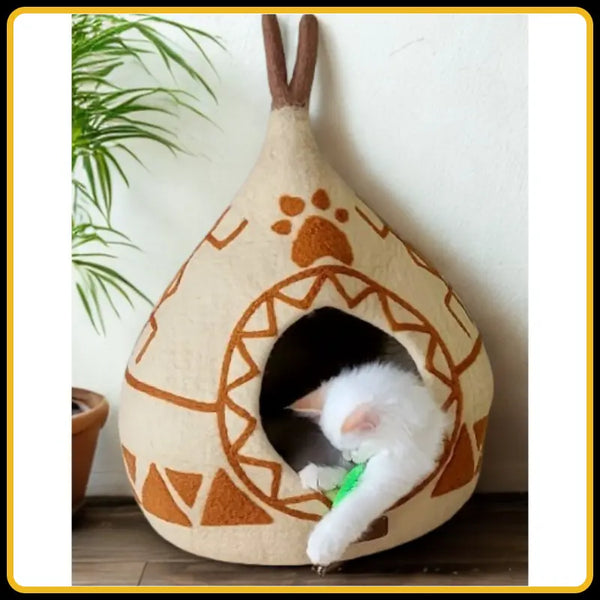
Protecting Stray Cats in Winter: A Complete Guide to Outdoor Cat Shelters
Protecting Stray Cats: Winter is approaching, bringing with it a host of challenges for our feline friends who live outdoors. Whether it's stray cats, neighborhood cats, or your own cat who refuses to come home, a suitable cat shelter can literally save lives during the cold months.
Protecting Stray Cats: Why a Cat Shelter Is Essential in Winter
Sub-zero temperatures, icy winds, and dampness pose real dangers to cats spending the winter outdoors. Without adequate protection, they risk hypothermia, frostbite on their ears and paw pads, and even death in extreme cases.
A well-designed outdoor cat shelter offers:
- Protection against wind, rain and snow
- Thermal insulation that retains the cat's body heat
- A safe space to take refuge in during storms
- A dry area is essential to prevent hypothermia.
Characteristics of a Good Winter Shelter for Cats
Size and Insulation
The most common mistake is building a shelter that's too big. For a cat shelter to be effective in winter, it should be just spacious enough for the cat to turn around. A smaller space allows the cat to warm the surrounding air with its own body heat.
The ideal dimensions for a winter cat house:
- Width and depth: 40 to 50 cm
- Height: 35 to 40 cm
- Opening: 15 cm maximum diameter
Regarding insulation, prioritize:
- Double-walled walls with insulation (polystyrene, wood wool)
- A floor raised at least 10 cm above the ground
- A waterproof and slightly sloping roof
- Straw as bedding (never fabrics that retain moisture)
Strategic Positioning
The location of your outdoor cat house is crucial:
- Position the opening with its back to the prevailing wind.
- Place the shelter against a wall or under an awning for added protection.
- Raise it up to avoid contact with snow and ground moisture
- Choose a discreet location so the cat feels safe.
DIY Solutions: Building an Inexpensive Cat Shelter
The Ice Shelter (Economical Solution)
A simple polystyrene cooler makes an excellent emergency shelter:
- Take a 40-50 litre cooler
- Cut a 15 cm circular opening on the side
- Line the bottom with fresh straw
- Place a weight on the lid to prevent it from flying away.
- Protect with a waterproof tarpaulin
Cost: approximately €15-20
Plastic Bin Shelter (Robust Solution)
For a more durable outdoor cat house:
- Use two plastic containers of different sizes (one fitting inside the other with a 5cm gap)
- Cut out the entrance on the large tray
- Fill the space between the two bins with insulation or straw.
- Drill small ventilation holes at the top
- Add a waterproof roof
This DIY cat house costs around €30-40 and lasts for several years.
Heated Shelters: When and How to Use Them
For regions with extreme winters (temperatures regularly below -15°C), a heated cat shelter may be necessary.
Secure Heating Options
Self-regulating heating pads : These devices maintain a constant temperature of 38°C (the cat's body temperature) only when the cat is on them. They consume little energy (20-25W) and are safe. Price: €30-50.
Outdoor heating plates : Designed specifically for outdoor shelters, they are weather-resistant and maintain a comfortable ground temperature. Price: €50-80.
Warning : Never use light bulbs, conventional radiators or unsafe heating blankets that present risks of fire or electrocution.
Shelter Maintenance and Upkeep
An outdoor cat shelter requires regular maintenance:
Weekly :
- Check that the entrance is not blocked by snow.
- Check the condition of the litter (it must remain dry)
Bimonthly :
- Change the straw completely
- Clean the inside with a mild product
- Inspect the roof for leaks
Monthly :
- Check the insulation and seal any cracks.
- Ensure that the structure remains stable and secure
Solutions for Multiple Cats
If you are feeding a colony of stray cats, consider:
The covered feeding station : A large shelter (1m x 1m) with multiple entrances where cats can eat under cover. Add individual kennels nearby for resting.
Modular shelters : Several small cat huts placed close together but separated allow cats to choose their space while remaining close.
The heated tunnel : An innovative solution that connects several areas with an insulated and slightly heated passage.
Essential Additional Accessories
To maximize comfort:
- Heated bowls : Prevent water and food from freezing (€25-40)
- Rubber doormat : Placed in front of the entrance so the cat can wipe its paws
- Awning or pergola : Creates a protected buffer zone
- Infrared camera : To monitor shelter usage without disturbing others (optional, €30-60)
Legal and Community Aspects
Before installing a cat shelter on land that does not belong to you:
- Check with your local council about local regulations
- Contact animal protection associations who can advise you
- Inform your neighbors to avoid conflicts
- Join stray cat sterilization programs (TNVR: Trap-Neuter-Vaccinate-Return)
Budget Summary
Here are the different price ranges for equipping one or more cats:
Minimum budget (one cat) : 20-40€
- DIY shelter using a cooler or plastic container
- Straw
- Protective tarpaulin
Average budget (one to two cats) : €80-150
- Commercial or DIY improved insulated cat house
- Heating pad
- Heated bowls and pet food containers
- Straws and accessories
Optimal budget (multiple cats) : €300-500
- Several high-quality shelters or multi-cat stations
- Complete heating system
- Heating and water supply equipment
- Surveillance camera
Signs that a cat is using your shelter
How can you tell if your outdoor cat house is effective?
- Paw prints in the straw
- Compacted straw in the shape of a nest
- Cat hair inside
- The cat is visible nearby at mealtimes.
- The shelter gives off a faint feline scent.
Conclusion: A Life-Saving Gesture
Setting up a cat shelter for the winter is an act of compassion that makes a real difference. Whether you opt for a budget-friendly DIY solution or a sophisticated commercial cat shelter, you're providing a lifeline to vulnerable felines in your neighborhood.
Remember: even the simplest shelter, if it's dry, insulated, and protected from the wind, can mean the difference between life and death on a freezing night. Start small if necessary, but start now—temperatures drop quickly, and cats are counting on us.
Useful resources :
- Local feline protection associations for donations of equipment
- DIY Shelter Building Video Tutorials
- Facebook groups supporting neighborhood cats
- Municipal programs for the management of cat colonies
Have you ever installed a cat shelter in your garden? Share your experience and tips in the comments!