2025 Buyer's Guide: How to Choose the Best Cat Shelter
Cat owners invest an average of €150 to €300 per year in accessories for their feline friends. Among these essential purchases, a cat shelter is a top priority. But with the market overflowing with options, how can you distinguish a quality product from a marketing gimmick? This comprehensive buyer's guide will help you make the right choices.
Essential Criteria Before Any Purchase
Understanding Your Cat's Specific Needs
Before investing in a cat cave , cat bed or cat house , International Cat Care recommends carefully observing your feline's habits for a full week.
Profile of the observant cat : Prefers high places, constantly monitors its surroundings, often sleeps on furniture. Ideal solution: an open cat bed placed high up, a window hammock, or a wall platform.
Profile of a shy cat : Hides under furniture, runs away when visitors arrive, seeks out darkness. Suitable solution: a closed cat cave with a single opening, placed in a quiet, secluded corner.
Profile of a sociable cat : Sleeps near you, follows your movements, meows frequently. Recommended solution: cat bed in main living areas, open shelters allowing visual interaction.
Territorial cat profile : Marks its territory, defends certain areas, reacts poorly to changes. Optimal solution: a structured cat house clearly delineating its inviolable personal space.
According to a behavioral study from the University of Lincoln, 68% of owners buy shelters that are unsuitable for their cat's profile, explaining the low occupancy rate and financial waste.
Evaluate the Available Space
A cat shelter that's the wrong size for your home will create frustration and clutter. Essential preliminary steps:
Studios and small apartments (less than 40m²) : Opt for multifunctional, space-saving shelters. Consider foldable cat caves , cat beds that hang under chairs or tables, and wall-mounted niches integrated into shelves. Avoid bulky structures that take up floor space.
Medium-sized apartments (40-80m²) : Complete freedom of choice. It's possible to install 3-4 different cat houses in separate rooms without visual clutter. Decorative cat houses become integral pieces of furniture.
Large houses (over 80m²) : Provide multiple shelters to prevent the cat from monopolizing a single, remote location. Rule: 1 cat shelter per main living area (living room, office, bedrooms).
The American Association of Feline Practitioners suggests photographing the intended locations before purchase to visualize how the shelter will actually integrate into your decor.
Realistic Budget and Sustainable Investment
The price of a cat shelter varies from €15 (entry-level) to €300+ (high-end design). Understanding this price range helps avoid disappointment and poor investments.
€15-35 range : Basic structures made of synthetic fabrics, reinforced cardboard, or simple plastic. Average lifespan 6-18 months. Suitable for testing the preferences of a newly adopted cat or rapidly growing kittens. Quality varies; always check user reviews.
€35-80 range : Optimal value for money according to Consumer Reports. Decent materials (cotton, high-quality polyester, MDF), stable frames, removable covers. Lifespan 2-4 years. Recommended for most homeowners.
€80-150 range : Premium materials (solid wood, wool felt, organic linen), meticulous finishes, sophisticated designs. Lifespan 4-8 years. A worthwhile investment for stable adult cats or owners with high aesthetic standards.
€150+ range : Designer pieces, luxurious materials, handcrafted. Objects that are as decorative as they are functional. Reserved for those with comfortable budgets who prioritize decorative integration.
Calculate the daily cost of use: a cat cave costing €60 used for 3 years = €0.05/day. This perspective transforms the purchase into a reasonable investment.
Deciphering Materials: Composition and Performance
Textiles and Fabrics: Beyond Marketing
Manufacturers compete with technical jargon. Deciphering the truly important materials:
Natural cotton : Breathable, hypoallergenic, and washable at high temperatures. Ideal for all-season cat beds . Drawbacks: shrinks after washing (consider ordering a larger size), wrinkles easily. GOTS (Global Organic Textile Standard) certification guarantees the absence of harmful chemicals.
Technical polyester : Durable, quick-drying, and anti-mite if treated. Perfect for cat caves that require frequent washing. Look for the "phthalate-free" label (phthalates are endocrine disruptors). Avoid budget polyesters that give off persistent chemical odors.
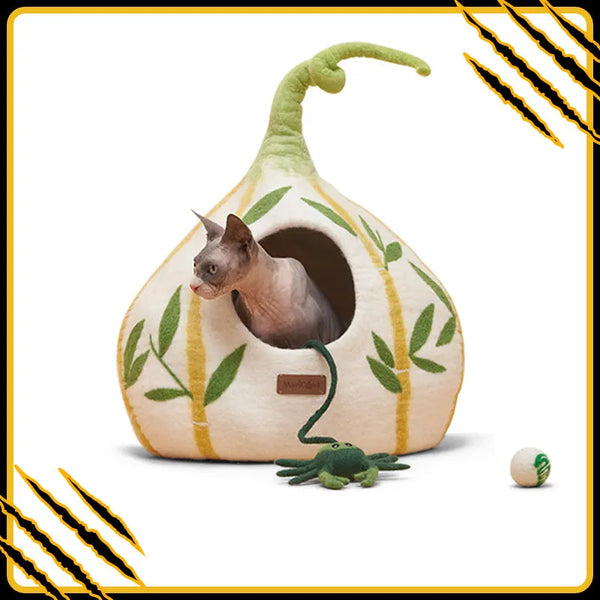
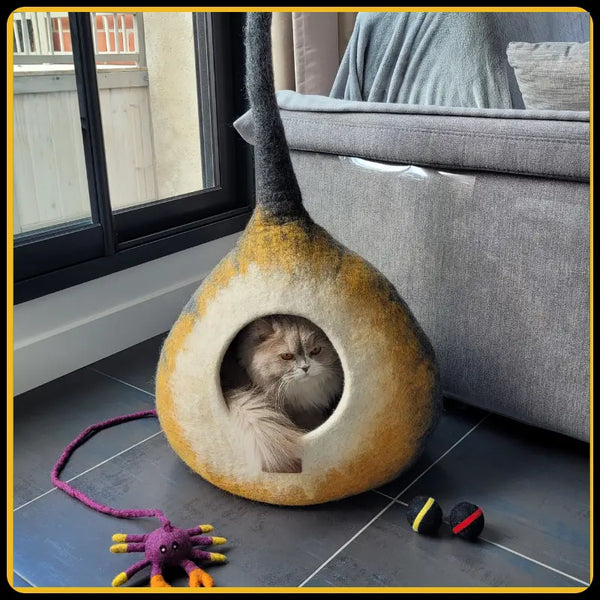
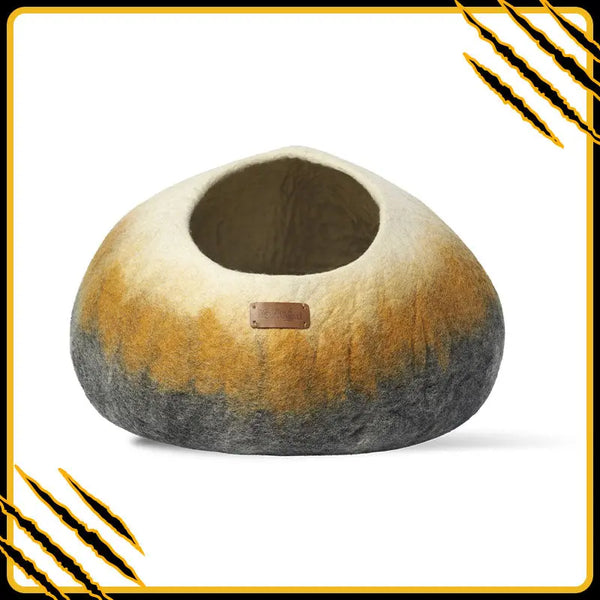
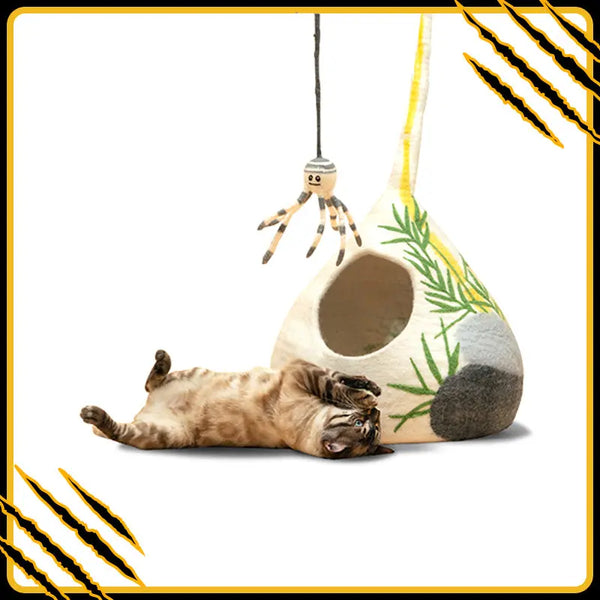
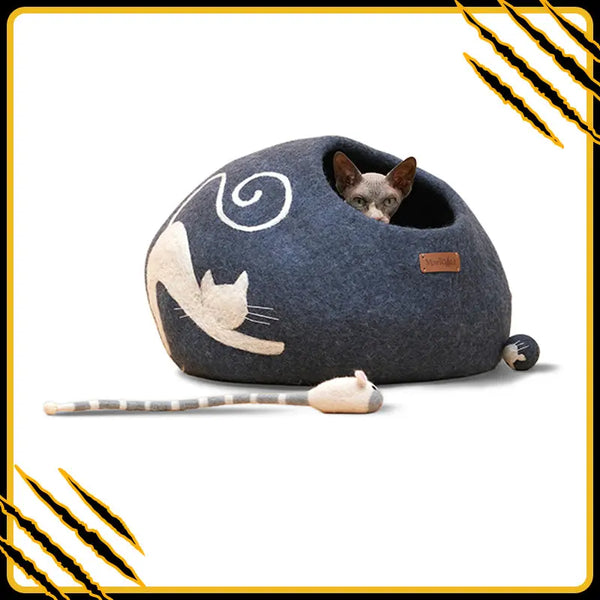
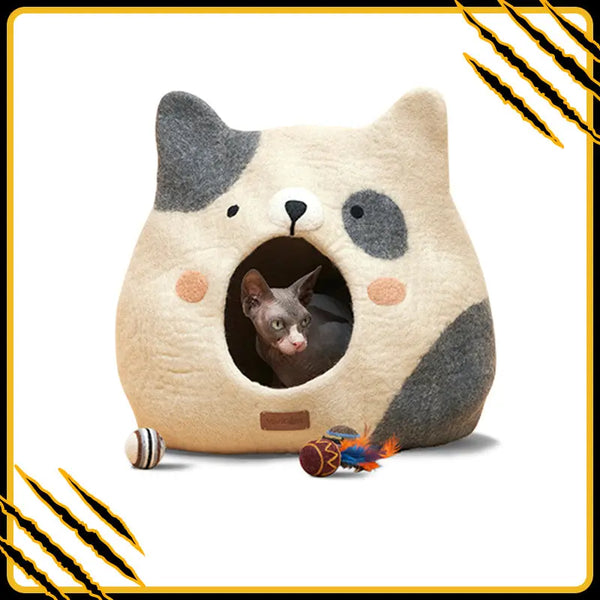
Wool felt : Excellent for winter cat caves . Natural thermoregulation, exceptional insulation, superior durability. High cost (€80-200) but pays for itself over 5-10 years. Opt for merino or alpaca wool, Woolmark certified.
Velvet and plush : Softness is appreciated, but hair accumulates significantly, causing static electricity. Cleaning is difficult. Acceptable for occasional cat beds , not recommended for main shelters.
Linen and hemp : Excellent eco-friendly materials for warmer seasons. Naturally cooling, antibacterial, and durable. The rustic texture may not appeal to cats accustomed to softer bedding. An adjustment period is necessary.
According to the ASPCA (American Society for the Prevention of Cruelty to Animals), absolutely avoid stain-resistant or waterproofing treated materials containing PFAS (perfluoroalkyl substances) which are toxic to felines.
Padding and Foams: Comfort and Health
The padding determines the comfort and longevity of a cat bed . Comparison of technologies:
Standard polyurethane foam : Basic, loses firmness quickly (6-12 months). Acceptable only if density ≥25kg/m³. Below this density, sagging is guaranteed and discomfort for the cat. Approximate price: €20-40.
Memory foam (viscoelastic) : Conforms to the cat's shape, relieving joint pain. Essential for senior cats with arthritis. Optimal density: 40-60 kg/m³. CertiPUR-US certification guarantees the absence of heavy metals and formaldehyde. Price: €50-120.
Hollow silicone fibers : Softness comparable to down, machine washable, hypoallergenic. Retains its loft after repeated washings. Excellent compromise between comfort and care for cat caves . Price: €35-70.
Natural kapok : Rot-proof, thermoregulating, and eco-friendly plant fiber. A vegan alternative to down. Less common but offers excellent performance. Price: €60-100.
Cork granules or spelt balls : Natural fillings that conform to the body's shape. Some cats appreciate their massaging properties. Be aware of the noise they make when moving (may frighten nervous cats). Price: €45-80.
Research from Cornell University demonstrates that inadequate bedding increases nighttime position changes by 40%, degrading the quality of feline sleep.
Structures and Reinforcements: Durable Strength
A cat house must withstand years of heavy use. Structural analysis:
Reinforced cardboard : Economical, ecological, recyclable. Limited lifespan (6-18 months) but allows for frequent replacement. Ideal for cats who love to scratch their shelter. Check for thickness ≥5mm and triple-layered corrugations. Price: €15-40.
MDF (Medium Density Fiberboard) : Bonded fiberboard. Good value for money if E1 class (low formaldehyde emissions). Stable structure, does not warp. Significant weight (advantage: stability). Price: €40-90.
Solid wood : Pine, beech, oak depending on the range. Maximum durability (10+ years), premium aesthetics, substantial weight ensuring stability. Check for the absence of toxic varnishes (look for "water-based varnish" or "linseed oil finish"). Price: €80-250.
Plywood : An interesting alternative to solid wood, lighter and less expensive. Quality varies: opt for multi-ply plywood (minimum 7 plies) with CARB P2 certification (low emissions). Price: €50-120.
Plastic and resin : Easy to clean, lightweight, often translucent (modern aesthetic). Check for BPA-free and food-grade plastic. Some cats are reluctant to use plastic structures (odor, slipperiness, noise). Price: €30-100.
Rattan and wicker : Natural, breathable, attractive, and eco-friendly materials. Beware of potential splinters and fragility under heavy scratching. Best suited for calm cats. Price: €60-150.
The website consumer.org points out that a quality cat house should support 3 times the weight of the cat without deformation (test: 5kg cat = 15kg resistant structure).
Analysis of Popular Models: Advantages and Disadvantages
Cat Caves: A Detailed Comparison
Foam igloo model : Self-supporting hemispherical structure, single circular opening.
- Advantages: Excellent thermal insulation, reassuring cocoon effect, removable cover, affordable price (€30-60)
- Disadvantages: Sagging after 1-2 years, bulky, difficult to position at a height
- Ideal profile: Cats that are sensitive to cold, anxious, medium weight (<6kg)
- Average lifespan: 18-30 months
Suspended felt grotto : Flexible structure hung at a height, ovoid shape.
- Advantages: Space saving, satisfied height preference, Scandinavian aesthetic, durable material (wool)
- Disadvantages: Swaying motion can be frightening, wall mounting required, high price (€80-150)
- Ideal profile: Confident cats who love heights, modern homes
- Average lifespan: 4-7 years
Foldable mesh fabric cave : Flexible frame structure, demountable.
- Advantages: Portable (travel, holidays), optimal summer ventilation, compact storage, attractive price (€25-45)
- Disadvantages: Limited stability, poor insulation, frame can break
- Ideal profile: Traveling cats, seasonal summer use, overheated accommodation
- Average lifespan: 12-24 months
Modular tunnel cave : Several connectable sections forming a route.
- Advantages: Adaptable to available space, mental stimulation, usable by multiple cats, multifunctional play/rest
- Disadvantages: Large size, complex cleaning, high overall cost (€100-200 for a complete kit)
- Ideal profile: Kittens, young active cats, multi-cat households
- Average lifespan: 2-4 years
International Cat Care recommends cat caves with a minimum of two openings to avoid a feeling of being trapped, which is particularly crucial for traumatized or very fearful cats.
Cat Beds: Options and Specifications
Classic raised-edge bed : Oval or rectangular shape, padded edges 10-15cm.
- Advantages: Versatile, easy to care for, affordable price (€20-50), suitable for all body types
- Disadvantages: Basic, poor insulation, limited aesthetics
- Ideal profile: Confident cat, all seasons, tight budget
- Average lifespan: 18-36 months
Orthopedic memory foam bed : High density viscoelastic foam, flat or slightly concave surface.
- Advantages: Joint relief, maximum comfort, recommended by veterinarians, durable (quality foam)
- Disadvantages: High price (€60-120), heavy, slow drying after washing
- Ideal profile: Senior cats (10+ years), cats with arthritis, large breeds (Maine Coon, Ragdoll)
- Average lifespan: 3-6 years
Electric heated bed : Integrated heating element, adjustable thermostat, consumption 15-25W.
- Advantages: Optimal thermal comfort in winter, pain relief, attractive to cats sensitive to the cold
- Disadvantages: Electrical dependency, cable monitoring required, energy cost (€20-30/year), purchase price (€50-100)
- Ideal profile: Hairless cats (Sphynx), senior cats sensitive to the cold, convalescent cats
- Average lifespan: 2-4 years (heating element)
Cooling gel/water bed : Encapsulated gel or water absorbs body heat, without electricity.
- Advantages: Natural freshness (5-7°C below ambient temperature), safe, economical to use, sustainable
- Disadvantages: Limited effectiveness (2-3 hours), risk of punctured claws, unusual sensations (possible rejection), variable price (€30-80)
- Ideal profile: Long-haired cats, heatwave conditions, brachycephalic breeds (Persian, Exotic)
- Average lifespan: 2-5 years depending on the quality of the casing
Radiator hammock : Metal frame attached to the radiator, textile surface.
- Advantages: Maximum space saving, free winter heating, high-altitude observation, low price (€15-35)
- Disadvantages: Seasonal use only, limited weight capacity (max 7kg), variable stability
- Ideal profile: Small breeds, compact homes, cats that love warmth
- Average lifespan: 2-4 years (metal fatigue)
Wicker or rattan basket bed : Natural woven structure, removable cushion.
- Advantages: Rustic aesthetic, breathable natural materials, decent durability, timeless
- Disadvantages: Hair accumulation in braiding, difficult cleaning, risk of splinters, destructive scratching, medium-high price (€40-100)
- Ideal profile: Natural decor, calm, non-destructive cats
- Average lifespan: 3-6 years if not scratched
According to a study by The Ohio State University Indoor Pet Initiative, a cat bed raised 30-50cm off the ground is used 40% more frequently than a floor model, satisfying the cat's surveillance instinct.
Cat Houses: A Complete Typology
Wooden design playhouse : Miniature architectural structure, roof, windows, door.
- Advantages: Premium aesthetics, exceptional durability, decorative object, maximum longevity
- Disadvantages: High price (€100-300), significant weight (immobility), bulky, delicate interior cleaning
- Ideal profile: Well-decorated cat, territorial cat, long-term investment
- Average lifespan: 8-15 years
Multi-level modular house : Several floors with stairs, multiple openings, distinct spaces.
- Advantages: Multiple cats can be used simultaneously, vertical stimulation, versatile use (rest/play), adaptable
- Disadvantages: Very bulky, expensive (€120-250), complex to clean, stability needs to be checked
- Ideal profile: Multi-cat households, large spaces, active young cats
- Average lifespan: 4-8 years
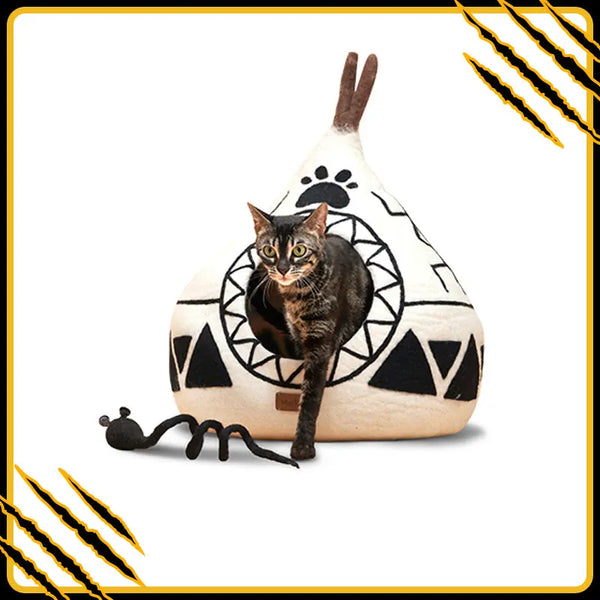
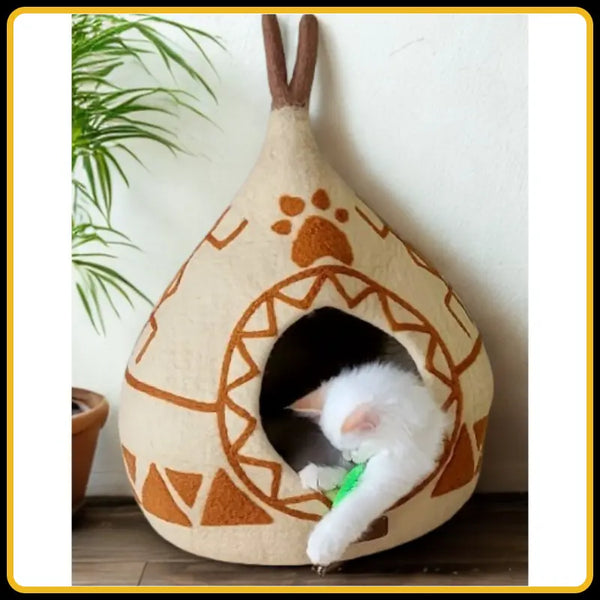
Tipi house or textile tent : Conical structure on a wooden or metal frame, removable canvas.
- Advantages: Trendy bohemian aesthetic, demountable, lightweight, reasonable price (€40-80)
- Disadvantages: Average stability, frame can break, limited thermal insulation
- Ideal profile: Modern decor, small/medium cats (<5kg), temperate indoor use
- Average lifespan: 2-3 years
Minimalist cube house : Simple geometric shape (cube, hexagon), rigid structure, clean design.
- Advantages: Contemporary decor integration, stackable (multiple cubes), easy to clean, stable
- Disadvantages: Basic comfort (requires an additional cushion), cold if the material is not insulating, variable price (€50-150)
- Ideal profile: Modern, minimalist interiors, well-balanced adult cats
- Average lifespan: 5-10 years (quality wood/MDF)
Furniture hideaway : Refuge integrated into functional furniture (coffee table, bench, bookcase).
- Advantages: Maximum space saving, total discretion, dual function, sturdy furniture
- Disadvantages: Very high price (€200-600), immobility (furniture), difficult adaptation if rejected
- Ideal profile: Small apartments, aesthetics a priority, comprehensive furniture investment
- Average lifespan: 10-20 years (furniture quality)
Insulated outdoor igloo house : Waterproof structure for garden/balcony, reinforced thermal insulation.
- Advantages: Complete weather protection, multi-season use, outdoor safety
- Disadvantages: Regular maintenance required (sealing), fixed installation, significant price (€80-200)
- Ideal profile: Outdoor cats, harsh climates, gardens
- Average lifespan: 5-10 years depending on climate exposure
PETA recommends that any cat house have at least two openings to allow escape in case of perceived danger (another animal, child).
Safety Criteria: Standards and Verifications
Certifications and Labels to Look For
Oeko-Tex Standard 100 : Certifies textiles free from harmful substances (heavy metals, pesticides, allergenic dyes, phthalates). Essential for cat beds in prolonged direct contact with the feline. Verifiable on the oeko-tex.com website using the certification number.
CertiPUR-US / CertiPUR : Guarantees foams free of heavy metals, PBDEs (toxic flame retardants), formaldehyde, and low VOC emissions. Crucial for cat cave foams and orthopedic beds.
FSC (Forest Stewardship Council) : Wood sourced from sustainably managed forests. Suitable for solid wood cat houses . An environmentally friendly label that also guarantees traceability (wood untreated with hazardous chemicals).
GOTS (Global Organic Textile Standard) : Certified organic cotton, GMO-free, pesticide-free, ecologically processed. Premium but justified for cats with skin sensitivities or allergies.
EN71 toy certification : European standard for children's toys, applicable to cat accessories. Guarantees the absence of small detachable parts, strong seams, and non-toxic dyes. Look for the "EN71 compliant" label on cat shelters with decorative elements.
The absence of certification does not automatically imply danger, but their presence offers additional assurance according to the Consumer Product Safety Commission.
Security Vigilance Points
Structural stability : An unstable cat shelter generates stress and risks injury. Simple test before buying: push the empty structure vigorously. If it tips over easily, avoid it. Minimum recommended weight: 2 kg for structures up to 50 cm high, 4 kg for structures above that height.
Absence of hazardous elements :
- Buttons, beads, and pompoms are glued on (risk of ingestion if they come loose).
- Zippers accessible from the inside (risk of pinching claws, pads)
- Visible staples or metal wires
- Sharp angles on rigid structures
- Toxic glues that emit odors (formaldehyde in particular)
Adequate ventilation : A cat cave must allow for air renewal. A single opening is acceptable if its diameter is ≥25cm. Below this size, there is a risk of CO2 buildup and overheating. Airtight caves are dangerous.
Fixing strength : For suspended or wall-mounted shelters, check the maximum load capacity. Minimum safety factor 3: for a 5kg cat, the fixing must support 15kg. Opt for through-wall fixings (metal expansion anchors) rather than adhesive ones.
Cables and electricity : For heated cat beds , follow this checklist:
- Reinforced cable with textile sheath (bite protection)
- Sufficient length without tension (minimum 2m)
- Thermostat with automatic overheat shut-off
- NF/CE electrical certification visible
- Manufacturer's warranty ≥2 years (indicator of quality confidence)
Product Recalls and Safety Monitoring
Check product recall databases regularly:
- RappelConso (France): official government website for reporting dangerous products
- SaferProducts.gov (USA): CPSC (Consumer Product Safety Commission) database
- Safety Gate (Europe): rapid alert system for dangerous products
Several cat shelters were subject to recalls between 2020 and 2024 for risks of suffocation (inadequate openings), poisoning (non-compliant foams) or fire (defective heated beds).
Subscribe to pet product alerts for real-time information. A safe purchase requires ongoing vigilance, not just at the time of purchase.
Where to Buy: Distribution Channels Analyzed
Physical Pet Shops: Tactile Advantages
Key features :
- Physical examination of the product (materials, finishes, stability)
- Evaluation of actual dimensions versus perception in photos
- Expert sales advice (varies depending on the store)
- Immediate availability, no delivery waiting
- Easy returns/exchanges if close to home
Weak points :
- Limited choice versus online offer
- Prices are generally higher (physical distribution margins)
- Less frequent promotions
- High-end ranges rarely available
Recommended retailers : Opt for specialist chains (Animalis, Jardiland pet store, Maxi Zoo) over general supermarkets. Their expertise and product quality are generally superior.
Online Marketplaces: Maximum Diversity
Amazon :
- Advantages: Huge selection, instant price comparison, abundant customer reviews, fast Prime delivery
- Disadvantages: Highly variable quality, many no-name products, frequently misleading photos, exaggerated descriptions
- Tip: Filter for 3-star reviews (more honest), check the seller (prioritize "Sold and shipped by Amazon"), and be wary of abnormally low prices.
Zooplus, Wanimo, Zoomalia :
- Advantages: Pet specialists, quality selection, detailed descriptions, competent customer service, regular promotions
- Disadvantages: Fewer choices compared to Amazon, sometimes slower delivery (3-5 days), less flexible returns
- Tip: Take advantage of loyalty offers and group orders (free shipping generally applies to orders over €39-49).
Specialized Sites and Craftsmen
Etsy, handmade, local artisans :
- Advantages: Unique, customizable products, superior manufacturing quality, premium materials, support for craftsmanship, exclusive designs
- Disadvantages: High prices (€100-300 for handcrafted cat houses ), long manufacturing times (2-6 weeks), complicated returns
- Tip: Check store reviews, ask for photos of similar products, confirm exact dimensions, and clarify the return policy before ordering.
Direct brand websites : Some manufacturers sell directly (Trixie, Karlie, Zolux official websites).
- Advantages: Guaranteed authenticity, complete product ranges, exclusive promotions, optimal manufacturer's warranty
- Disadvantages: Impossible to easily compare with competitors, prices rarely the lowest
- Tip: Use this to identify exact models, then compare prices on marketplaces.
Second-hand and pre-owned goods: Opportunities and risks
Leboncoin, Vinted, Facebook Marketplace :
- Advantages: Prices reduced by 2-4, environmentally friendly (reuse), sometimes high-end products are accessible
- Disadvantages: Variable wear and tear, questionable hygiene, no guarantee, risk of scams
- Tip: Acceptable only for rigid structures that can be completely cleaned (wooden/plastic cat houses ). Absolutely avoid second-hand fabrics/foams (parasites, bacteria, and ingrained odors that are impossible to remove).
According to a study by UFC-Que Choisir, 30% of second-hand cat shelters contain invisible but harmful biological contamination (mites, fleas, fungi).
Optimizing Your Purchase: Timing and Strategies
Favorable Promotional Periods
Black Friday / Cyber Monday (November) : Real discounts of 20-50% at online pet stores and Amazon. Best time of year for significant purchases (high-end cat houses , multi-packs).
Seasonal sales (January, July) : Clearance of previous collections, particularly interesting for cat caves and designer cat beds . Discounts 15-40%.
Holidays and marketing events : Valentine's Day, Mother's Day, and Christmas generate targeted promotions like "treat your cat to some comfort." Discounts are modest (10-20%) but promo codes are frequent.
Anniversary events for retailers : Zooplus and Wanimo organize annual anniversary sales with significant discounts for loyalty members.
End of season : September (late summer) for discounted cooling cat beds , March (late winter) for warm cat caves . Savings of 25-40%, but selection is limited to remaining stock.
Loyalty Programs and Cashback
Pet store loyalty cards : Accumulate points for discounts. Variable profitability: Animalis (5% of purchase value), Jardiland (4%), Maxi Zoo (irregular program). Worthwhile if you regularly buy food and accessories.
Online cashback : iGraal, Poulpeo, and eBuyClub offer 2-8% cashback on purchases made on partner sites (Zooplus, Amazon, etc.). It's free and can be combined with other promotions. For example, on a €150 cat house purchase, you could get €6-12 back. Negligible on a one-off purchase, but worthwhile annually.
Referrals : Many sites offer referral discounts (10-20€). Ask your friends and family before your first order or use online community codes (forums and chat rooms).
Bundles and Lots: Economies of Scale
Complete "new cat" kits : Some sellers offer 3-5 piece kits ( cat cave + cat bed + cushion + toys) with a 15-25% discount compared to buying individual items. Suitable for recent adoptions, allowing you to try out different shelters.
Multi-cat group purchase : If you have several cats, negotiate quantity discounts with retailers or on professional websites. Savings of 10-20% are possible starting with 3 identical cat shelters .
End-of-line clearance sales : Specialized websites (ventes-privees.com pet supplies section, veepee) are selling off unsold stock at 40-60% below retail price. Selection is random, but there are exceptional opportunities.
Personalization and Customization: When to Invest More
Cats with Special Needs
Giant breeds : Maine Coon (up to 12kg), Ragdoll, and Savannah require oversized cat shelters that are rarely available as standard sizes. Solution: custom-made, handcrafted shelters or modifications to existing structures (removing panels, enlarging openings).
Average cost of a custom-made XXL cat house : €200-400 versus €100-150 for a standard one. Justified by the lack of suitable alternatives.
Cats with disabilities : Reduced mobility, blindness, and deafness require specific adaptations. Cat beds with extra-high sides (for safety), soft access ramps, tactile guiding textures, and widened openings.
Specialist craftsmen offering equipment for disabled animals provide customized solutions ranging from €150 to €500. Contact them through specialized associations or veterinary behaviorists.
Allergies and sensitivities : Dermatitis and textile allergies necessitate certified hypoallergenic materials. Cat caves are made of 100% organic cotton, CertiPUR foam, and untreated raw wood frames. This adds 30-50% to the cost but is essential for healthy skin.
Premium Decorative Integration
Owners who prioritize interior aesthetics invest in signature designer cat houses :
Designer creations : Brands Meyou Paris, LyCS Design, Tuft & Paw offer sculptural retreats priced from €300-€800. Functional works of art, impeccable finishes, noble materials (solid oak, merino wool, vegetable-tanned leather).
Custom-built furniture : Carpenters integrate cat shelters into libraries, staircases, and attics. Total budget €500-€2000 depending on complexity, but maximum added value and space optimization.
Handmade orders : Etsy is full of creators offering complete customization (size, colors, patterns, embroidered cat's name). Expect to pay €100-300 depending on the complexity, with a delivery time of 3-8 weeks.
The investment is justified if the cat shelter becomes a decorative element in its own right, avoiding aesthetic compromises often seen with industrial products.
Assessing Quality: Purchasing Checklist
Before Ordering Online
✓ Precise dimensions verified : Measure the intended space and compare to the nearest centimeter. E-commerce photos distort perceptions. A cat shelter that appears compact can take up 80cm of floor space.
✓ Product weight analyzed : Ridiculously low weight (e.g., a 60cm cat house advertised as 2kg) indicates low-quality materials and a fragile structure. Expect disappointment in quality.
✓ Filtered customer reviews : Read 3-star reviews (balanced), ignore recent 5-star reviews that are suspicious (sometimes fake), and note the frequency of mentioned defects. If 30% report a "persistent chemical odor," eliminate the product.
✓ Customer photos reviewed : Favor products with numerous real user photos over marketing visuals. Show the product after use, with a real cat in it (size proportions).
✓ Confirmed return policy : Check the return period (legal minimum 14 days, but some offer 30-60 days), conditions (who pays for return shipping?), and refund procedures. Keep packaging intact until final confirmation.
✓ Seller and brand search : Google the brand name + "reviews" or "recall". Reputable manufacturers have an established web presence and verifiable history. Brands that don't appear in search results are risky.
Upon Receipt of the Product
✓ Immediate olfactory inspection : Strong chemical odor = low-quality materials or toxic treatment. Ventilate for 48-72 hours. If the odor persists, return the item (harmful to cats).
✓ Checking seams and seams : Run your finger along the seams. Loose thread, slack stitches, uneven hems = poor workmanship. Pull firmly: a good seam will resist movement.
✓ Physical stability test : Push and shake the empty cat shelter vigorously. Instability = danger. A high-quality structure remains stable under stress.
✓ Finish inspection : Loose threads, wood splinters, plastic burrs, and poorly glued components indicate poor quality control. They predict premature wear.
✓ Descriptive accuracy : Compare actual dimensions (meters), materials (feel), and advertised colors. Significant discrepancies justify return (misleading business practice).
✓ Documentation and warranty : A reputable product includes instructions, any certificates, and customer service contact information. Absence of this indicates an unreliable manufacturer.
If even one major criterion is unsatisfactory, exercise your right of withdrawal. Compromising on cat shelter quality = financial waste + feline health risk.
Maintenance and Sustainability: Maximizing Investment
Cleaning adapted according to materials
Removable covers : Machine wash at 40-60°C depending on fabric composition. Use a hypoallergenic, fragrance-free detergent (such as "sensitive skin" detergents or Marseille soap). A gentle spin cycle preserves elasticity. Air drying is preferable (tumble drying damages fibers). Frequency: every 2-3 weeks.
Foams and padding : Vacuum twice a week to remove hair and dust between full washes. Avoid soaking standard foams (deformation). Memory foams: spot clean only (water + mild soap), dry for 24-48 hours.
Wooden structures : Dust weekly with a slightly damp microfiber cloth. For occasional stain removal, use diluted white vinegar (1/4) or black soap. Annually renovate with linseed oil (nourishes, protects, and revives). Avoid wax products (toxic if licked).
Plastic structures : Wash with soapy water, rinse thoroughly, dry immediately (prevents limescale buildup). Disinfect quarterly with pure white vinegar (soak for 30 minutes or spray).
Rattan and wicker : Vacuum gently with a blower, brush gently with a soft brush. Lightly dampen occasionally (prevents drying and cracking). Avoid soaking (deformation guaranteed).
Repairs and Lifespan Extension
Seams that are coming undone : Hand repair with strong thread (waxed cotton thread is ideal). Backstitch for strength. Reinforce stress areas (corners, openings).
For sagging foam : Add an extra layer of foam (fabric stores sell remnants at very low prices). To reinflate synthetic fibers: tumble dry on a cold cycle for 10 minutes.
Unstable structures : Add base weights (sandbags, flat stones) or secure with extra-strong adhesive Velcro.
Persistent odors : Sprinkle baking soda (leave for 2 hours, vacuum), or expose to direct sunlight for 4-6 hours (natural UV deodorizers).
Localized scratches : Repositioning in a safe place (scratched side against wall), heat-seal fabric patch if textile, light sanding then oiling if wood.
A well-maintained cat shelter far exceeds its advertised lifespan. Attentive owners report that cat caves of decent quality last 6-8 years, while those with standard, neglected use last 3-4 years.
Common Mistakes to Avoid
Impulsive, Unthinking Purchases
Mistake : Falling for an ultra-design cat house without checking if it's suitable for a feline's profile or compatible with the living space.
Consequence : Shelter ignored by the cat, clutter, frustration, waste of €80-200.
Solution : Observe cat for 7-10 days, note preferences (height, opening/closing, materials), measure available locations BEFORE product search.
Underestimating the Importance of Materials
Mistake : Prioritizing only aesthetics and price, neglecting actual composition (low-end synthetic textiles, polluting foams, treated wood).
Consequence : Harmful odors repelling the cat, skin allergies, rapid degradation (3-6 months), health risks.
Solution : Always check the detailed composition, certifications, and reviews mentioning material quality. Investing an extra €20-30 in healthy materials will save you money in the long run.
Neglecting Interior Dimensions
Error : Relying on external dimensions without considering wall thickness. Cat cave advertised as 50x40cm but with 5cm walls = actual space 40x30cm.
Consequence : Cat (especially medium/large breeds) unable to stretch comfortably, refuses to use the shelter.
Solution : Contact seller for precise internal dimensions OR subtract 10-12cm from the advertised external dimensions (estimated thickness of double walls).
Multiply Identical Shelters
Mistake : Buying 3-4 identical cat beds thinking you need variety.
As a result , the cat uses only one shelter and ignores the others. Humans vary, and so do cats: they need a diversity of shelter types (open/closed, warm/cool, high/low).
Solution : Diversify types and locations. 1 cat cave + 1 cat bed + 1 cat house is better than 3 identical beds.
Ignore Chat Signals
Mistake : Insisting that the cat use the purchased shelter, trying to force it, getting upset about rejection.
Consequence : Reinforcement of aversion (refuge associated with stress), degraded human-cat relationship, pointless obstinacy.
Solution : Accept feline preferences. If rejected after 3-4 weeks of trying different things (treats, catnip, toys, scent transfer), acknowledge the inadequacy. Offer alternatives or sell the item secondhand. The cat always decides.
Wait for an emergency to buy
Mistake : Waiting for a harsh winter to seek a warm shelter, a heatwave for a cool shelter, or a behavioral problem (stress) to set up shelters.
Consequence : Rushed purchase, limited choice (stock shortages during peak periods), high prices (high demand), possible unsuitability.
Solution : Anticipation. Buy cat caves for winter in June-July (sales), cool shelters in autumn-winter (promotions), establish shelters BEFORE problems (prevention versus correction).
The Future of Cat Shelters: 2025 Trends
Connected Technologies
Smart cat beds with integrated sensors are emerging:
- Sleep monitoring (duration, quality, movements)
- Daily weight measurement (health variation detection)
- Automatic temperature regulation according to metabolism
- Smartphone alerts for abnormal behavior
Pioneering models (Petcube, Sure Petcare) currently cost €200-400. More affordable options are expected in 2026-2027, with prices dropping to around €100-150.
Relevance debated: marketing gimmick versus genuine health benefit? Behavioral veterinarians remain skeptical but acknowledge the potential for early detection of pathologies.
Eco-friendly and Sustainable Materials
Environmental awareness is driving manufacturers towards:
- Mycelium (fungus) cat caves : 100% biodegradable, rapid cultivation, exceptional insulating properties. Startups My-Part and Ecovative are developing prototypes.
- Recycled textiles: Plastic bottles transformed into fleece fibers, fishing nets converted into durable nylon. Brands like Beco Pets and West Paw offer complete product lines.
- Next-generation cardboard structures: Treatments providing water resistance and increased durability (3-5 years versus the current 6-12 months). Cat Amazing, a pioneering company.
- Systematized FSC-certified wood: Consumer pressure forces widespread sustainable certification even for entry-level products.
Prices currently 20-40% higher compared to conventional equivalents, but the gap narrows with mass production.
Architectural Designs
Cat houses are moving away from conventional shapes:
- Organic structures inspired by nature (oval shapes, fluid curves, imitation of rocky caves)
- Invisible technological integration (integrated smartphone chargers, platforms, soft ambient LED lighting)
- Extreme modularity (multiple reconfigurations depending on cat's mood, season, moves)
- Japanese minimalism (wabi-sabi aesthetics, raw materials, maximum simplicity)
Collaborations with renowned designers (Philippe Starck created a line of feline accessories, Zaha Hadid Architects designs futuristic cat houses ).
The luxury segment is exploding: owners are willing to invest €500-€2000 in a refuge that becomes a design sculpture.
Mass Customization
3D printing and laser cutting technologies now make it possible to:
- Custom-made cat shelters , exact dimensions, no extra cost, handcrafted
- Customization of patterns, engravings, and colors via online configurators
- Local production reduces carbon footprint and deliveries
Platforms like ShapePets and CustomCatFurniture offer services for €100-€300 (versus €300-€600 for traditional craftsmanship). A democratization of personalization is expected.
Testimonials and Feedback
"I tried 8 shelters before finding THE right one."
Sophie, owner of an 8kg Maine Coon: "Initial mistake: buying according to MY aesthetic tastes without considering Simba's morphology. Standard caves were too small, beds sagged under his weight. After research, I invested in a custom-made XXL cat house (€280 Etsy). Transformation: Simba spends 12 hours a day in it. Lesson: quality and suitability > initial savings."
"The basic shelter is popular versus the design is ignored"
Marc, who lives in an apartment with 3 cats: "I bought a designer cat cave for €150 (aesthetically stunning) and kept the old IKEA cat bed for €15 'temporarily'. Six months later, the result: all 3 cats exclusively use the basic bed, and the luxurious cave is used for storing remote controls. Financially frustrating, but a lesson learned: the cat always decides. Now I buy based on their observed preferences, not my decorating whims."
"Healthcare investment pays off"
Valérie, a 14-year-old cat with arthritis: "On the advice of my vet, I bought an orthopedic memory foam cat bed for €95. My cat would howl when she got up (in pain). One week after installation: her meowing was reduced by two-thirds, and her mobility improved. I saved on anti-inflammatories (€40/month). The bed paid for itself in three months. Now, after two years of use, it's still perfect. The best cat purchase I've ever made."
"A scam narrowly avoided"
Thomas: "I fell for a cat house on Instagram with a 'flash sale €79 instead of €250'. Thorough research revealed: unknown brand, website created 2 months prior, no legal notices, 5-star reviews all written on the same day. Dropshipping of an Alibaba product costing €12, resold for €79. I avoided it thanks to my checks. Since then, I only buy from established sellers with a verifiable history."
Conclusion: Investing Wisely for Feline Happiness
Choosing the right cat shelter goes beyond a simple accessory purchase. It's about providing a safe haven where your feline friend will spend nearly 70% of their time. An ergonomic cat bed improves sleep quality and joint health. A reassuring cat cave reduces stress and anxiety. A territorial cat house reinforces a sense of security and belonging.
The initial investment, whether €30 or €300, is measured by daily use over years. A shelter costing €80 used intensively for four years represents €0.05 per day of comfort. This perspective changes the perception of cost.
The keys to a successful purchase: careful observation of feline behavior, qualitative research of materials, scrupulous verification of dimensions and safety, diversification of shelter types, anticipation of seasonal and evolving needs.
With the market evolving rapidly (technologies, eco-friendly materials, personalization), stay informed through online feline communities, specialized blogs, and veterinary recommendations. An informed owner makes optimal choices for their pet's well-being and their own budget.
Your cat deserves a shelter that respects its instincts, protects its health, and enriches its daily life. With the knowledge gained from this guide, you now have all the tools you need to make informed choices and offer your feline the comfort it truly deserves.