
A cardboard box, an old sweater, a few boards: you don't need much to make a homemade cat shelter. Whether you want to give your indoor cat a hiding place or protect a stray cat from the cold this winter, here are 6 easy-to-make designs, from the simplest to the most elaborate, with the materials, steps, and safety rules to follow.
Before you start: safety rules
Materials to use
- thick, clean cardboard, without ink or adhesive tape on the inside;
- raw or untreated plywood for the inside, wood treated with a non-toxic product for the outside;
- natural fabrics (cotton, wool) washed without scented detergent;
- polystyrene and thick plastic bins for outdoor shelters;
- straw (and not hay) as outdoor bedding.
Materials to avoid
- solvent-based glues and paints, varnishes, products that give off strong odors;
- protruding staples, nails, or screws;
- strings, ribbons, pom-poms, buttons, and small pieces that can be swallowed;
- blankets and fabric cushions in an outdoor shelter: they absorb moisture and cool the cat down.
The right dimensions
A shelter that is too large loses its cocoon effect and does not retain heat well. For an average-sized cat, allow about 40 to 50 cm on each side and 35 to 40 cm in height, with an opening of about 15 cm. The shelter must be stable: it must not tip over or collapse when the cat enters.
Indoor shelters
1. The cardboard cave (beginner, a few euros)
Materials: a thick cardboard box measuring about 40 x 40 x 40 cm, a box cutter, paper tape, an old sweater, or a cushion.
- Close the box and reinforce the edges with tape, on the outside only.
- Cut a round opening measuring 15 to 18 cm on one side, a few centimeters above the floor.
- Sand or cover the edges of the opening with paper tape to prevent sharp edges.
- Place a cushion or an old sweater that carries your scent at the bottom.
Tip: cut a second, smaller opening as an emergency exit, which anxious cats will appreciate. Cardboard wears out quickly: it is a temporary solution that should be replaced when it becomes misshapen.
2. The recycled sweater cushion bed (beginner)
Materials: an old sweater, a square cushion, thread, and a needle.
- Slide the cushion into the sweater at chest level.
- Sew the collar and the bottom of the sweater to enclose the cushion.
- Stuff the sleeves with fabric, then sew them around the cushion to form a rim.
The result: a small, soft, washable basket with a rim, perfect for a cat that likes to rest its head on the edge.
3. The fabric teepee (intermediate)
Materials: 4 wooden poles measuring about 70 cm, natural rope, a sheet or thick cotton fabric, a cushion.
- Drill a hole in each pole 10 cm from the top and tie them together with the rope.
- Spread them apart to form a square base measuring about 50 cm.
- Drape the fabric around three sides and secure it by sewing or tying it to the poles. Leave the fourth side open.
- Place a cushion at the bottom.
Check the stability: the teepee must not tip over if the cat leans on it. To find out if a teepee is right for your cat, read our article on the teepee for cats.
4. The wooden house (intermediate)
Materials: untreated plywood panels measuring 10 to 12 mm, wood screws, solvent-free wood glue, sandpaper, a saw.
- Cut a base measuring 45 x 40 cm, two sides measuring 40 x 35 cm, a back and a front measuring 45 x 35 cm, and two roof panels.
- Cut a round opening measuring about 18 cm in the front.
- Assemble with glue and screws, making sure no points protrude on the inside.
- Carefully sand all the edges.
- Attach the roof, ideally with a hinge so you can clean the inside.
If you paint the outside, use non-toxic water-based paint and let it dry and air out for several days before offering it to the cat.
Outdoor shelters for winter
For a stray cat or a cat that lives outdoors, the shelter must above all be dry, insulated, and protected from the wind.
5. The cooler shelter (beginner, emergency solution)
- Take a 40- to 50-liter polystyrene cooler.
- Cut an opening measuring about 15 cm on the side, a few centimeters from the bottom.
- Fill the bottom with straw.
- Weight down the lid and protect the whole thing with a tarp.
6. The double plastic bin shelter (intermediate, durable)
- Take two storage bins that fit together with about 5 cm of space between them.
- Fill the bottom and sides of the space between the two bins with polystyrene sheets.
- Cut the entrance through both bins, aligning them.
- Fill with straw and place the lids on top.
Place the shelter on an elevated surface, with the opening facing away from the wind, against a wall or under an awning. All our tips for installing and maintaining it are in our guide to outdoor cat shelters in winter.
Getting the cat to use the shelter
- Place it in a quiet area, out of the way, away from the litter box and food bowls.
- Place a piece of fabric inside that carries its scent or yours, along with a few treats.
- Never force it inside: give it a few days, sometimes several weeks.
- Do not move it constantly.
Maintaining a homemade shelter
- Regularly check the stability, edges, and fastenings.
- Wash the fabrics and cushions regularly with unscented detergent.
- Replace the cardboard as soon as it becomes misshapen or dirty.
- Outdoors, replace the straw every two to four weeks, or as soon as it becomes damp.
Mistakes to avoid
- Building it too large: the cat will not feel enclosed, and the shelter will not retain heat.
- Leaving dangerous pieces: staples, nails, threads, small decorations.
- Using scented products: paint, varnish, or solvent-based glue can repel the cat or intoxicate it.
- Placing the shelter poorly: a perfect shelter in a hallway or next to the washing machine will not be used.
Make it or buy it?
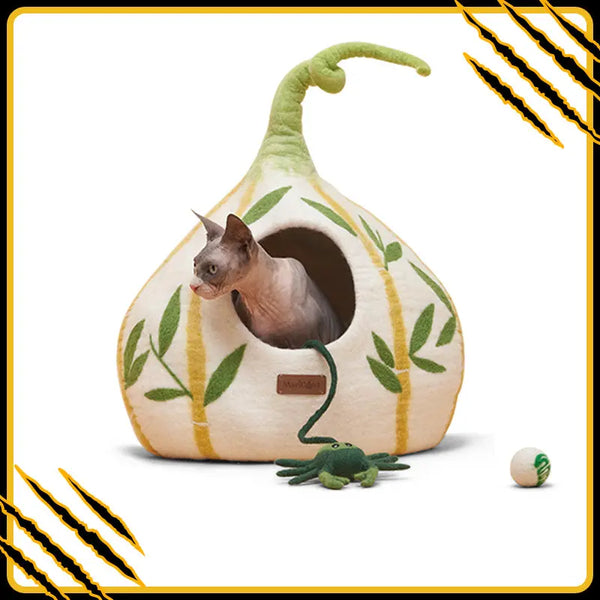
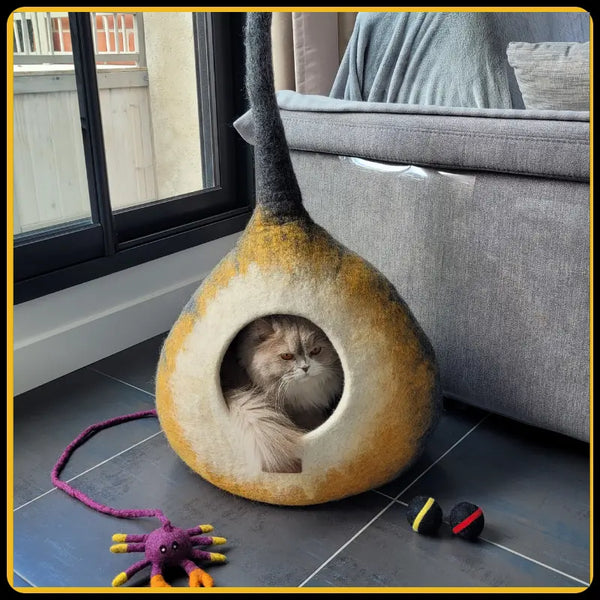
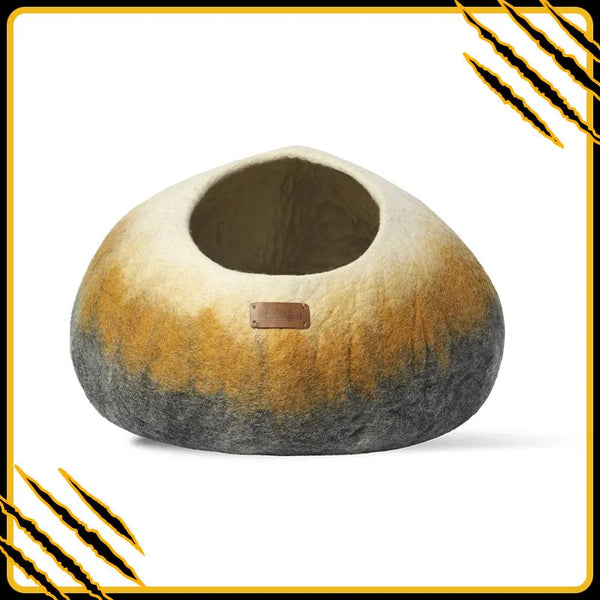
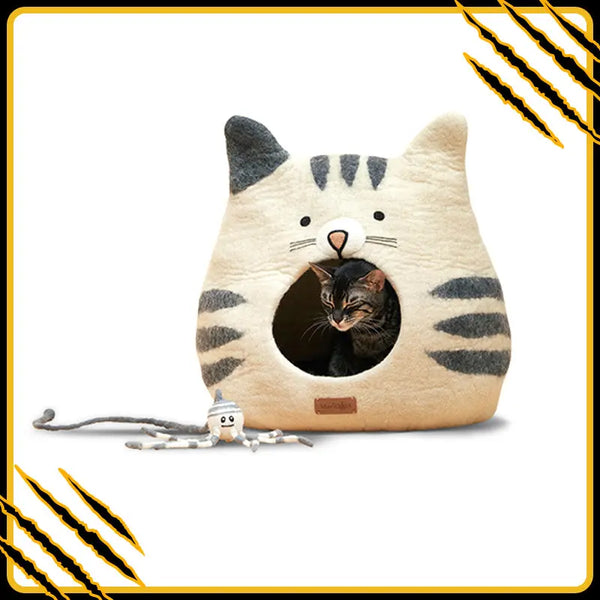
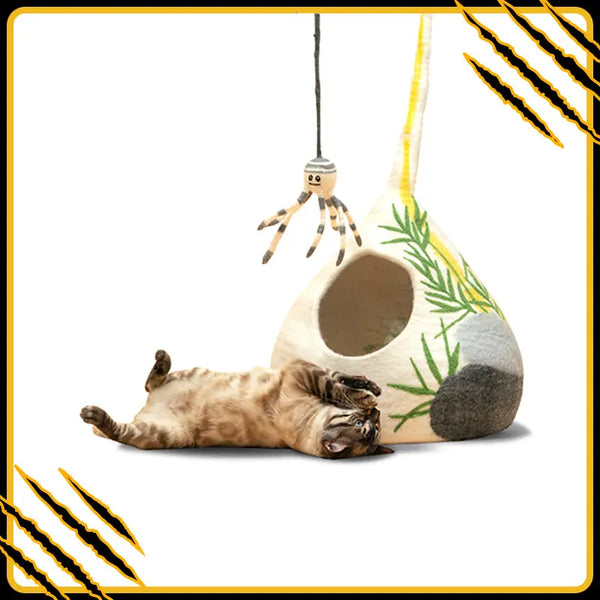
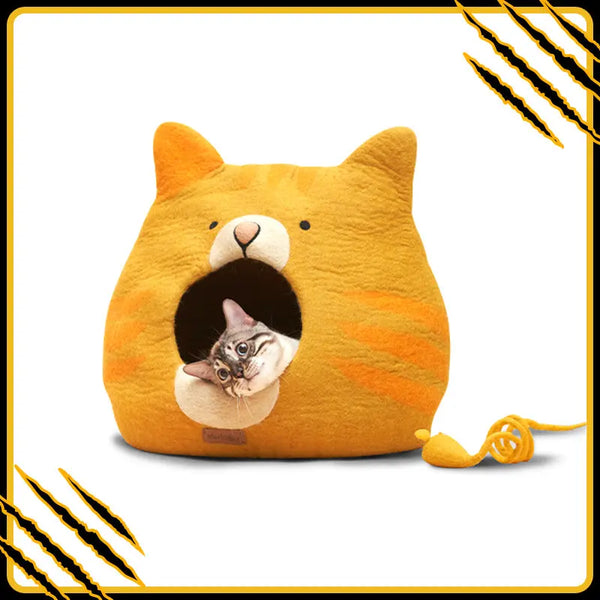
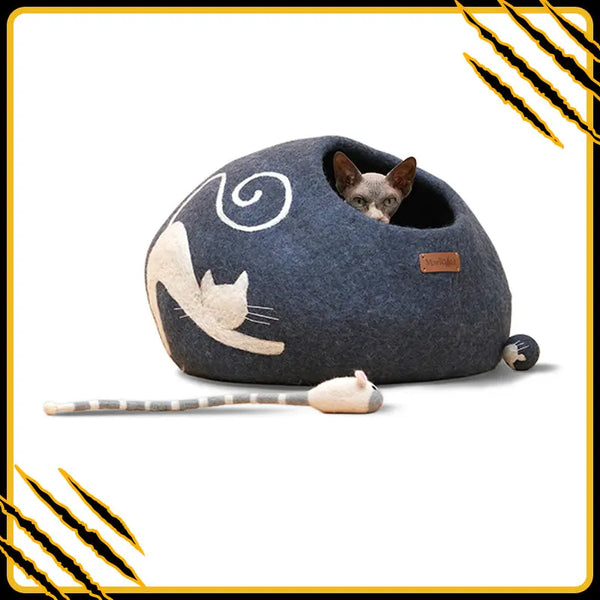
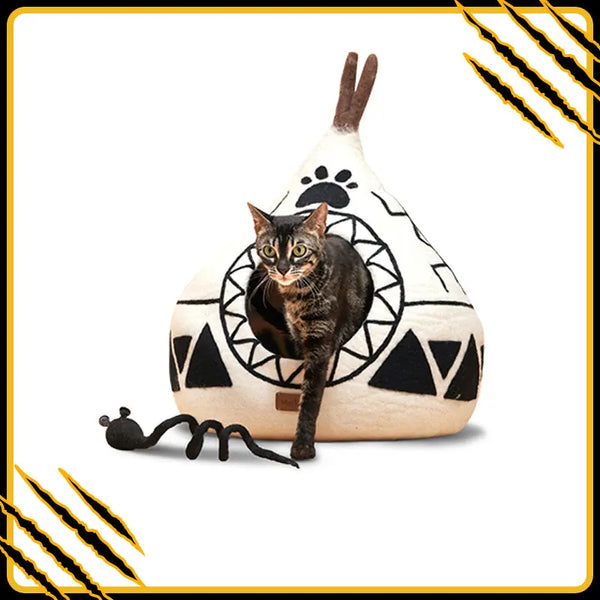
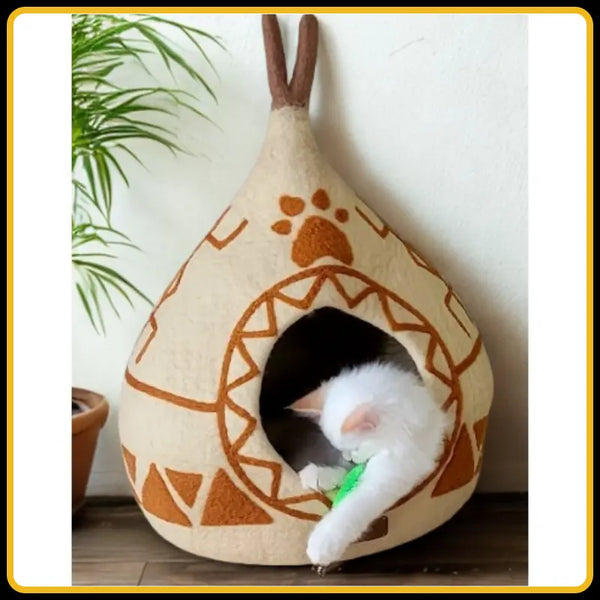
A homemade shelter is economical, customizable, and perfect for a temporary solution or for outdoors. For an indoor refuge that lasts for years, a felted wool cave offers heat, durability, and a lifespan that are difficult to match with cardboard or fabric. To compare the options, read our cat shelter buying guide and discover our felted wool caves.
Frequently asked questions
What is the easiest cat shelter to make?
The cardboard cave for indoors, and the cooler shelter filled with straw for outdoors: a few minutes and a few euros are all it takes.
What size should a homemade cat shelter be?
About 40 to 50 cm on each side and 35 to 40 cm high, with an opening of about 15 cm. If it is larger, it will not retain heat well.
What should go in an outdoor cat shelter?
Straw, never a blanket: fabric absorbs moisture and cools the cat down, while straw stays dry.
Can you paint a wooden shelter?
Yes, on the outside only, with non-toxic water-based paint. Let it dry and air out for several days before installing it.
In summary
To make a cat shelter, keep three rules in mind: a small size, safe materials, and a good location. Indoors, a cardboard box or a recycled sweater is enough to start; outdoors, a cooler or an insulated double bin filled with straw can help a cat get through the winter.