Integrating a Cat Cave into Your Interior
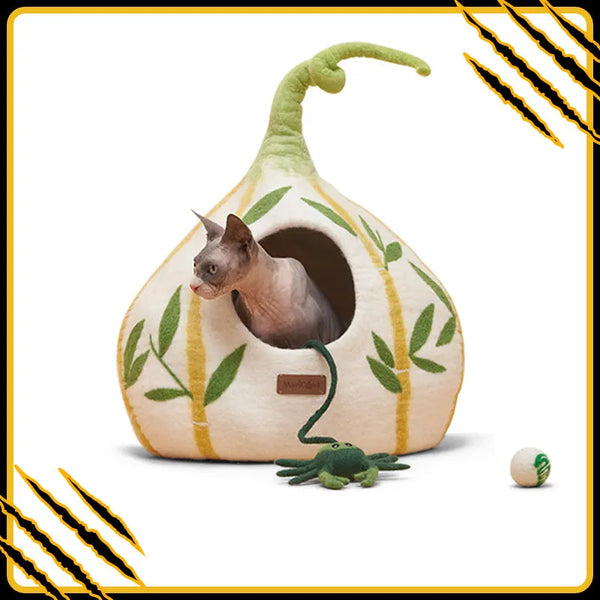
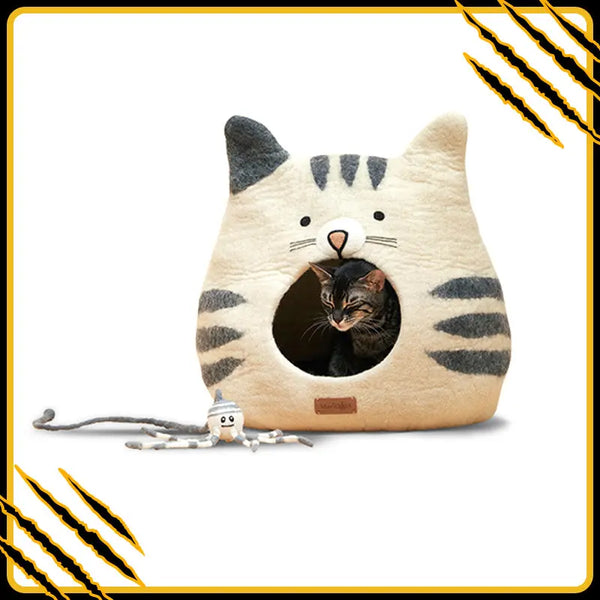
You've decided to get your feline friend a cat cave , but you're wondering how to seamlessly integrate it into your décor without turning your living room into a pet shop? This crucial question stumps many aesthetically conscious owners. Yet, a cat shelter is essential for your companion's well-being, and there are dozens of solutions to reconcile decorative style with feline comfort. In this comprehensive guide, discover how to choose a cat cave that enhances your interior, the strategic placements that work in every type of space, stylist tips for camouflaging or, conversely, highlighting your cat's hideaway , and the best furniture-cave combinations according to your decorating style. Whether you prefer clean Scandinavian, warm bohemian, or minimalist contemporary, transform your cat house into a design element in its own right rather than an accessory that clashes with your decor.
Why Integrating a Cat Cave Aesthetically Is Important
The Psychological Impact of Decorative Coherence
Living in a harmonious home isn't just about appearances: it's scientifically proven that a visually coherent space reduces stress, improves mood, and increases feelings of well-being. When a pet accessory clashes horribly with your decor, it creates a daily visual dissonance that subconsciously affects your mental comfort.
The responsible owner's dilemma : You absolutely want to provide your feline friend with a cat cave (a legitimate and necessary need), but you refuse to sacrifice the aesthetics of your carefully decorated home. This isn't superficiality; it's about wanting to reconcile two legitimate needs: your cat's well-being AND your own environmental well-being.
The good news : The two goals are perfectly compatible! The cat accessory industry has evolved considerably in recent years. Gone are the days when all cat shelters were made of garish candy-pink or electric-blue plastic. Today, designers and artisans create cat hideaways that are true decorative pieces.
Acceptance and Use: The Virtuous Circle
Here is a fascinating phenomenon observed by interior designers specializing in "pet-friendly" design: the more harmoniously the cat cave is integrated into your decor, the more likely you are to position it optimally, and therefore the more your cat will use it.
The vicious cycle of the poorly integrated cave :
- You're buying a functional but ugly cave
- You hide it in a secluded/inconspicuous corner to minimize the aesthetic impact
- This location is often unsuitable from a behavioral standpoint (too isolated, too noisy, etc.)
- The cat uses it little or not at all
- You conclude "my cat doesn't like caves" when the problem is actually the location.
- The cave becomes a useless clutter that you end up storing in the attic.
The virtuous circle of the well-integrated cave :
- You are investing in an aesthetically pleasing cat cave
- You proudly install it in a visible and decorative location.
- This location is generally also behaviorally suitable (quiet living areas, well positioned)
- The cat quickly adopted it and uses it daily.
- You are visually satisfied AND your cat is happy
- You're even considering adding more designer cat shelters
Choose a Cat Cave According to Your Decorating Style
Scandinavian Style: Simplicity and Functionality
Style characteristics : Clean lines, neutral colors (white, grey, beige, black), natural materials (light wood, wool), functional minimalism, maximum brightness.
Suitable cat caves :
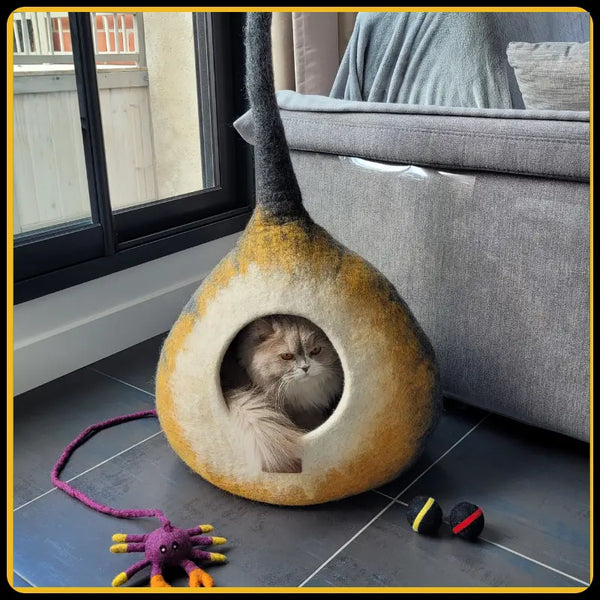
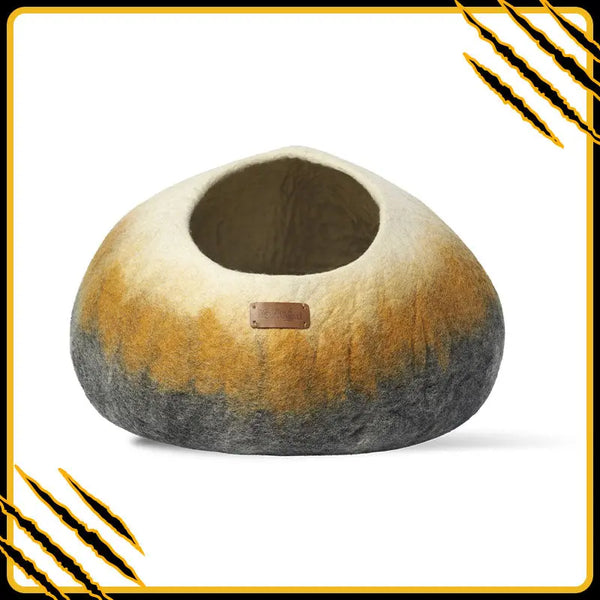
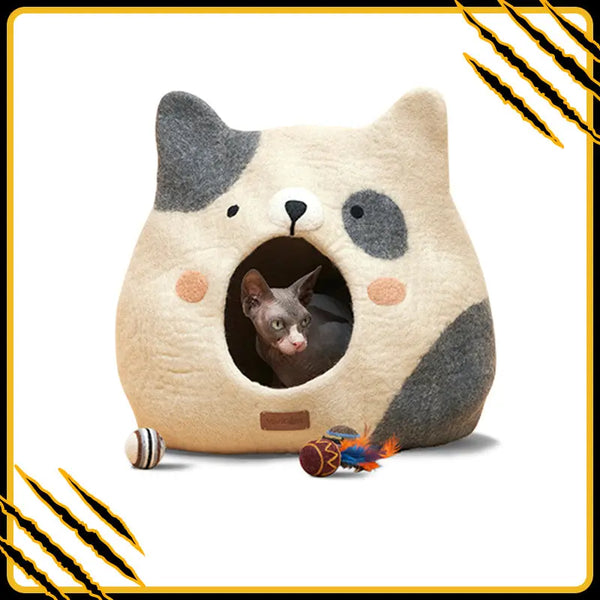
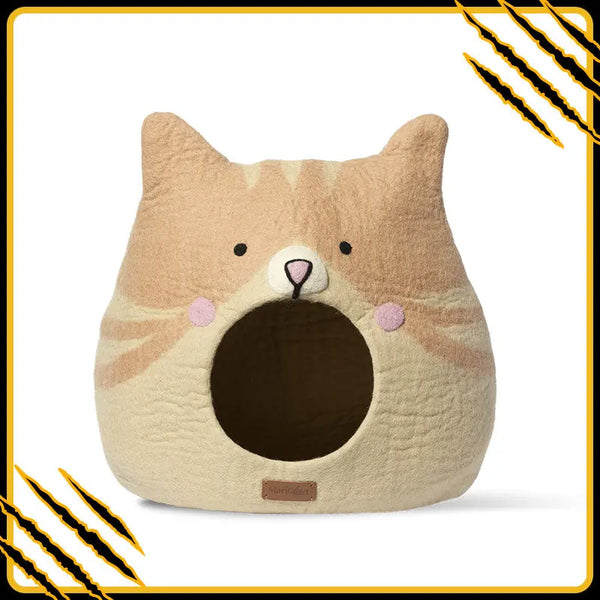
The cave in grey or beige felted wool (100-180€)
- Natural texture perfect for Scandinavian aesthetics
- A soft, organic shape that contrasts elegantly with the geometric lines of the furniture.
- Neutral colors (light grey, anthracite grey, beige, off-white) that blend in discreetly
- Craftsmanship is valued in Nordic philosophy
Optimal Scandinavian positioning :
- On a light wood wall shelf (vertical integration)
- In a reading corner with a natural fabric armchair and a throw
- Near a window (Scandinavians maximize light, and so does the cat!)
- On a multi-functional storage bench
Winning decor combinations : ✅ Gray cat cave + off-white throw + black and white geometric cushion ✅ Natural wicker basket + beige cave + green plant (ficus, monstera) ✅ Light wood shelf + anthracite cave + white candle
Absolutely avoid : ❌ Bright or flashy colors (destroy the neutral harmony) ❌ Glossy plastic (too artificial for a natural aesthetic) ❌ Busy or whimsical patterns (incompatible with Scandinavian simplicity)
Bohemian Style: Warmth and Eclecticism
Characteristics of the style : Layering of textures, warm colors (terracotta, mustard, sage green), ethnic craftsmanship, abundant plants, harmonious accumulation.
Suitable cat caves :
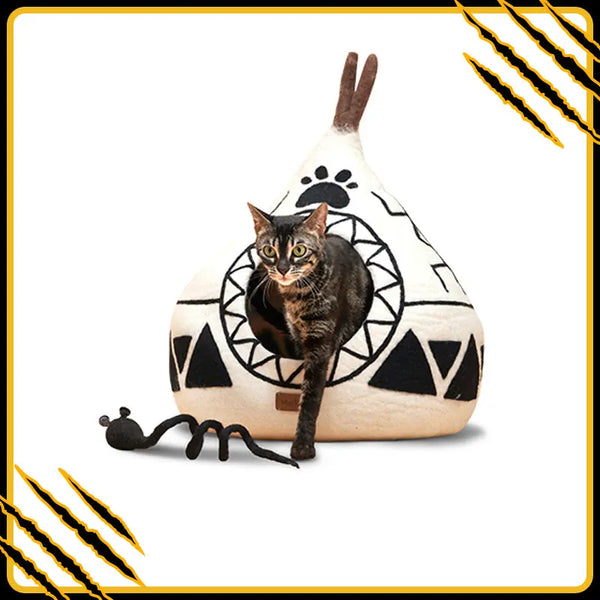
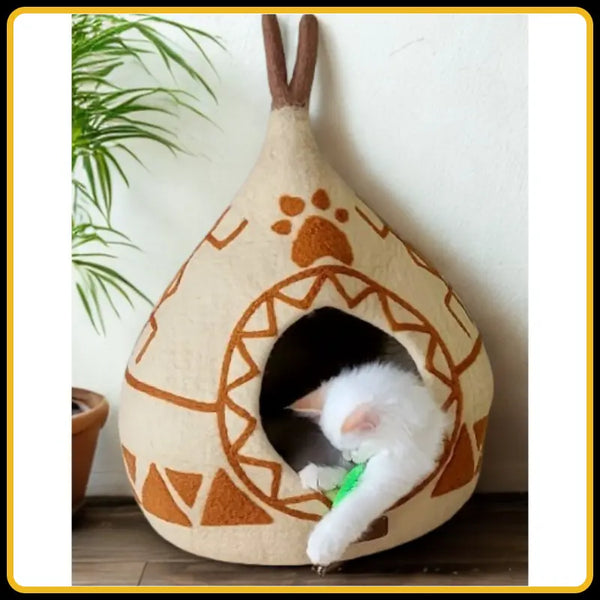
The colorful wool cave or the ethnic tipi (80-150€)
- Rich earthy colors (terracotta, camel, mustard, olive green)
- Handcrafted details (pom-poms, embroidery, fringes) are highlighted in a bohemian aesthetic.
- Cat teepee made of canvas printed with ethnic patterns
- natural woven rattan/wicker basket
Optimal bohemian positioning :
- On the floor, among piles of cushions and overlapping rugs
- In an "urban jungle" corner surrounded by plants
- On a vintage piece of furniture (antique trunk, repurposed coffee table)
- Integrated into a filled open library
Winning decor combinations : ✅ Terracotta cat cave + macrame wall hanging + Berber cushion ✅ Ethnic teepee + kilim rug + hanging plants ✅ Wicker basket + handwoven throw + handcrafted pottery
Absolutely avoid : ❌ Overly smooth/industrial finishes (lacking artisanal soul) ❌ Cold colors (steel grey, glacier blue) incompatible with bohemian warmth ❌ Overly geometric/modern designs (break the organic feel)
Contemporary Style: Design and Sophistication
Style characteristics : Clean lines, black/white contrast, noble materials (marble, brass, velvet), statement design, asymmetrical balance.
Suitable cat caves :
The architectural grotto or the designer niche (€120-300)
- Bold geometric shapes (hexagon, geodesic dome)
- Premium materials (thick black wool, lacquered wood, dense felt)
- Minimalist design with luxurious details (gold legs, contrasting stitching)
- Cat house sculptural structure
Optimal contemporary positioning :
- As a centerpiece on a designer console table
- Integration into a custom-designed library (dedicated niche)
- Deliberate contrast: black cave on a white lacquered sideboard
- Staged with indirect lighting (LED spotlights)
Winning decor combinations : ✅ Black cat cave + brass vase + art book coffee table ✅ Architectural niche + gold frame + eucalyptus bouquet ✅ Geometric house + emerald velvet cushion + sculpted candle
Absolutely avoid : ❌ Overly rustic "handmade" looks (incompatible with sophistication) ❌ Soft pastel colors (lacking visual impact) ❌ Visibly low-quality materials (shiny polyester, cheap plastic)
Industrial Style: Raw and Authentic
Style characteristics : Raw materials (metal, untreated wood, concrete), dark palette, exposed piping, vintage industrial furniture, high ceilings.
Suitable cat caves :
The niche in raw wood or metal structure (70-150€)
- Cat house made from reclaimed wood/pallets
- Tubular metal frame with leather cushion
- Aged metal basket with a rusty effect
- Cave made of anthracite grey/black felt
Optimal industrial positioning :
- On a metal shelf
factory-style wall art
- Integrated into a repurposed vintage workshop cabinet
- On the ground near an exposed brick wall
- Under a metal staircase (using raw spaces)
Winning decor combinations : ✅ Raw wood cat house + articulated metal lamp + cactus ✅ Metal structure + aged leather cushion + vintage poster ✅ Anthracite cave + wooden crate + Edison bulb
Absolutely avoid : ❌ Pastel or bright colors (break the raw atmosphere) ❌ Overly polished/smooth finishes (lack of industrial character) ❌ Delicate materials (lace, satin) incompatible with robustness
Classic/Traditional Style: Timeless Elegance
Characteristics of the style : Moldings, woodwork, fine fabrics, symmetry, muted colors (taupe, greige, blue-grey), quality furniture.
Suitable cat caves :
The elegant cat house or the refined basket (€90-200)
- Cat house with a furniture-like appearance (fine wood finish)
- White or natural wicker basket, tightly woven
- Cave made of velvet or wool in a muted color (taupe, greige, blue-grey)
- Discreet design without eccentricity
Optimal classic positioning :
- Integrated into a wooden bookcase (lower level)
- On a small table in the living room corner
- In an existing wall niche (as an architectural element)
- Coordination with furniture (same wood finish as furniture)
Winning décor combinations : ✅ Fine wood cat house + porcelain vase + leather-bound book ✅ White wicker basket + dried hydrangea + ivory candle ✅ Taupe velvet cave + antique gilt frame + cashmere throw
Absolutely avoid : ❌ Overly modern/avant-garde designs (stylistic break) ❌ Fluorescent or highly saturated colors (vulgar in a classic context) ❌ Overtly synthetic materials (plastic, shiny polyester)
Where to Position Your Cat Cave: Strategic Locations
The Salon: Heart of Life and Integration Challenges
Advantages of a cave in the living room :
- Chat remains connected to family life (reduces feelings of isolation)
- A generally temperate and comfortable area
- Facilitated supervision (health, behavior)
- Several positioning options
Challenges to overcome :
- High-traffic area (requires protected location)
- Potential noise (television, conversations)
- Maximum visibility (aesthetics crucial)
Optimal integration solutions :
Option 1: Integration into a bookcase/shelf
- Dedicate a section of your bookshelf to the cat cave
- Ideal height: 80-120cm (neither too high nor on the ground)
- Surround with books and decorative objects for visual integration
- The cat appreciates the semi-protection offered by the side shelves.
Option 2: Reading/Relaxation Corner
- Create a "cozy corner" with an armchair + blanket + cave
- Consistent theme: "human-cat relaxation zone"
- A reading lamp creates a soothing atmosphere.
- Cat and human share a quiet space
Option 3: Under console/sideboard unit
- Make use of the space under a piece of furniture (entrance console, low sideboard)
- Create a discreet but accessible "cat garage"
- Add a light curtain if you want to camouflage it further.
- Perfect solution for minimalists wanting zero visibility
Option 4: A bold decorative approach
- Position the cat cave as a central element on a side table.
- Style around: plant, book, candle
- Make it an intentional decorative vignette
- Change the perception: it's no longer a "cat accessory" but a "design object"
Positions to avoid : ❌ In front of the television (noise + stressful fluctuating lights) ❌ Passage between kitchen and living room (heavy traffic) ❌ Against the radiator (overheating, dangerous) ❌ Front door (drafts + stress from arrivals/departures)
The Chamber: A Shared Sanctuary
Advantages of a cave in the bedroom :
- Naturally quiet area (ideal for deep feline sleep)
- Temperature usually stable
- Strengthens the bond between cat and owner (nighttime proximity)
- Fewer aesthetic constraints (private space)
Integration solutions :
Option 1: Foot of the bed
- Classic but effective
- The cat watches over "its human" while being protected.
- Coordinate the cat cave with the bedding (same color palette).
Option 2: Dressing/bedroom area
- If you have an open wardrobe, integrate the cave-like storage unit on a low shelf.
- Among shoes and accessories, create a dedicated "cat corner" effect
Option 3: Enhanced bedside table
- Some owners replace a bedside table with a piece of furniture that has a built-in cat cave underneath.
- Top section: lamp, book, alarm clock
- Lower section: feline refuge
- Great space saver for small bedrooms
Positions to avoid : ❌ Under a south-facing window (summer overheating) ❌ Near a fan or air conditioner (direct drafts) ❌ Closed cupboard (lack of ventilation + claustrophobia)
The Office: Concentration and Company
Advantages of having a cave in the office :
- The cat's calming presence during work
- A quiet area, perfect for daytime feline rest.
- The cat supervises "its human at work"
Integration solutions :
Option 1: Under the desk
- Make use of the wasted space under the desk (if the legs allow it).
- Cat at your feet = mutual comfort
- Caution: Check that electrical cables are protected.
Option 2: On a shelf, bookcase, or desk
- Natural integration among professional books
- The height allows for observation (cats like to watch).
Option 3: Dedicated rest area
- If your office is spacious, create a small relaxation zone.
- Reading chair + cat teepee + plant
- Coffee break = cuddle break
Positions to avoid : ❌ On the desk (cumbersome) ❌ Near the printer (noise + stressful vibrations) ❌ Window with a distracting view of birds if the cat is a strong hunter (frustration)
The Kitchen: An Area to Generally Avoid
Why avoid cooking for a cave?
- Heavy traffic during mealtimes
- Loud noises (household appliances, dishes)
- Food odors clash with rest area
- Hygiene risks (hair near food)
- High heat (cooking)
Exception : Large family kitchen with separate and quiet dining area can accommodate a cat cave in the dining area, away from the cooking area.
Outdoor Spaces: Balcony and Terrace
Specific features of external integration :
An outdoor cat house or cat hut on a balcony/terrace requires additional considerations:
Climate protection :
- Position under an awning or pergola (for rain protection).
- Orient with your back to the prevailing winds
- Avoid full sun exposure all day (overheating).
Outdoor aesthetics :
- Coordinate with existing garden furniture
- Natural materials (wood, rattan) blend in better outdoors
- Create a "cat lounge area" with potted plants around it
Security :
- If the balcony is high up, check that the cave is stable (use ballast if necessary).
- Protect from birds/squirrels that might frighten the cat
Tips to Enhance Your Cat Cave: Stylist Techniques
Technique #1: Chromatic Camouflage
Principle : Choose a cat cave in the same tones as your dominant wall or furniture.
Applications :
- Light grey wall → Light grey cave (visibly disappears)
- Beige sofa → Beige cave (visual fusion)
- Wooden bookcase → Cat house with identical wood finish
The result : The cave becomes almost invisible, blending in through chromatic mimicry. Perfect for strict minimalists.
Technique #2: The Deliberate Contrast
Principle : Instead of hiding, make the cat cave a strong decorative focal point.
Applications :
- White Salon → Architectural Black Cave (statement piece)
- Neutral interior → Vibrant terracotta grotto (colorful accent)
- Minimalist decor → Bohemian ethnic teepee (a touch of originality)
Result : The cave becomes a decorative work of art, a conversation starter, an element of character that personalizes the space.
Technique #3: Vignette Stylization
Principle : Create an intentional decorative micro-scene around the cat niche .
Method :
- Position the cave on a side table/console
- Add 2-3 coordinated decorative elements:
- Potted plant (same height as cave)
- Book coffee table elegantly placed
- Small candle or vase
- Create a balanced composition (rule of thirds)
The result : The eye perceives a coherent decorative composition, not "something for the cat lying there." The cave becomes an integral part of a stylistic painting.
Technique #4: Architectural Integration
Principle : Treat the cat cave as if it were an architectural element planned from the initial design of the space.
Applications :
- Custom-made bookcase with dedicated compartment (exact dimensions of the cave)
- TV stand with integrated "cat garage" lower compartment
- Staircase with space under the steps converted into a cat niche
- Openwork partition including alcove for cat house
Result : Integration so perfect that one cannot imagine the space without it. The cave becomes an architectural feature.
Technique #5: Textile Coordination
Principle : Harmonize the textiles of the cat cave with those of the rest of the room.
Applications :
- Cave cushion = same fabric as sofa cushions
- Blanket in teepee = same throw as the one on the armchair
- Cave color = repeat of an accent color from the rug
Result : Textile coherence that visually unifies the space. The grotto fits into the overall decorative scheme.
Mistakes to Absolutely Avoid When Integrating a Cat Cave
Mistake #1: Sacrificing Feline Comfort for Aesthetics
The trap : Buying a beautiful cat cave that is unsuitable for your feline's needs (too small, uncomfortable material, poor ventilation).
The result : The cave remains unused despite its beauty. You have a beautiful decorative object, but your cat sleeps elsewhere.
Solution : ALWAYS prioritize feline functionality, THEN look for the most attractive model among the functional options. Never do the reverse.
Mistake #2: Positioning for Aesthetics Only
The trap : Placing the cave where "it looks good visually" without considering the cat's behavioral needs (calm, security, temperature).
The result : A perfectly stylized but empty cave. The cat prefers to sleep under your bed.
Solution : First identify the 3-4 behaviorally optimal locations, THEN choose the most aesthetically pleasing one among them.
Mistake #3: Forgetting the Multi-Refuge Rule
The trap : Installing a superb designer cat cave and assuming that "that's it, the cat has its refuge".
As a result , cats need several refuge areas in a home. One, even a perfect one, is not enough.
Solution : Provide 2-3 different shelters (cave + basket + perch). All can be aesthetically integrated using the techniques described here.
Mistake #4: Ignoring Scale and Proportions
The trap : Installing a cave that is disproportionate to the surrounding furniture (huge cave on a small shelf, or tiny teepee next to a huge sofa).
Consequence : Visual imbalance that attracts the eye negatively.
Solution : Maintain harmonious proportions. The cave should represent 1/3 to 1/2 of the maximum width of the supporting furniture.
Mistake #5: Neglecting Cosmetic Grooming
The trap : A cave that was initially beautiful but never cleaned. Accumulation of hair, odors, stains.
Consequence : An object that gradually becomes visually repulsive, negating all integration efforts.
Solution : Regular maintenance routine (weekly vacuuming, monthly washing if possible). A beautiful, clean cat cave stays beautiful. A dirty one becomes a problem.
Cat Cave: Budget and Investment for Successful Integration
Analysis of the Quality-Price-Aesthetics Ratio
Entry-level range (€30-60) :
- Basic aesthetics, limited design options
- Synthetic materials generally
- Functionality is adequate, but decorative integration is difficult.
- Verdict : Acceptable as a temporary solution but not for long-term aesthetic integration
Mid-range (€60-120) :
- A good compromise between functionality and aesthetics.
- Accessible natural materials (cotton, simple wood)
- Sufficient design options to integrate decently
- Verdict : Excellent value for money for most interiors
Premium range (€120-250) :
- Designer design or high-end craftsmanship
- High-quality materials (thick wool, precious wood, luxury finishes)
- A decorative piece in its own right
- Exceptional durability (10-15 years)
- Verdict : A worthwhile investment if the budget allows, especially for highly visible main rooms
Ultra-premium range (€250+) :
- Creations by renowned artists/designers
- Almost unique or custom-made pieces
- Exceptional materials
- Verdict : For design enthusiasts willing to invest in cat furniture as much as human furniture
Where to Invest Your Budget
Prioritize quality/aesthetics for :
- Living room (most visible area, crucial aesthetic integration)
- Entrance/hall (first impression for visitors)
- Open-plan rooms (open kitchen, loft)
Save on :
- Bedroom (private space, less aesthetic pressure)
- Office closed (few visitors)
- Second/third refuge (the main one being premium, the secondary ones can be simpler)
Conclusion: Your home can be beautiful AND welcoming for your cat.
Integrating a cat cave seamlessly into your home is no longer an impossible challenge. With the right styling techniques, a judicious choice of materials and colors, and strategic placement, your cat shelter becomes a decorative asset rather than an aesthetic compromise.
The golden rules to remember:
- Feline functionality first : An unused shelter, however beautiful, is a failure
- Stylistic consistency : Choose designs/materials that complement your existing decor
- Thoughtful positioning : Optimal location both behaviorally AND visually
- Intentional stylization : Make the cave a decorative element in its own right, not an unfortunate addition
- Regular maintenance : Lasting beauty requires upkeep
Whether you opt for a Scandinavian handcrafted wool cat cave , an ethnic bohemian cat teepee , a contemporary designer cat kennel or a natural outdoor cat house , the key is to create a space where you AND your feline feel perfectly at home.
Your home reflects who you are. Harmoniously integrating your pet's needs demonstrates that being a cat lover and having a passion for design isn't contradictory. It's even an opportunity to create a truly complete space, where every member of the family, human and feline alike, finds their place in an aesthetically pleasing environment.