
Everyone knows this gentle motor-like sound. But why do cats purr? Contrary to popular belief, a cat's purr is not always a sign of happiness. It is a form of communication in its own right, which can also express a request, anxiety, or even pain. Here is how it works, what it means depending on the context, and what we really know about its effects.
How do cats purr?
Purring is produced in the larynx by the vibration of the vocal cords and the muscles surrounding them, both on inhalation and exhalation. This is why it is continuous. Its frequency is most often between 25 and 150 vibrations per second. The exact mechanism is still being researched.
Kittens start purring from their first days, while nursing: it is one of the first forms of communication between the kitten and its mother.
Why does my cat purr?
1. It is relaxed and happy
This is the most common case: during strokes, when falling asleep, curled up in its bed. It is accompanied by a relaxed body, half-closed eyes, and sometimes kneading.
2. It is asking you for something
The "solicitation" purr, often at mealtimes, combines a purr with a small higher-pitched sound, close to a meow. It is particularly difficult for us to ignore, and the cat knows it.
3. It is trying to reassure itself
A cat may purr at the vet, in a stressful situation, or when facing another animal. The purr then seems to help it calm down, or signal that it is not threatening.
4. It is in pain or sick
Some cats purr when they are suffering, sick, or very weak. A purring cat is therefore not necessarily a cat that is doing well: observe the other signs.
5. It is communicating with its kittens
The mother purrs to guide her kittens, which are still blind and deaf during their first days, and the kittens purr while nursing.
How to know what its purr means?
Purring is not enough: it is the context and body language that hold the key.
- Relaxed body, half-closed eyes, kneading: well-being.
- Near the bowl, with a small high-pitched cry: request.
- Tense body, ears back, at the vet: stress.
- Dejected cat, hiding or no longer eating: it may be suffering, consult a vet.
To learn more, read our article to understand cat language.
Does purring have benefits?
For the cat
A frequently cited hypothesis suggests that the low frequencies of purring could promote the healing of bones and tissues. It is interesting, but it is not proven: let's remain cautious.
For us
Many owners find purring soothing, and living with an animal is associated with a feeling of well-being. We sometimes talk about "purr therapy," but studies on an effect unique to purring remain limited.
How to encourage your cat's moments of relaxation
- Strokes when it asks for them, where it likes them (cheeks, base of the ears, chin).
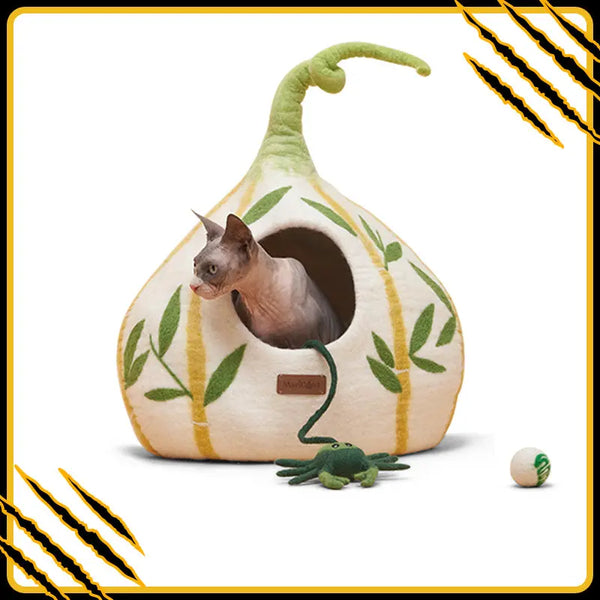
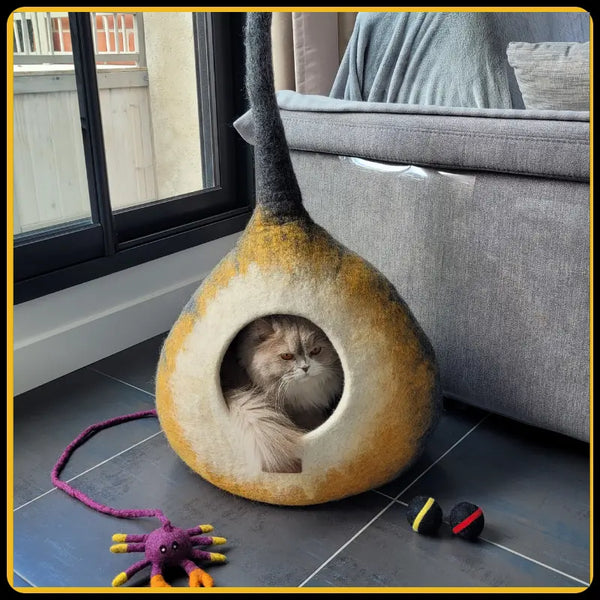
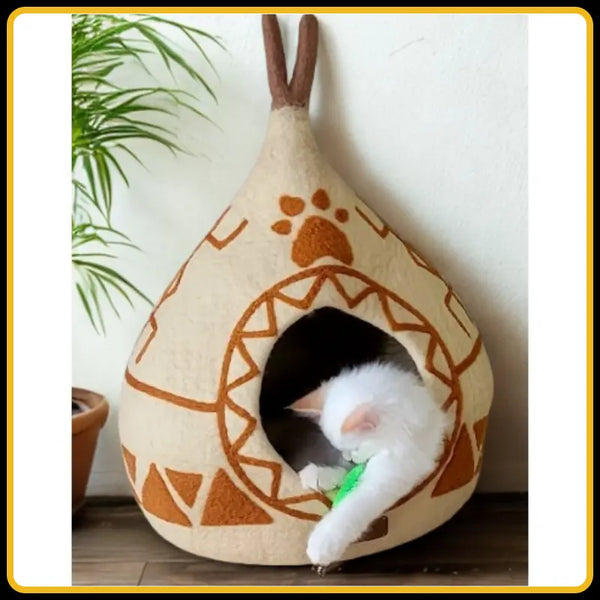
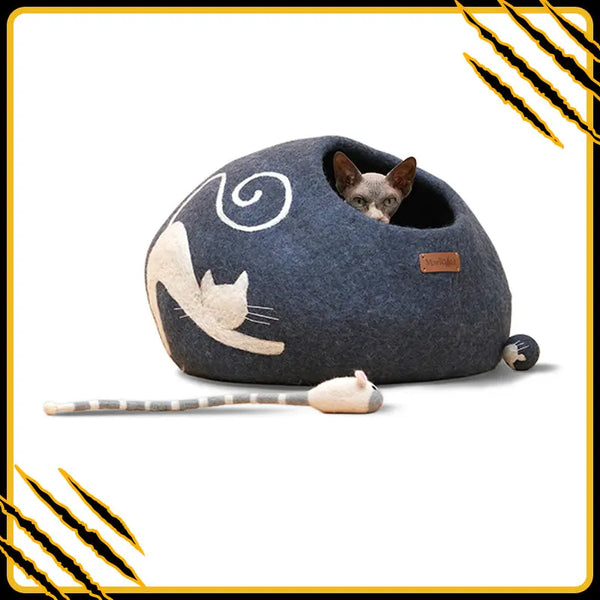
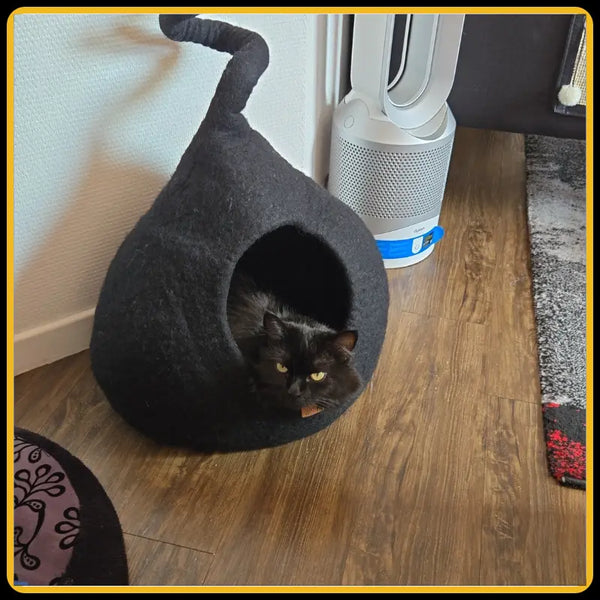
- A warm and quiet bed where it feels safe, such as a felted wool cave or a cushion near you.
- Regular play sessions, followed by a meal and some rest time: see why a playful cat is a happy cat.
- A stable routine that reassures it.
Frequently Asked Questions
Is a purring cat always happy?
No. It also purrs when it asks for something, when it is stressed, or when it is suffering. Look at its body and the context.
Why does my cat purr and then bite me?
It may be overstimulated by strokes. Observe its tail and ears: as soon as they twitch, stop stroking it.
My cat never purrs, is that serious?
No. Some cats purr very little or very discreetly. What matters is its overall behavior.
Do big cats purr?
Some small cats and cheetahs purr; big cats that roar, like lions, do not purr in the same way.
In summary
Purring is a language: often a sign of well-being, it can also express a request, stress, or pain. To understand it, always observe the context and your cat's body.