
Play is not a luxury for a cat: it is one of its basic needs, just like eating or sleeping safely. A cat that plays regularly is fitter, calmer, and closer to you. But not all cats play the same way. Here is why a playful cat is a happy cat, and how to adapt games to its personality and age.
What play brings to your cat
- A sharp mind: watching, anticipating, catching, it is a real mental workout.
- A fit body: running, jumping, and climbing maintain its muscles and help prevent obesity.
- Less stress: play releases accumulated energy and allows the hunting instinct to be expressed, which limits boredom and unwanted behaviors.
- A stronger bond: playing together creates trust and complicity.
To understand the hunting instinct and choose the right toys, read our article on durable and natural cat toys.
The signs of a happy cat
- it plays spontaneously and responds when you offer it a game;
- it sleeps in relaxed positions, sometimes on its back;
- it has its tail raised when it comes to you, its eyes half-closed when it rests;
- it purrs, kneads, rubs against you and the furniture;
- it eats and grooms itself normally.
Conversely, a cat that no longer plays at all, hides, or suddenly changes its behavior deserves attention: see stressed cat: 12 signs to recognize and cat that hides: 7 reasons.
Adapting games to your cat's personality
The explorer cat
Curious and fearless, it loves to discover. Offer it search games: hidden treats, boxes to explore, toys hidden in the room, and elevated paths.
The shy cat
Reserved, it plays better quietly and from a distance. Favor soft toys that it can catch alone, such as a wool mouse, and play sitting on the floor, without sudden movements. Always leave it a refuge nearby, such as a cave, from where it can observe before launching itself.
The very playful cat
Energetic, it loves to run, pounce, and catch. Chase games with a fishing rod, balls to hit, and snakes to grab are perfect. Plan two or three real sessions a day so it can burn off its energy.
The observant cat
It prefers to watch the world. Set up an observation post for it near a window and offer slow games: a toy that appears and disappears behind a piece of furniture often catches its attention.
The cuddly cat
It seeks proximity. Calm games, next to you on the couch, suit it well, followed by a moment of rest on a wool cushion near you.
Adapting games to its age
- Kitten: very playful, it needs varied and short games, several times a day. Never play with your hands or feet: it would learn to attack them.
- Adult: two to three sessions of 10 to 15 minutes a day, preferably in the morning and evening.
- Senior: slower games, on the floor, without jumps. A toy that is gently slid is enough to interest it. See our tips for playing with a senior cat and, in case of stiffness, our article on cat arthritis.
The keys to a good play session
- Imitate prey: make the toy run away, hide it, let it stand still.
- Let your cat catch its "prey" at the end.
- Finish with a small meal or a treat.
- Rotate the toys to keep the novelty effect.
- Put away strings and fishing rods after play.
5 easy games to play at home
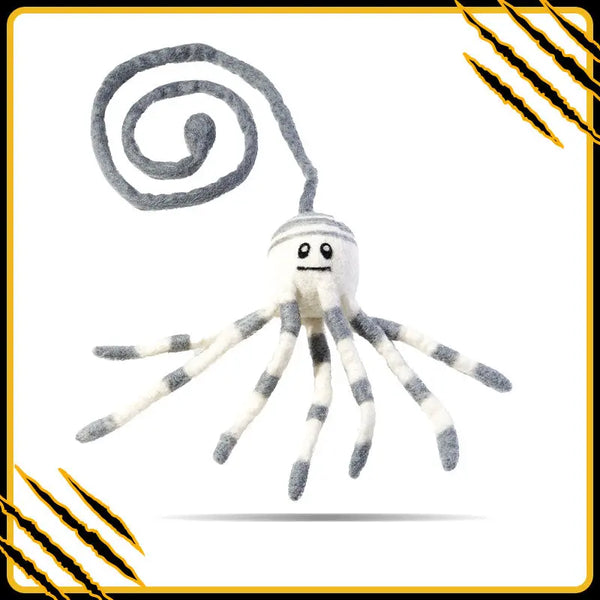
- The toy hunt: slide a mouse or a wool snake behind a piece of furniture, then stop it. Let your cat pounce on it.
- The treat hunt: hide a few kibbles in the room or in a box with holes.
- The box to explore: a simple box with two openings becomes a hiding place and a playground.
- The rolling ball: a wool ball thrown on the parquet floor awakens the chase instinct.
- The observation post: a cushion on a windowsill overlooking birds occupies a cat for hours.
Frequently asked questions
How long should I play with my cat?
Two to three sessions of 10 to 15 minutes a day are enough for most adult cats, preferably in the morning and evening.
My cat no longer plays, is that normal?
An older cat plays less, but a sudden lack of interest in play can signal pain, illness, or stress. Talk to your veterinarian.
Why does my cat attack my feet?
It often lacks play and directs its hunting instinct at what moves. Offer it regular play sessions with a toy, and never play with your hands or feet.
What toys for an indoor cat?
Vary: a fishing rod to play together, wool mice and snakes to catch, balls to push, and treats to search for.
After play, a refuge to rest
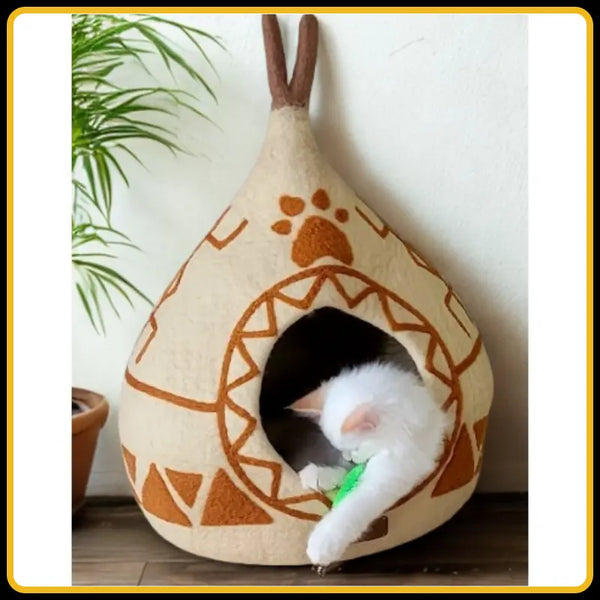
A happy cat alternates activity and rest. After a play session, it needs a quiet and warm place to recover: a felted wool cave, a house from our Tipi collection, or a cushion in a quiet corner.