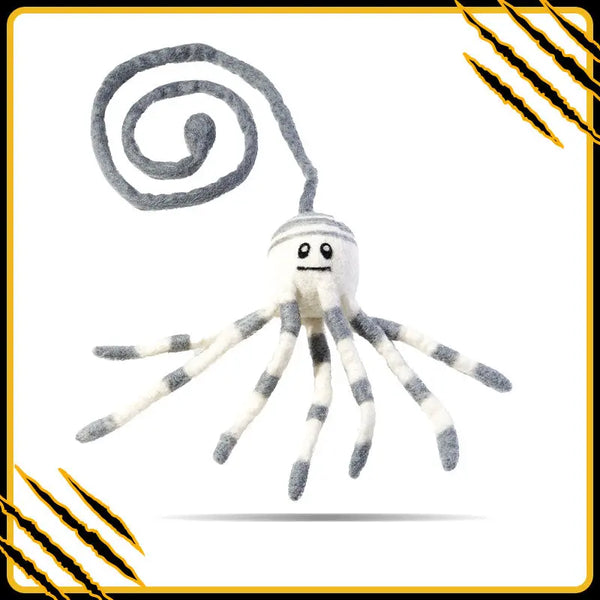

Does your cat ambush you from behind the sofa, pounce on your feet under the duvet, or race through the hallway at midnight? That's their hunting instinct at work. The right toy lets them satisfy it safely. Here's why play is essential, why cats love toys that mimic prey (and even snakes), and how to choose durable, natural cat toys.
Why your cat needs to play
Domestic cats descend from small wild felines that hunted several times a day. Even when fed at regular times, they retain the entire hunting sequence: stalk, approach, pounce, catch, bite. Play is the only way for an indoor cat to express it.
- It keeps them fit and helps prevent obesity.
- It stimulates their mind: sight, hearing, touch, anticipation.
- It prevents boredom, a source of stress and unwanted behaviors (scratching the sofa, waking you up at night, "play" aggression toward your ankles).
- It strengthens your bond when you play with them.
A cat that wakes you up at night often lacks play during the day: see my cat wakes me up or meows at night.
Why cats love prey-shaped toys
Mice, birds, insects, fish: toys that mimic prey immediately trigger the hunting instinct. It's not so much the shape that matters as the movement: an object that darts away, stops, hides, and starts again. A wool mouse that you slide behind a chair leg is irresistible.
It's also a healthy alternative to real prey: hunting a wool mouse instead of a bird in the garden is better for wildlife and for your cat.
The cat snake toy: why it works
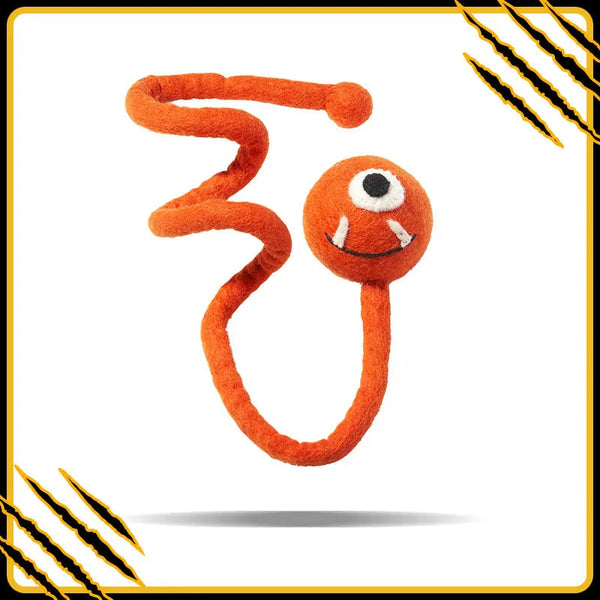
Snake toys are very popular, and for good reason: their long, flexible bodies undulate at the slightest movement, like real prey fleeing. The cat can grab it with its front paws, bite it, and "kill" it with its back paws. We sometimes see videos of cats jumping at the sight of a snake; with a toy, it's the opposite: they become the hunter.
Our felted wool snakes, such as the Mamb snake or the Virex snake, are long enough to be dragged along the floor and dense enough to withstand claws.
Choosing the right cat toy
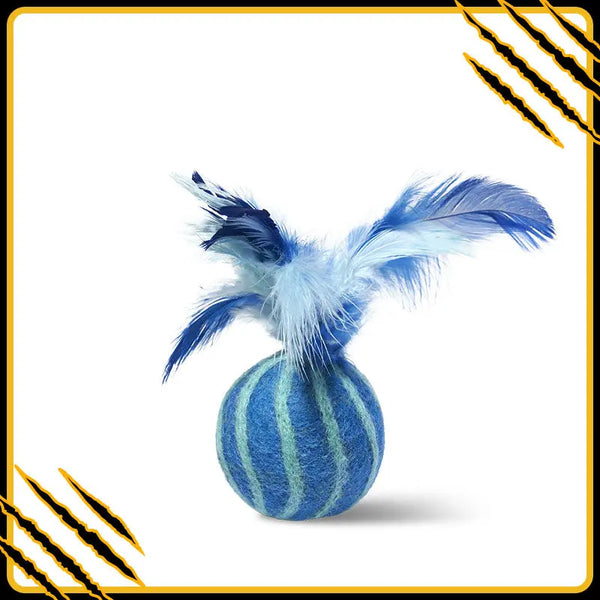
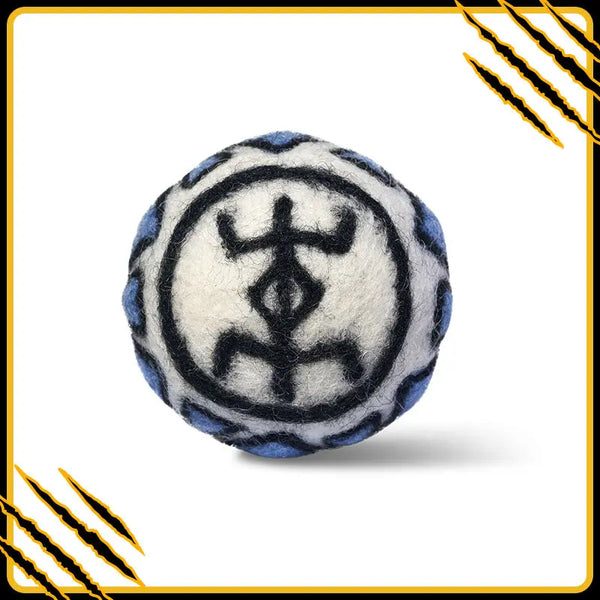
- Vary the shapes: mice for chasing, snakes and octopuses for catching and biting, balls for pushing and batting.
- Choose a sturdy material: dense felted wool resists claws much better than a thin fabric toy.
- Avoid small parts that can become detached and swallowed: glued-on eyes, bells, poorly attached feathers.
- Consider the size: large enough that it cannot be swallowed.
- Be wary of cheap plastics, which break and can cause injury.
Why wool? It's soft on teeth and paws, natural, and dense felt lasts a long time. A toy that lasts for months rather than days also means less waste.
Safety: best practices
- Inspect toys regularly and discard those that are fraying or torn.
- Store fishing rods, strings, and elastic bands after play: if swallowed, they can cause a serious intestinal blockage.
- If your cat tends to chew and swallow fabric, play with them under supervision and then remove the toy.
- Supervise kittens, who are more likely to swallow pieces.
How to play properly with your cat
- Choose the right time: evening and morning, their natural active hours. They are receptive when their ears are pricked and their pupils dilated.
- Imitate prey: make the toy dart away, hide it behind a piece of furniture, let it stand still.
- Let them win: a hunt must end in a catch, otherwise the cat will become frustrated.
- Two to three 10- to 15-minute sessions a day are often enough.
- Finish with a small meal: hunt, eat, groom, sleep—that's their natural cycle.
- Rotate the toys: put some away and bring them out again later to maintain the novelty effect.
To adapt play to your cat's personality and age, read why a playful cat is a happy cat.
After play, rest
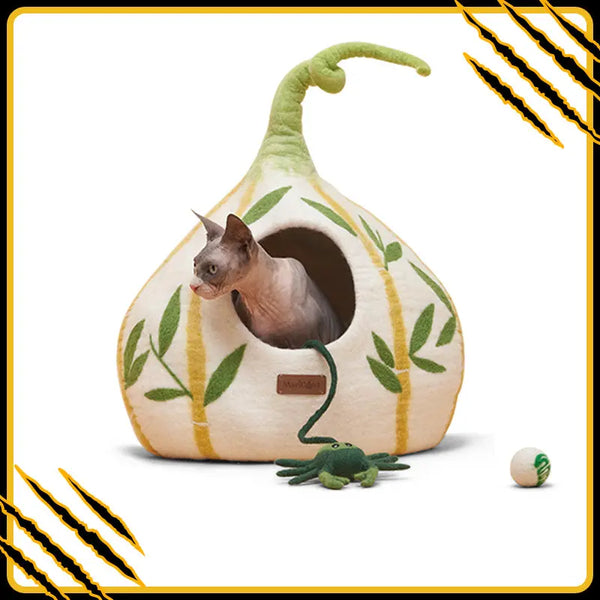
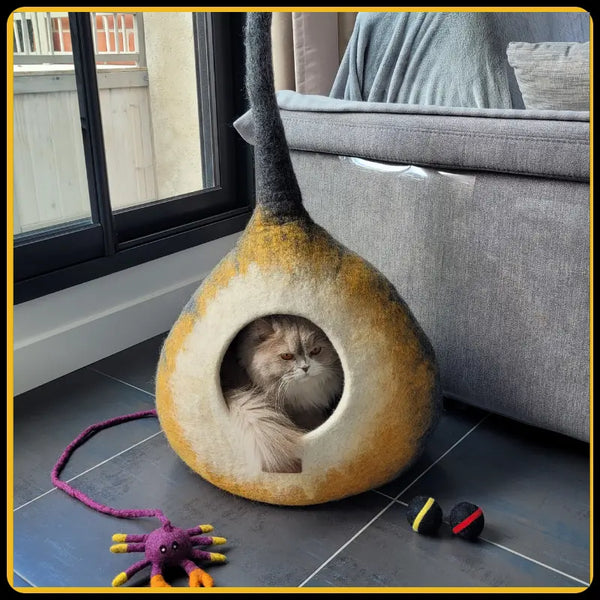
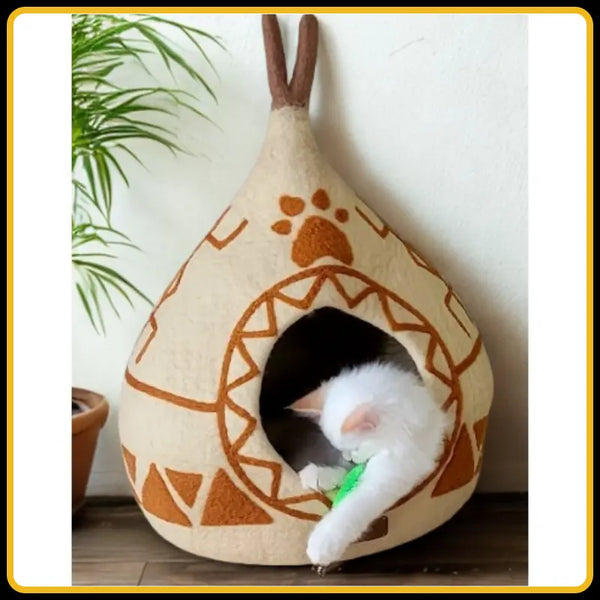
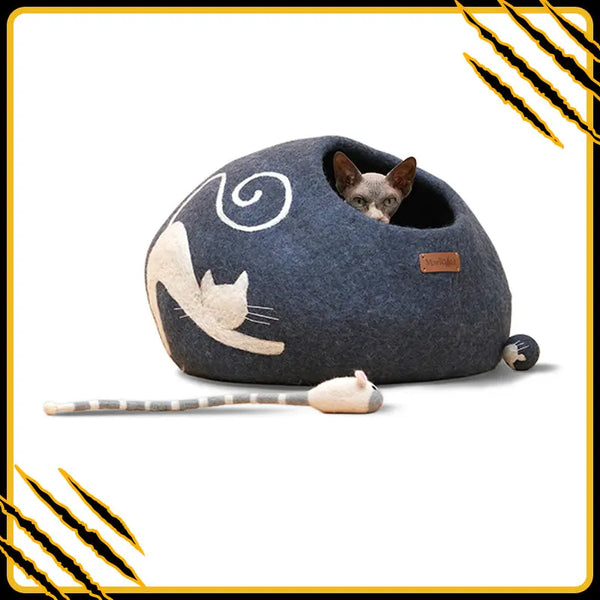
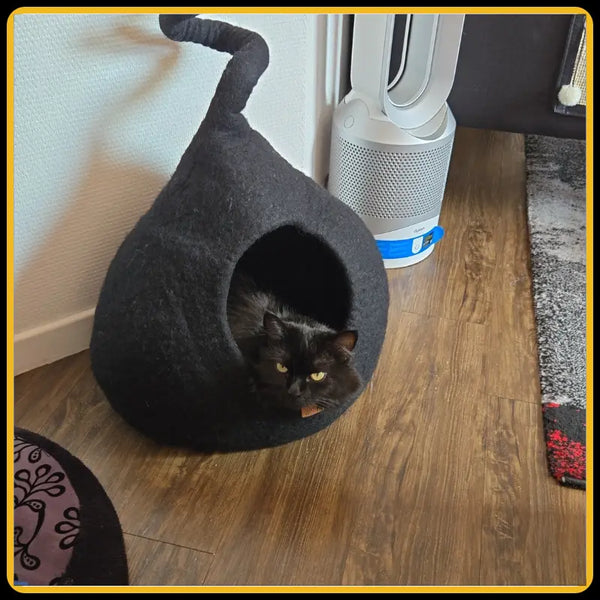
After a hunting session, your cat needs a quiet place to recover. A felted wool cave or a cushion in a quiet corner naturally complements the play area.
Frequently asked questions
What is the best cat toy?
One that mimics prey and that you move: a fishing rod, a mouse, or a snake that you slide along the floor. Vary the shapes to keep their interest.
Why does my cat love snake toys?
Their long, flexible bodies undulate like real prey fleeing. The cat can grab it, bite it, and "kill" it with its back paws.
Are wool toys safe?
Yes, if they are sturdy and the right size. Inspect them regularly and remove those that are fraying.
How many toys does a cat need?
A few are enough, provided you rotate them: put some away and bring them out again later to maintain the novelty effect.
Our felted wool cat toys
Mice, snakes, octopuses, spiders, balls: our toys are hand-felted from natural sheep's wool, without plastic. They are designed to last and to awaken the hunter slumbering inside your cat.