
A paw to the face, meowing down the hallway, an object falling from the dresser… and it’s 4 a.m. If your cat wakes you up or meows at night, it’s almost never a whim: there’s a reason, sometimes behavioral, sometimes medical. Here’s how to find it and get peaceful nights again.
Why your cat is active at 4 a.m.
Cats are naturally crepuscular: they are most active at dawn and dusk, when their prey comes out. A cat that has slept alone all day is therefore full of energy in the early morning. Add an empty stomach and a human who always eventually gets up, and the habit takes hold.
Behavioral causes
- Hunger: the number one cause. If the last meal was a long time ago, they’ll demand food. And if you get up to feed them, they’ll quickly learn that it works.
- Boredom and excess energy: they haven’t burned off their energy during the day.
- Seeking attention: any reaction, even getting angry, can reinforce the behavior.
- Heat in an unspayed female, or the presence of other cats outside.
- A change: moving house, a new pet, the absence of a family member, renovations.
Medical causes not to be overlooked
Especially in an older cat, or if the behavior appears suddenly, consider a medical cause:
- Hyperthyroidism, common in older cats: intense hunger, weight loss despite a good appetite, restlessness, increased thirst.
- Pain, especially arthritis: the cat often changes position, sleeps poorly, and gets up at night.
- Cognitive decline, the equivalent of senility: disorientation, meowing into the void, disrupted sleep cycles.
- Loss of sight or hearing, which makes the cat more anxious in the dark.
- High blood pressure, often associated with other diseases in older cats.
- Excessive thirst, which may indicate kidney disease or diabetes.
If your cat is over 10 years old, or if the waking and meowing started suddenly, consult your veterinarian. Many of these conditions can be treated or well managed when addressed early.
How to identify the cause
- They meow near the bowl or lead you to the kitchen: hunger is likely.
- They run, play, and knock things over: too much energy.
- They stop as soon as you react: seeking attention.
- They meow into the void, seem lost, eat a lot while losing weight, and drink more: see your veterinarian.
Everyday solutions
- Play for 10 to 15 minutes in the evening, with a game that mimics hunting (fishing rod, toy they can catch), until they are a little out of breath.
- Give a small meal right after playing, before bedtime: hunt, eat, sleep—that’s their natural rhythm.
- Use an automatic feeder for a small meal in the early morning, so you are no longer the source of food.
- Do not respond to the waking: no food, no play, no scolding. In the first few days, it often gets worse before it gets better; that’s normal. Hang in there.
- Keep them busy during the day: a lookout post near a window, rotating toys, a treat dispenser.
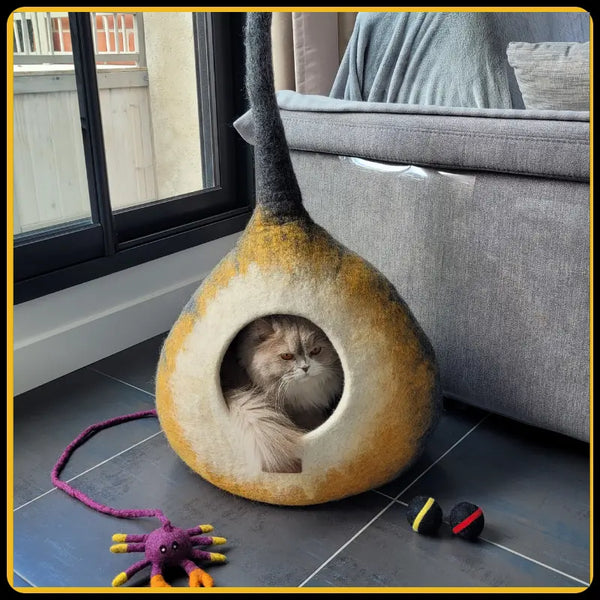
- Offer them a bed that makes them want to sleep: quiet, warm, away from high-traffic areas. An enclosed space helps them settle down, like our felted wool cat caves.
For the older cat
- A nightlight helps a cat with poorer vision find their way at night.
- An accessible litter box close to their bed limits nighttime trips.
- A thick, warm, easily accessible bed eases pain and prolongs sleep.
- A stable routine (meals, play, bedtime at the same times) reassures a cat that is losing its bearings.
See also our tips for adapting the home for a senior cat and, if your cat seeks warmth at night, my cat is cold at night.
Frequently asked questions
Should I close the bedroom door?
It can help, but many cats scratch or meow at the door. If you close it, do so from the start and consistently, and make sure they have everything they need (water, litter box, bed) on the other side.
How long does it take to change the habit?
Often one to three weeks, provided you never reward the waking again.
My older cat has recently started meowing every night; is it serious?
It’s not necessarily serious, but it is a change to report to your veterinarian: hyperthyroidism, pain, and cognitive decline are common and can be managed.
In summary
A cat that wakes you up at 4 a.m. is hungry, bored, or has learned that it works, but in an older cat, a medical cause must be ruled out. Play in the evening, a meal before bedtime, an automatic feeder, no response to the waking, and a comfortable bed: this is the combination that most often brings back peaceful nights.