
Is your cat no longer jumping onto the sofa, taking a long time to get up after a nap, or neglecting to groom its back? These may not just be signs of aging: cat arthritis is very common and often goes unnoticed because cats hide their pain. This guide will help you recognize the symptoms, understand the treatments your vet may offer, and choose a suitable bed, including the famous orthopedic cat cushion.
Cat arthritis, a common and underestimated condition
Arthritis is the progressive deterioration of the cartilage covering the joints. It causes inflammation, stiffness, and chronic pain. It mainly affects the hips, elbows, knees, and spine.
Several X-ray studies have shown joint damage in a large majority of older cats, even though few are diagnosed. The reason is simple: cats rarely limp. They discreetly adapt their habits to avoid pain.
Risk factors: age, excess weight, past injuries (fractures, dislocations), and certain breeds (Maine Coon, Persian, Scottish Fold). Arthritis is not limited to very old cats: it can begin in middle age.
Signs of arthritis in cats
- It jumps less: it hesitates, calculates, jumps lower, uses an intermediate step, or gives up.
- It is less active: it sleeps more, plays less, and explores fewer rooms.
- It is stiff, especially upon waking up or in cold weather; it stretches less.
- Its grooming habits change: dull or tangled fur on the back and rump, or, conversely, persistent licking of a joint.
- The litter box becomes a problem: it misses the box, especially if the sides are high.
- It scratches less, and its claws become too long.
- Its personality changes: it withdraws, becomes irritable, or reacts when its back or hips are touched.
A cat that no longer reaches its favorite windowsill deserves a visit to the vet. Note: incontinence, loss of appetite, or isolation can also have other causes (cystitis, kidney disease, etc.), which is why an examination is important.
Diagnosis and treatment
Only a vet can make a diagnosis through a clinical examination (palpation, mobility, gait), supplemented if necessary by X-rays and a blood test. They have cat-specific pain assessment tools and will often ask you to describe what you observe at home: your observations matter.
Depending on the case, they may suggest:
- pain management: anti-inflammatories approved for cats, or a monthly injectable monoclonal antibody, with appropriate monitoring, especially of kidney function;
- weight management: this is one of the most effective approaches, but a diet must always be supervised, as losing too much weight too quickly is dangerous for cats;
- supplements (especially omega-3s) for support;
- physiotherapy in some cases.
Important: never give your cat human or dog medication. Paracetamol, in particular, is toxic to cats, even in small doses.
Adapting the home for a cat with arthritis
- A low-sided litter box, or one with a cut-out entrance, and a litter box on each floor.
- Slightly raised bowls to prevent them from bending over too much.
- Steps or a ramp to access the sofa, bed, or window.
- A horizontal scratching post, which is easier to use than a vertical one.
- Non-slip flooring on their usual routes (rugs).
- Short, gentle play sessions to keep their muscles active without overexerting them.
For more ideas, read our 7 essential home improvements for senior cats.
What bed is best for a cat with arthritis?
An older cat spends much of the day lying down. Its bed will not cure arthritis, but it is very important for its comfort. The criteria:
- Thick, to insulate it from the hard floor and distribute its weight.
- Firm, so it can get up without sinking in.
- Accessible: placed on the floor or very low, with a low side or wide entrance, without having to jump.
- Warm: cold increases stiffness. Place it in a warm room, away from drafts.
- Stable: it should not slide when the cat gets on it.
Memory foam orthopedic cushion or felted wool cushion?
- The memory foam orthopedic cushion contours to the body and reduces pressure points. It is a good choice for a very stiff cat or one that lies down for long periods. Its limitations: the foam retains heat and moisture, and some cats may not like it as much.
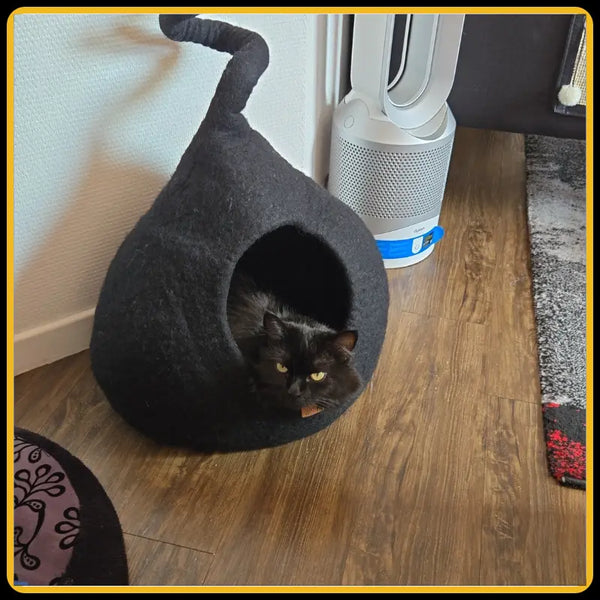
- The felted wool cushion is dense, firm, and warm. Wool retains the cat's body heat, remains breathable, and manages moisture well. It provides a stable, easily accessible bed that many older cats appreciate for its warmth.
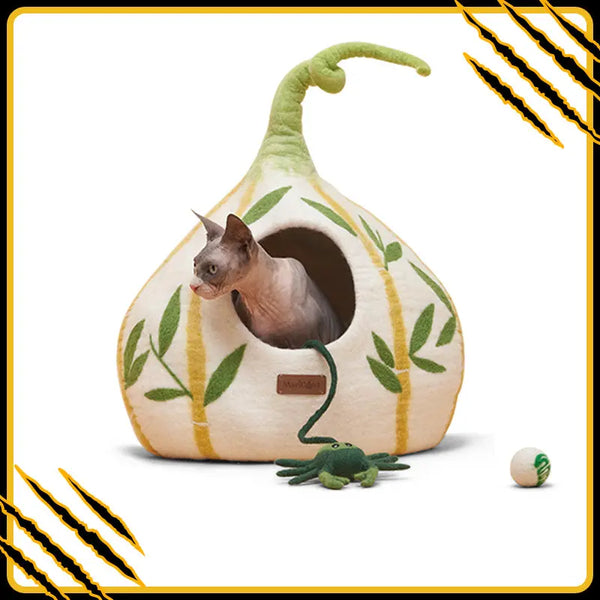
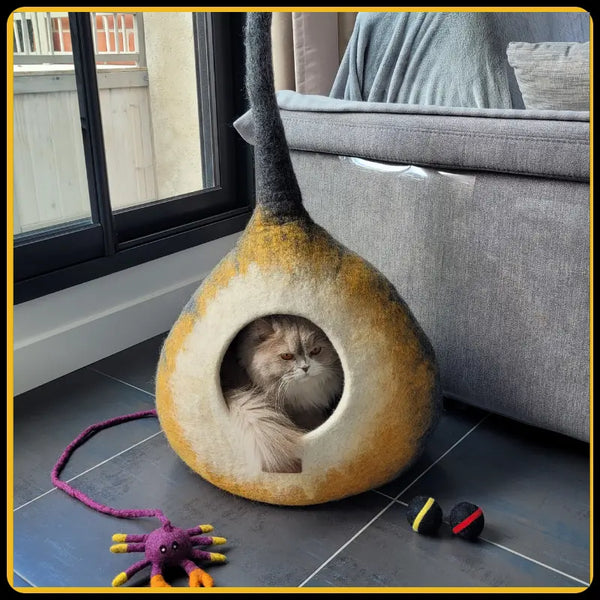
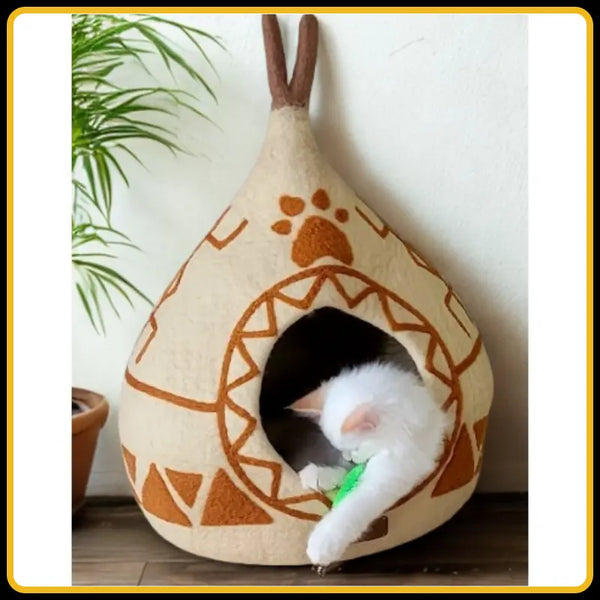
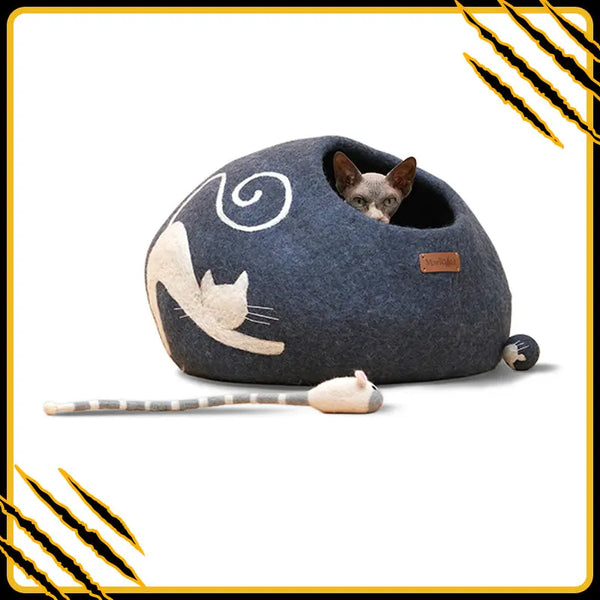
The two can complement each other. The most important thing is to observe your cat: the one it chooses is the right one. Our felted wool cushions, rugs, and beds sit on the floor, and for a cat that also likes to hide, a house with a large entrance eliminates the need to bend down.
Placing it properly
- In the room where it spends the most time, near you.
- In a warm spot, but not right next to the radiator.
- On its usual route, without any stairs to climb.
- A bed in each living area, so it does not have to travel far.
Cold makes stiffness worse: for winter nights, also see my cat is cold at night: 7 signs and 9 effective solutions.
Frequently asked questions
My cat does not limp. Could it still have arthritis?
Yes. Limping is rare in cats. Instead, watch for changes in jumping, grooming, litter box use, and activity.
Can arthritis be cured?
No, but it can be managed well. With appropriate treatment, weight management, and home improvements, a cat with arthritis can maintain a good quality of life for years.
Is an orthopedic cushion enough?
No. It improves comfort, but does not replace veterinary care or pain management.
My cat is ignoring its new cushion. What should I do?
Place it where it already sleeps, put one of your worn clothes on it, and give it two to three weeks. Our 100-day cat adoption guarantee gives you time to test it.
In summary
- Arthritis is common in older cats, but subtle: watch for changes in jumping, grooming, and litter box use.
- Consult your vet: pain can be treated, and weight management is a major factor.
- Make home improvements and provide a thick, firm, warm, and accessible bed.