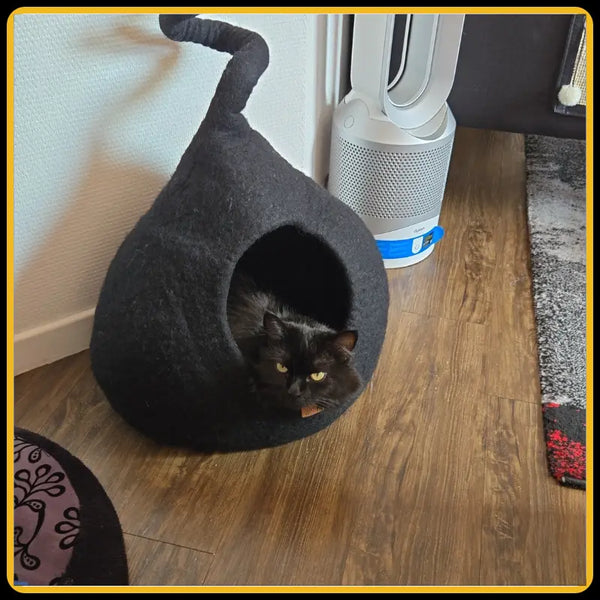

Your cat sleeps between 12 and 16 hours a day, sometimes more if they are a kitten or senior. Their cat bed is therefore not just an accessory: it is the place where they spend most of their time. Yet, many beds end up being shunned in favor of the sofa or a cardboard box. Here is how to choose a bed that your cat will actually use: shape, size, material, location, and mistakes to avoid.
Open bed, basket, cave: what's the difference?
- The open bed (or thick cushion): a resting surface without walls or with low edges. For the confident cat who likes to sleep stretched out and keep an eye on the room, and for the older cat who needs easy access.
- The basket with raised edges: raised edges to rest their head on, providing a slightly enclosed feeling. For the cat who sleeps curled up in a ball. See our guide to the felted wool cat basket.
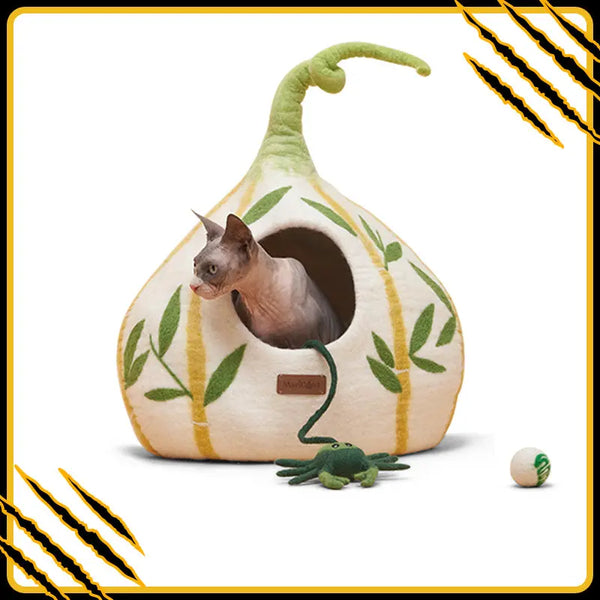
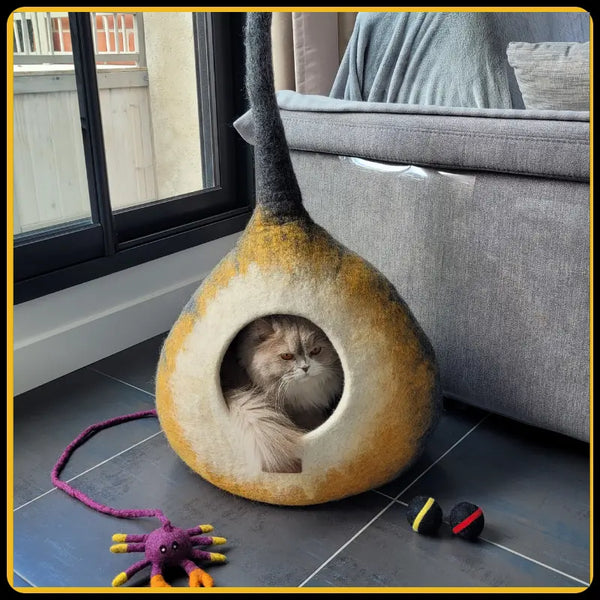
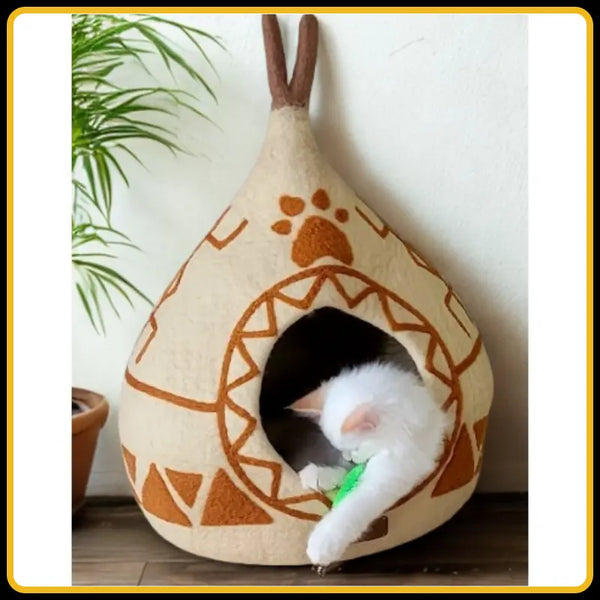
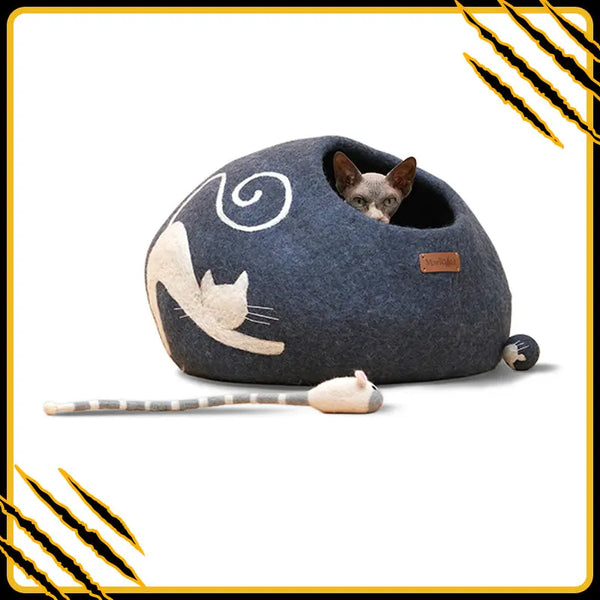
- The cave or house: an enclosed shelter. For the anxious, discreet, or chilly cat. See our felted wool caves.
The easiest way is to observe your cat: stretched out on the sofa, they will appreciate an open bed; curled up in a ball, a basket; hidden under the bed or in a closet, a cave. Many cats like to have two: an enclosed shelter and an open bed near you.
Signs it's time to change their bed
- they avoid their usual bed;
- they sleep in unusual places (cardboard boxes, wardrobes, laundry baskets);
- the bed is sagged, deformed, or retains odors despite cleaning;
- they seem stiff when getting up, or hesitate to get in.
Choosing a cat bed: 5 criteria
1. Size
Your cat must be able to adopt their usual positions: curled up, stretched out, or on their side. Measure them from the nose to the base of the tail when they are sleeping stretched out, and compare it with the interior dimensions of the bed. For a cat who sleeps curled up, a smaller, more enveloping bed will often suit them better than a large one.
2. Thickness
A thick bed insulates from the cold floor and distributes the cat's weight. This is particularly important for older or arthritic cats: see our article on cat arthritis and the orthopedic cushion.
3. Material
- Felted wool: warm, breathable, it manages moisture well and retains its shape. Hand-wash only.
- Fabric and synthetic padding: often machine washable and cheaper, but it sags over time and retains odors more.
- Memory foam: adapts to the body, interesting for a very stiff cat, but retains heat and moisture.
4. Accessibility
For an older cat, a kitten, or an overweight cat, choose a bed placed on the floor, without an edge that is too high to step over.
5. Maintenance
A clean bed is more likely to be used. Check how it is cleaned before buying. For wool, follow our guide to caring for a wool bed or cave.
Where to place your cat's bed
- In a room where you spend time: living room, office, bedroom. Cats like to sleep near their humans.
- In a quiet place, away from walkways and far from noisy appliances.
- Away from the litter box and food bowls.
- Away from drafts, near a gentle heat source in winter, but not right next to the radiator.
- Elevated for a cat who likes to observe (window ledge, low piece of furniture), on the floor for an older cat.
A bed for winter
In winter, many cats get cold without showing it: they sleep tightly curled up and seek out heat sources. A thick bed, made of insulating material, with edges to block drafts, makes a real difference. For very chilly cats, an enclosed bed retains heat even better. See my cat is cold at night: 7 signs and 9 effective solutions.
Mistakes to avoid
- Choosing too large for a cat who sleeps curled up: they won't feel enclosed.
- Choosing solely for aesthetics: an uncomfortable or poorly placed beautiful bed will end up being abandoned.
- Placing it in a walkway or next to the litter box.
- Moving it constantly: stability reassures the cat.
- One bed for several cats: plan for one per cat, plus one.
Helping them adopt a new bed
- Place it where your cat already sleeps, or next to their old bed.
- Place a piece of clothing that carries your scent, or their old blanket, inside it.
- Add a few treats, or a little catnip if they are sensitive to it.
- Never force them to settle in, and give them two to three weeks.
Our 100-day feline adoption guarantee gives you time to test it.
Our felted wool cat beds
Our beds, cushions, and rugs are designed in France and hand-felted by our artisan partners, using 100% non-mulesing sheep's wool. Each piece is unique. A few models: the Bison bed for large cats, the Bison-oni bed, or the Anaïs-Res bed.
Frequently asked questions
Why doesn't my cat sleep in their bed?
Most often, the bed is poorly placed (walkway, noise, draft), too large, or not suited to their sleeping style. Try moving it first, then try a different shape.
What size bed is right for a cat?
They should be able to stretch out if they sleep stretched out, or curl up and feel enclosed if they sleep curled up. Compare the length of your cat with the interior dimensions.
Do older cats need a special bed?
A thick, low, and easily accessible bed, placed in a warm room, is often enough. In case of arthritis, talk to your veterinarian.
Bed or basket: which should I choose?
The bed for the cat who sleeps stretched out, the basket for the one who sleeps curled up and likes to rest their head on an edge.