
Is your cat jumping less high, sleeping more, seeking warmth, and taking longer to get up? They are entering their senior years. Good news: a few simple changes around the house are often enough to make their life easier and more comfortable. Here is the age at which a cat is considered senior, what changes for them, and the 7 essential changes for a senior cat's comfort.
At what age is a cat considered senior?
Veterinarians generally distinguish between:
- the "mature" cat, from around 7 to 10 years old: the first signs of aging may appear;
- the senior cat, from 10-11 years old;
- the very old cat, over 15 years old.
Many indoor cats now live to 15 and beyond. Every cat ages at its own pace, but from age 10, it is time to adapt their environment.
What changes in an older cat
- Joints: osteoarthritis is very common and often subtle. They jump less and get up stiffly.
- Temperature: they regulate their body heat less effectively and become more sensitive to the cold.
- Grooming: less flexible, they groom themselves less effectively, especially their back and hindquarters.
- Senses: their sight and hearing may decline.
- Behavior: they sleep more, may become more anxious, and sometimes disoriented at night.
- Health: kidney disease, hyperthyroidism, diabetes, dental problems, and high blood pressure become more common.
Change 1: a thick, warm, and easily accessible bed
An older cat spends a large part of the day sleeping. Their bed therefore matters more than ever:
- thick, to insulate them from the floor and relieve their joints;
- low, without a rim that is too high to step over;
- warm, made of an insulating material such as wool;
- well placed: in a warm room where the family lives, sheltered from drafts, and close to their usual route.
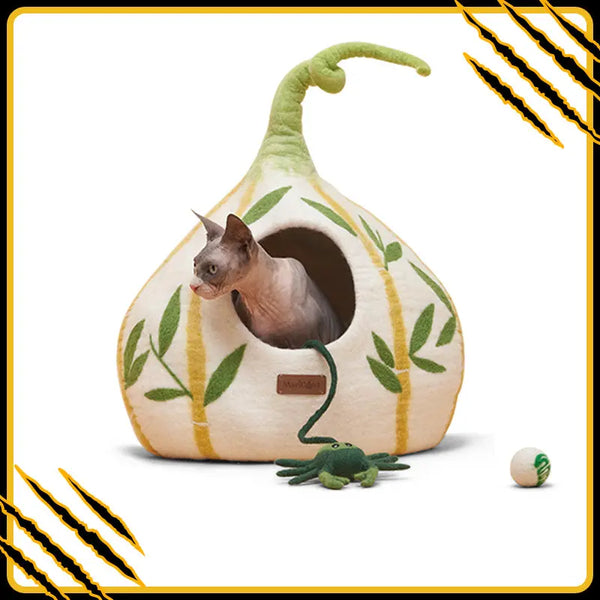
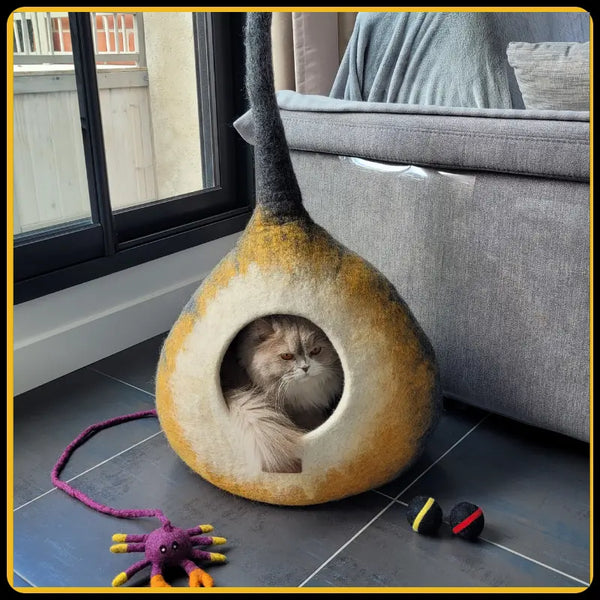
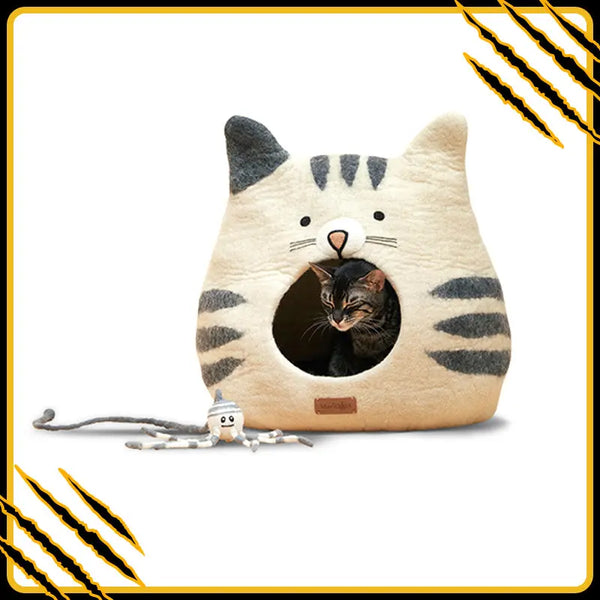
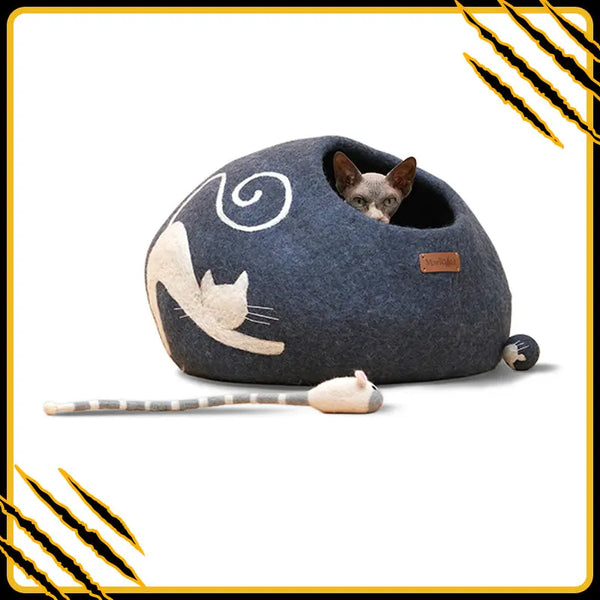
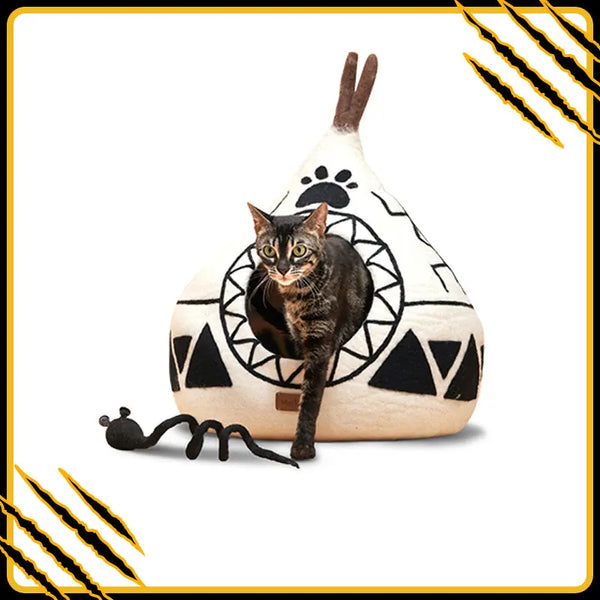
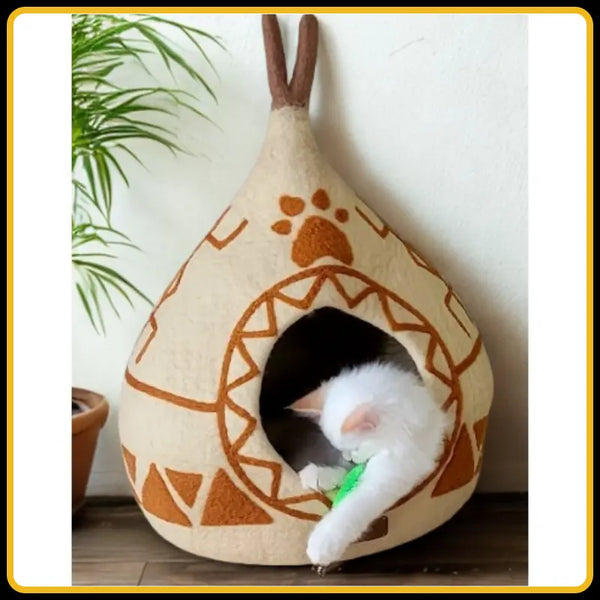
Provide a bed in every room where they spend time, so they do not have to travel far. For a cat that likes to hide, a house with a wide entrance avoids the need to crouch down, like our Potir house. If they are particularly stiff, read our article on cat arthritis and orthopedic cushions, and our guide to choosing a cat bed.
Change 2: make moving around easier
- Steps or a ramp to access the sofa, bed, or their favorite windowsill. A stool or intermediate pouf is often enough.
- Less slippery floors on their routes: a rug on the tile or parquet floor helps them get up and walk.
- Their favorite spots within reach: lower a perch, move a chair closer to the window.
- Slightly raised bowls, so they do not have to lean down too much.
Change 3: a suitable litter box
- A low-sided box, or one with a cut-out entrance, and large enough for them to turn around.
- A litter box on each floor, and one near where they sleep.
- A fine, soft substrate for their paws.
- No covered box if they have difficulty bending down.
An older cat that becomes incontinent is not "stubborn": pain, difficulty accessing the box, or an illness (kidney, urinary, diabetes) is often to blame. Consult your veterinarian.
Change 4: warmth
Older cats are often sensitive to the cold. In winter:
- keep a stable temperature, without turning off the heating completely at night;
- provide a warm bed, and why not an enclosed shelter that retains its heat;
- elevate the bed slightly to keep it away from the cold floor;
- avoid hot water bottles and heated pads not designed for animals, which can burn a cat that moves little.
To recognize a cat that is cold, read my cat is cold at night: 7 signs and 9 effective solutions.
Change 5: gently stimulate their mind
An older cat always needs to play and explore, at their own pace. Play keeps their muscles and mind active, and can help delay cognitive decline.
- short and calm play sessions, on the floor, with a toy that is slowly slid;
- treats hidden to find, without having to reach a height;
- an observation spot near a window;
- a very stable routine: meals, play, and bedtime at the same times.
See our tips for playing with a senior cat. If your older cat meows at night or seems lost, read my cat wakes me up or meows at night.
Change 6: help them with grooming
- Brush them regularly, gently, especially their back and hindquarters that they can no longer reach. It is also a good time for bonding.
- Monitor their claws: an older cat that grooms itself less wears them down less, and they can become too long.
- Gently clean their eyes and hindquarters if necessary, with a damp compress.
- Avoid baths, except when necessary and on your veterinarian's advice.
Change 7: closer veterinary monitoring
Many illnesses in older cats can be treated or managed well if detected early. After age 10, a veterinary check-up every 6 months is often recommended, with a blood test, urine analysis, and blood pressure check if necessary.
At home, monitor:
- their weight (weight loss is an important sign);
- what they drink and urinate: increased thirst should alert you;
- their appetite and the way they eat (dental pain);
- their movements and mood.
Note the changes over the weeks: these observations are valuable for your veterinarian.
The senior cat and stress
With age, many cats handle change less well: visitors, renovations, a new pet. Offer them a calm shelter and keep their familiar surroundings. See stressed cat: 12 signs to recognize.
Frequently asked questions
At what age is a cat old?
A cat is generally considered senior from 10-11 years old, and very old over 15 years old. The first signs can appear as early as age 7.
Why does my older cat sleep so much?
It is partly normal: a senior cat sleeps more. But new and pronounced fatigue, especially with a loss of appetite or weight, should be reported to your veterinarian.
My older cat no longer jumps, is that serious?
It is often a sign of osteoarthritis, which is very common and underdiagnosed. It can be relieved: talk to your veterinarian and adapt the house with steps and a low bed.
What bed for a senior cat?
A thick, warm, low, and easily accessible bed, in a warm room where the family lives.
In summary
- Thick, warm, and easily accessible bed in every living room.
- Steps, non-slip rugs, and raised bowls.
- Low-sided litter box, one on each floor.
- Stable warmth in winter.
- Gentle play and a stable routine.
- Grooming assistance.
- A veterinary check-up every 6 months and careful monitoring at home.
👉 Discover our felted wool cushions and beds · See our caves and houses