
Has your cat grown a few white hairs, sleep longer, and jump lower? That's no reason to stop playing. On the contrary: play helps keep their muscles, joints, and mind active, and remains one of the best ways to bond. You just need to adapt. Here's how to play with a senior cat safely.
Why keep playing with an older cat
- It helps maintain muscle strength and flexibility, which helps them stay mobile despite arthritis, which is very common with age.
- It keeps their mind sharp: mental stimulation can help slow cognitive decline.
- It helps maintain a healthy weight, which is important for their joints.
- It helps them stay calm: play reduces boredom and anxiety.
- It helps you stay connected, and you'll notice changes in behavior more quickly.
The golden rules of playing with a senior cat
- Short, frequent sessions: 5 minutes, two or three times a day, rather than one long session.
- On the floor, without jumping: slide the toy along the floor rather than making it fly through the air.
- Slowly: slow movement that stops and starts again is enough to capture their attention.
- Always let them catch it: let them catch their "prey" at the end of each session.
- Stop before they get tired: if they lie down, pant, or lose interest, that's enough for today.
- On a non-slip surface: a rug prevents slipping on tile or hardwood floors.
Games for senior cats
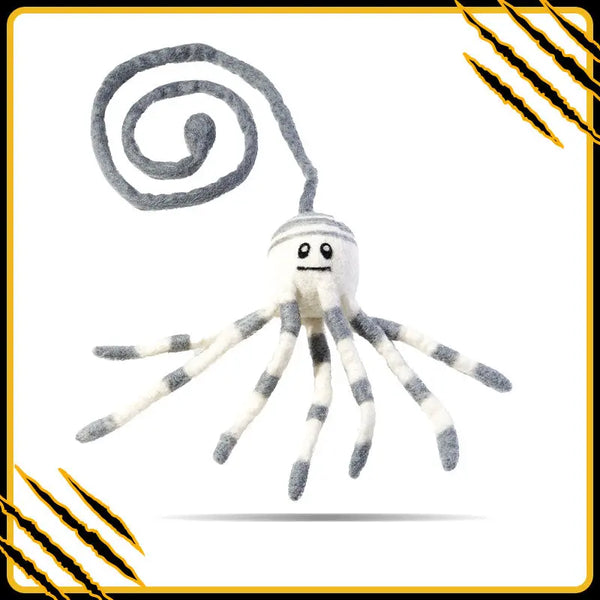
- The sliding mouse: slowly slide a mouse or wool snake along the floor, behind a chair leg or the edge of a rug.
- The treat hunt: hide a few kibbles at nose level, under an upside-down cup, or in a box with holes.
- The slowly rolling ball: a light wool ball, pushed slowly toward them.
- The paw game: a toy under a towel that they can try to catch with their paw without moving much.
- The observation post: a cushion near a window overlooking birds, effortless stimulation.
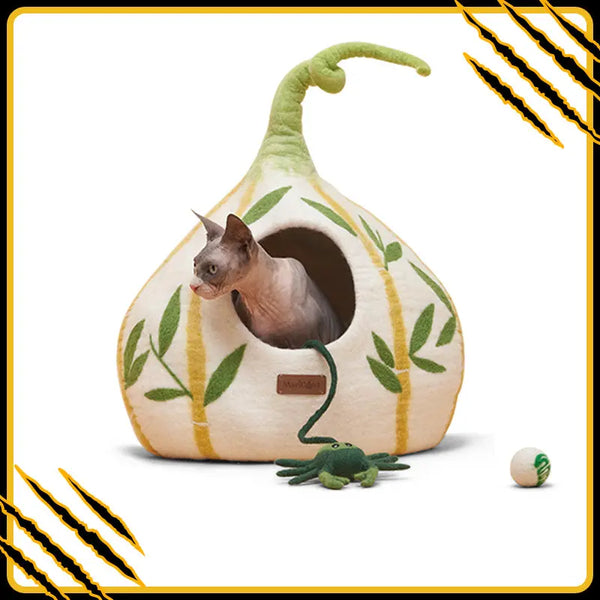
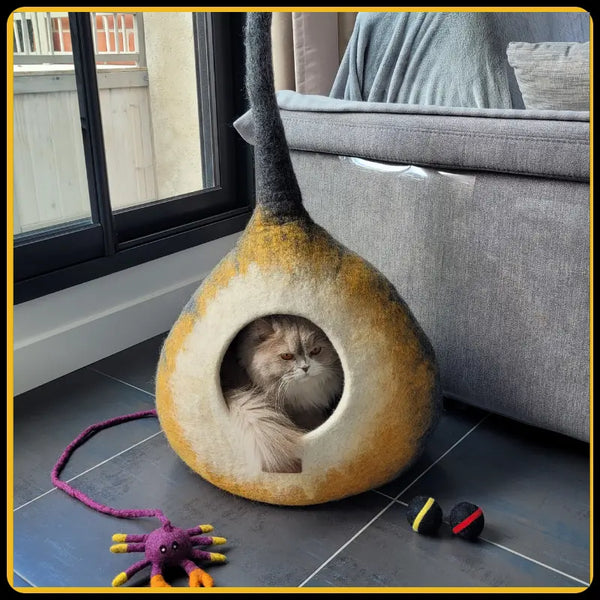
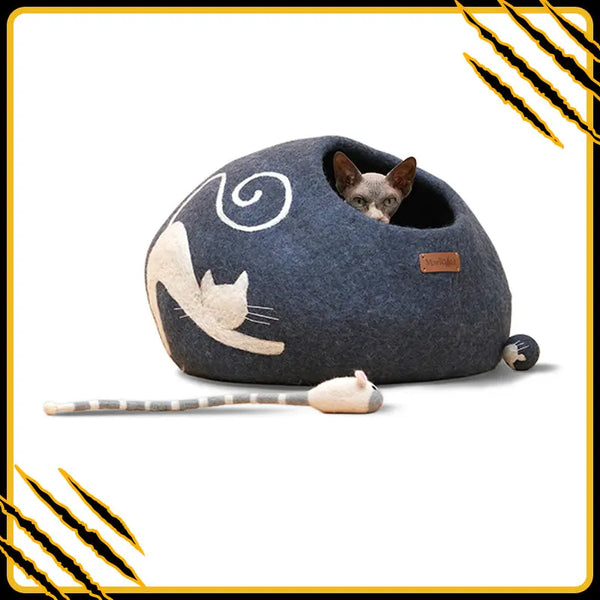
Our toys and felt wool balls are soft, light, and easy to grasp.
Toys to avoid
- toys that require jumping high or making sudden turns;
- laser pointers, which are frustrating because they can never catch the dot;
- small toys they could swallow, especially if their eyesight is failing.
Adapting play to their health
- In case of arthritis: very gentle play on the floor, on a soft surface. See our article on cat arthritis.
- If their eyesight is failing: use toys that make a soft noise, and bring them closer to their side.
- If their hearing is failing: focus on movement and highly visible toys.
- If they are overweight: very gradually increase the length of the sessions, in consultation with your veterinarian.
After play, a good rest
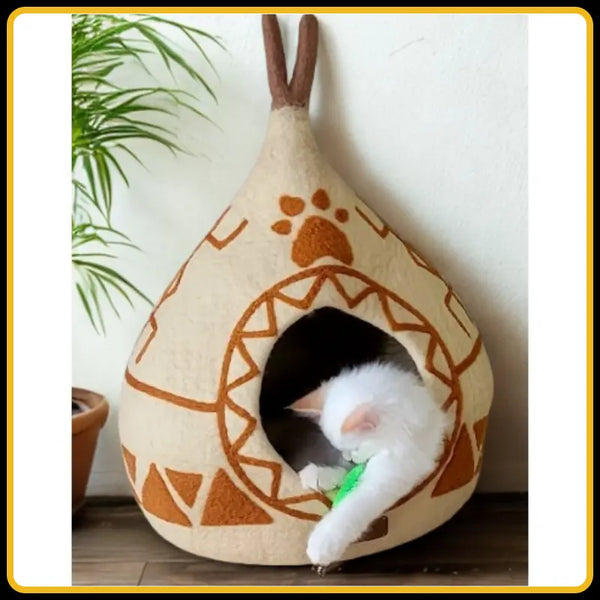
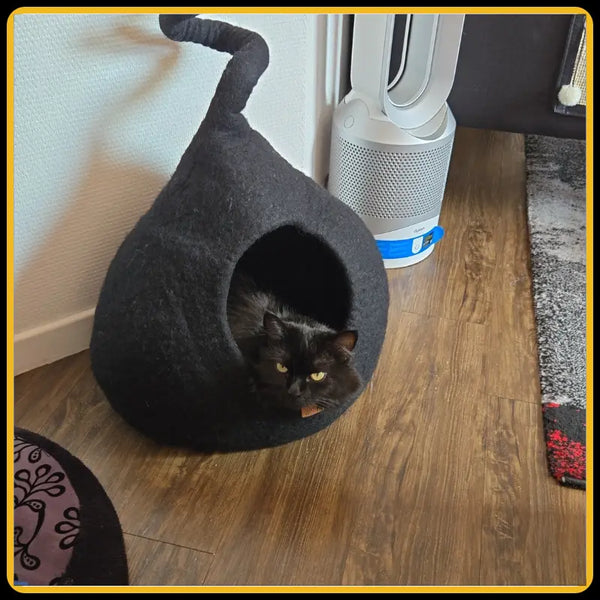
After exercise, an older cat needs a warm, quiet, easily accessible place to recover: a felt wool cave, a thick cushion, or a house with a wide entrance. To make your whole home cat-friendly, read our 7 essential home improvements for senior cats.
Frequently asked questions
My older cat no longer wants to play. Is that normal?
Older cats play less, but a sudden and complete lack of interest can indicate pain, illness, or failing eyesight. Talk to your veterinarian.
How long should I play with a senior cat?
A few minutes, two or three times a day. Consistency is what matters, not duration.
What toys are best for an older cat?
Soft, light toys that are easy to catch: wool mice and snakes, slowly rolling balls, and treats to find.
Can play slow down my cat's aging?
It won't stop it, but it helps keep their muscles, mobility, and mind active for longer.
In summary
With a senior cat, play for shorter periods but more often, on the floor, slowly, and always end with a catch. A few minutes a day is enough to keep their body and mind fit and maintain your bond.